Dried fruit isn’t automatically low in calories: according to the Consumer Advice Centre, removing the water concentrates sugar and calories per 100 g. For a midnight snack, it helps to measure out the amount you want in advance and compare the energy, sugar and ingredients on the specific pack. ‘No added sugar’ does not mean sugar-free.
Who should pay attention to their choice?
Late-night snackers keeping an eye on portions
You’d like something sweet in the evening and want to keep track of how much you eat. Measure out your portion in advance and use the nutrition values per 100 g to work out the amount you actually plan to eat. The Consumer Advice Centre points out that removing the water concentrates sugar and calories per 100 g.
People comparing ingredients and sugar
You want to distinguish added sweetening ingredients from naturally occurring sugar. Check the ingredients list and the ‘of which sugars’ nutrition figure: as Lebensmittelklarheit explains, ‘no added sugar’ does not mean sugar-free.
People who prefer a particular texture
You’re looking for soft dried fruit or crunchy freeze-dried fruit to keep in the cupboard. Compare the pack size and nutrition values for each option rather than assuming its texture tells you how many calories it contains.
What should you look for when buying?
Start by choosing the fruit and texture you’d like, then make your decision based on the ingredients, nutrition values per 100 g and the portion you plan to have.
| What matters to you |
What to check when buying |
Who it matters to |
| Calories and portion size |
Energy in kcal per 100 g and the amount you plan to eat in g. |
I want something sweet late at night without estimating the amount by eye; around 46 % of consumers prioritise portion control. |
| Ingredients and sugar |
Ingredients list and ‘of which sugars’; allergen information too, if needed. |
If I want to distinguish the fruit’s natural sweetness from added sweetening ingredients, the specific pack matters to me. Around 36 % of consumers focus primarily on this distinction. |
| Texture and pack size |
Drying method, preferred texture and pack size in g. |
I’m looking for either soft or crunchy fruit to keep in the cupboard and want to know how much is in the pack; around 18 % of consumers put this choice first. |
Common buying misconceptions
-
Assuming all dried fruit is low in calories
According to the Consumer Advice Centre, removing the water concentrates sugar and calories per 100 g. FARMER NATURALS dried pineapple shows how much the figures can vary: ALDI SÜD lists 319 kcal and 52 g of sugar per 100 g.
Check the energy figure on the pack you’ve chosen and measure out how many grams you want before eating.
-
Confusing ‘no added sugar’ with sugar-free
Dried fruit still contains naturally occurring sugar, even when no sugar has been added. So the claim on the front of the pack is no substitute for checking the nutrition information.
Read the ingredients list and the ‘of which sugars’ figure before comparing sweetened and unsweetened options.
-
Assuming crunchy fruit is automatically lower in calories
Freeze-dried fruit has a different texture from soft dried fruit. But according to the Consumer Advice Centre, sugar and calories are concentrated per 100 g in freeze-dried fruit too.
Choose it for the crunch you’re looking for, and check the nutrition values and pack size to help decide on a portion.
-
Looking only at the fruit or brand when checking for sulphites
You can’t tell whether sulphur dioxide or sulphites are relevant to your choice just from the brand name or type of fruit.
Check the ingredients list and allergen information for each option. Even if dried fruit is labelled as unsulphured, the information on the specific pack is what matters.
Brands and ranges to help you choose
Seeberger
Seeberger offers classic dried fruit, soft fruit, fruit crisps and freeze-dried fruit.
- The range includes options with no added sugar alongside products that are clearly labelled as sweetened or candied. This makes it easier to compare the ingredients for each product.
- The term ‘unsulphured’, used for products such as Seeberger apricots, doesn’t tell you anything about calories or sugar per portion.
EDEKA / EDEKA Herzstücke
EDEKA24 stocks whole apricots and dried currants from these brands, among other products.
- The fruit types and pack sizes listed can help you find an option that suits you.
- Compare ingredients and nutrition values using the product details or pack; the type of fruit alone won’t tell you how many calories it contains.
FARMER NATURALS (ALDI SÜD)
ALDI SÜD stocks FARMER NATURALS dried pineapple in a 100-g pack.
- ALDI SÜD lists 319 kcal and 52 g of sugar per 100 g for this specific product.
- These nutrition values apply to the pineapple mentioned, not to other dried fruit or every product from the brand.
Dried fruit at Joybuy
These two Seeberger products are classic dried fruits for anyone who prefers a soft texture. When choosing a snack portion, the information on each specific pack is what matters.
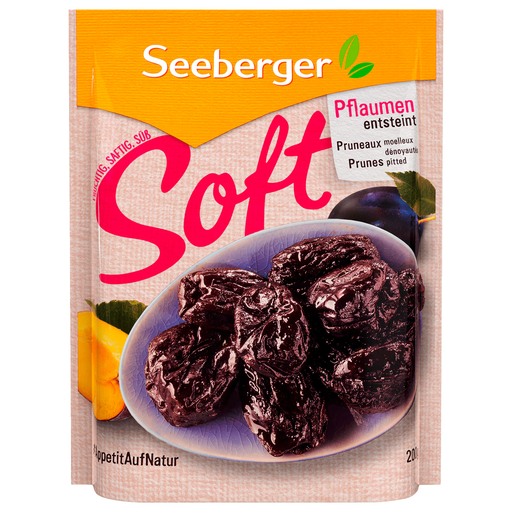 No image available
Seeberger soft pitted prunes, 200 g
An option if you’re looking for soft dried fruit for a late-night snack. Compare the nutrition values per 100 g with the amount you plan to eat, and measure out your portion in advance.
View at Joybuy
 No image available
Seeberger dried apple rings, 80 g
A different type of fruit for a measured snack. As well as energy and sugar per 100 g, check the ingredients list and, if sulphites are relevant to you, the allergen information on the pack.
View at Joybuy
Frequently asked questions
Is dried fruit automatically low in calories?
No. According to the Consumer Advice Centre, removing the water concentrates sugar and calories per 100 g, including in freeze-dried fruit. So compare the nutrition values on the specific pack and decide how much you want to eat.
Does ‘no added sugar’ also mean sugar-free?
No. Lebensmittelklarheit explains that the claim rules out added sugars and ingredients used for sweetening; naturally occurring sugar may still be present. The amount of sugar is shown in the nutrition information under ‘of which sugars’.
How can I check whether sulphites are listed in dried fruit?
Check the ingredients list and allergen information on the specific pack. The Federal Office of Consumer Protection and Food Safety explains how substances that can cause allergies or intolerances are labelled on packaged foods. Don’t rely solely on the type of fruit or brand when making your choice.


