Anyone looking for a fruit ingredient for high-protein meals
You might use dried fruit in a bowl or in baking, and want to check its protein and sugar content rather than count it as a source of protein.


Dried fruit works best as a fruit ingredient in a meal on a high-protein diet, rather than as a replacement for its protein source. When choosing a larger pack, consider not only the pack size but also the nutrition information per 100 g, the ingredients and whether you’ll use it up with your meals.
You might use dried fruit in a bowl or in baking, and want to check its protein and sugar content rather than count it as a source of protein.
You need dried fruit as an ingredient fairly often and want to choose a pack size that’s easy to store and use up once opened.
You want to know what’s in the pack before you choose, including whether it carries information about sulphites, allergens or possible traces.
First, decide what role you want the dried fruit to play in your meal. Then compare the nutrition information and ingredients. A larger pack is most practical if you use dried fruit regularly.
| What to consider | What to check when buying | Who it matters to |
|---|---|---|
| As a source of protein | Compare the protein per 100 g and plan the meal’s protein source separately from the fruit ingredient. | If I add dried fruit to a high-protein meal, I don’t want to overestimate its contribution. This is the top consideration for around 36% of consumers. |
| Pack size | Check the pack weight, whether the pack is divided into portions and the storage instructions for after opening. | If I use dried fruit regularly, I want to choose an amount that suits my household and that I can use up. This is the main priority for around 29% of consumers. |
| Sugar and ingredients | Check the sugar per 100 g in the nutrition information and see what else is listed in the ingredients. | If dried fruit often goes into breakfast or baking, I want to know what it contains besides fruit. Around 21% of consumers prioritise this comparison. |
| Sulphites and allergens | Check the ingredients list, any highlighted allergens and possible trace warnings on the specific pack. | If I need to avoid certain substances, I check the labelling on every product before buying. This is the most important selection criterion for around 14% of consumers. |
Protein content varies from product to product. EDEKA24 lists 2.2 g of protein per 100 g for Alnatura dried apricots and 7.6 g per 100 g for KoRo freeze-dried strawberry slices. These figures don’t apply to all dried fruit.
Use the fruit as an ingredient, and check the meal’s protein source against its own nutrition information.
A bulk pack isn’t much use if you only use dried fruit occasionally or can’t store the opened pack properly.
Choose a pack size that suits how much you usually use, and follow the storage instructions on the pack.
Dried fruit contains natural sugars, even when no sugar has been added. The German Nutrition Society and the Federal Office for Agriculture and Food point out that dried fruit contains considerably more sugar than fresh fruit.
Check the sugar per 100 g and choose a portion size that works with your planned meal.
Even a product made mainly from fruit may contain other ingredients or carry warnings about possible traces.
Check the ingredients list, allergen information and trace warnings on every pack you choose.
Seeberger stocks a range of classic dried fruit, including dates, figs and plums.
REWE stocks dried fruit from a range of brands and in different pack sizes.
EDEKA24 features classic dried fruit from its own-label and other brands.
Alesto is a Lidl brand selling dried fruit, nuts and other snack products.
ALDI SÜD sells FARMER NATURALS dried plums, among other products, in a 500 g pack.
This selection includes dried fruit in packs from 500 g to 900 g, suitable for regular use as a fruit ingredient. When choosing, pay particular attention to portion sizes, ingredients and preparation instructions.
 No image available
These red dates are intended as a fruit ingredient for porridge you make regularly.
The 900 g total is divided into 30 portion sachets of 30 g each. When eating them, be aware that the product description says they contain stones.
 No image available
These pitted dates can be used as a fruit ingredient in breakfast dishes and baking.
The pack contains 500 g. Compare the nutrition information per 100 g with the suggested portion for your meal.
 No image available
These dried plums can be used as a fruit ingredient in breakfast dishes or baking.
The pack contains 500 g. Check the ingredients list if you want to avoid preservatives. The product description says that small pieces of stone may be present.
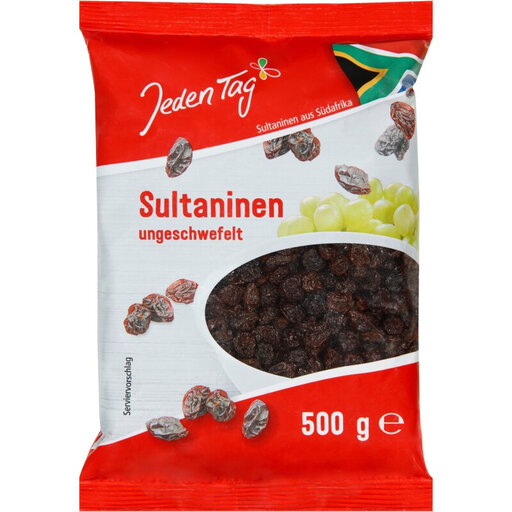 No image available
These sultanas are intended as a fruit ingredient for muesli, yoghurt or baking.
The pack contains 500 g. If you prefer a short ingredients list, check the label and follow the storage instructions after opening.
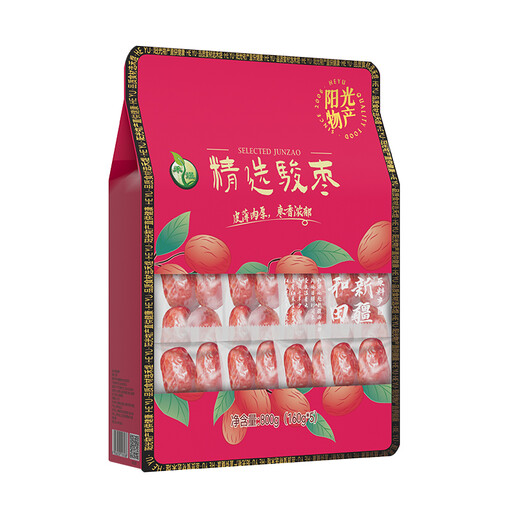 No image available
These jujubes are intended as a fruit ingredient in cooked dishes such as porridge or soup.
The 800 g is divided into five bags of 160 g each. The product description says to wash thoroughly and cook fully before eating; do not eat raw.
It’s best to count dried fruit as a fruit ingredient. EDEKA24 lists 2.2 g of protein per 100 g for Alnatura dried apricots and 7.6 g per 100 g for KoRo freeze-dried strawberry slices. Check the figures for the specific product and choose the meal’s protein source separately.
A larger pack is most suitable if you use the fruit regularly and can store and use it up after opening, following the pack instructions. As well as checking the pack weight, see whether the product is divided into smaller bags.
No. The absence of added sugar doesn’t mean the fruit is sugar-free. Check the sugar per 100 g in the nutrition information. The German Nutrition Society and the Federal Office for Agriculture and Food also point out that dried fruit contains more sugar than fresh fruit.
Check the ingredients list, highlighted allergen information and possible trace warnings on the specific pack. If you need to avoid sulphur dioxide or sulphites, the labelling on the product you choose is essential.
No. Solevita isn’t a like-for-like dried fruit brand in this comparison. Lidl describes Solevita as a range of fruit juices, nectars, spritzers and tea drinks.