Families who regularly stock up
If you pack small portions of fruit on several school days, a larger pack can be divided up easily. The key is whether your child will actually eat the variety you choose and whether you’ll use it up in time.


For packed lunches made regularly, a larger pack makes sense if your child likes the variety and your household will use it before its best-before date. Check the ingredients, sugar content and allergens on the specific pack, and portion out small amounts; dried fruit should complement a packed lunch, not make up the whole thing.
If you pack small portions of fruit on several school days, a larger pack can be divided up easily. The key is whether your child will actually eat the variety you choose and whether you’ll use it up in time.
If certain ingredients or allergens are a concern, check the ingredients list, highlighted allergens and any ‘may contain’ warnings on the current pack before each purchase. Lebensmittelklarheit explains how allergens that must be declared are labelled.
A multipack is of little use if your child doesn’t like the texture or type of fruit. Soft prunes, dates and sultanas all feel different to eat, so choose a variety your child likes and that’s practical for a packed lunch.
When buying dried fruit for regular school packed lunches, consider how much you’ll use, the information on the pack and your child’s preferences together. The overview below groups the buying decision by your main priority.
| Priority | What to check when buying | Who it matters to |
|---|---|---|
| Pack size | Compare the net quantity and best-before date with how quickly you usually use the product. | If I pack a small portion several times a week, I want to use up the pack before its best-before date. This is the main priority for around 36% of consumers. |
| Ingredients and allergens | Check the ingredients list, sugar content per 100 g, allergens and ‘may contain’ warnings. | If I’m checking ingredients or allergens, I need to know what’s in the specific pack; a short ingredients list alone won’t answer every question. This is the main buying priority for around 29% of consumers. |
| Acceptance and portions | Choose a type and texture your child likes, and pack their lunch portion separately. | If my child won’t eat a particular variety, even a well-planned stock-up is no use. That’s why around 21% of consumers put child-friendly choices first for school packed lunches. |
| Variety | Check the ingredients and product form separately for each new type of fruit. | I want to switch between different fruits and textures without stocking up on a new variety before checking it. This variety is the main priority for around 14% of consumers. |
Dried fruit contains natural sugars, even when no sugar has been added. Verbraucherzentrale points out that dried fruit contributes to a food’s sugar content.
As well as checking the ingredients list, read the sugar content per 100 g in the nutrition information and portion out an amount for the packed lunch in advance.
Products in the same category can differ in their ingredients and allergen information. If allergens are a concern, the description ‘dried fruit’ alone isn’t enough to help you choose.
Whenever you buy it again, check the current pack, including the ingredients list, highlighted allergens and any ‘may contain’ warnings.
A large pack makes it easier to portion out fruit regularly, but that doesn’t make dried fruit a complete packed lunch. According to Verbraucherzentrale, sweet, sticky snacks are less good for teeth.
Use dried fruit as a small part of the packed lunch, and choose the other foods to suit your child and any school rules.
ALDI SÜD sells 500 g packs of sultanas under this own-brand label.
EDEKA sells 500 g packs of sultanas and pitted prunes under this own-brand label.
REWE’s own brand offers pitted prunes in a 500 g pack.
Seeberger sells a range of dried fruit, including sultanas, dates and pitted prunes.
This selection includes larger packs and individually portioned red dates, jujubes, sultanas and prunes. For school packed lunches, the type of fruit, whether it contains stones and the information on the individual pack all matter, as well as pack size.
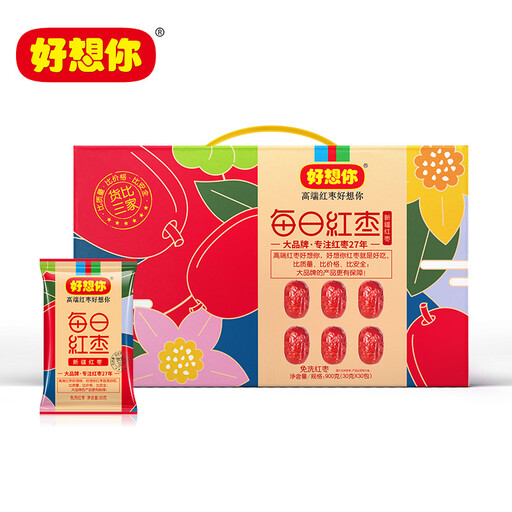 No image available
The 30 individual portions are easy to pack for regular school lunches. According to the product description, the dates contain stones; check they’re suitable for your child before packing them.
 No image available
These pitted dates are an alternative for families who want to pack a different type of fruit as well as sultanas. Check the pack labelling for ingredients and sugar content.
 No image available
This 500 g pack may suit households that want to pack small portions of jujubes regularly. Check the fruit itself and the pack information before portioning it out.
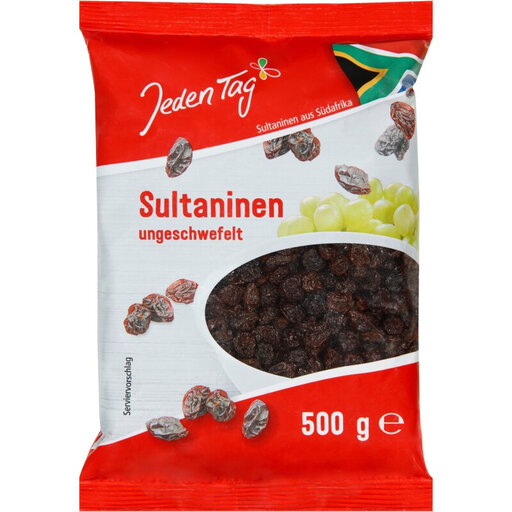 No image available
The 500 g pack suits households that regularly portion out sultanas for packed lunches. The product description warns of a possible choking hazard for younger children and recommends supervision; take your child’s age and abilities into account.
 No image available
These soft prunes have a different texture from sultanas. Despite being labelled ‘pitted’, the product description says that fragments of stones may still be present; check the fruit before packing it.
No, the fruit still contains natural sugars. Verbraucherzentrale points out that dried fruit contributes to sugar content too. So, if you’re comparing products, check the sugar content per 100 g in the nutrition information.
Check the ingredients list, highlighted allergens and any ‘may contain’ warnings for the specific product. Lebensmittelklarheit explains that allergens which must be declared have to be listed on packaged foods. If you have a known allergy, follow advice from your healthcare professional.
Follow the storage instructions on the individual pack, and reseal the remaining fruit after portioning out what you need for a packed lunch. For ja! prunes, REWE recommends storing them in a dry place away from heat; other products may have different instructions.
Not simply because they’re crunchy. According to Verbraucherzentrale, removing the water makes the sugar and calories more concentrated per 100 g. Choose according to your child’s preferences, and check the ingredients and nutrition information on the specific pack.