Parents with a specific protein target
If protein is meant to be the main feature of your snack, dried fruit is better viewed as the fruit component. Check the nutritional information of the specific product to assess its additional protein source.


Plain dried fruit is a handy way to add fruit to a quick snack, but it is not a convincing choice if protein is the priority for new parents. The examples considered from EDEKA, ALDI SÜD and REWE contain 1.5 to 2.8 g of protein per 100 g. If you’re specifically looking for protein, choose an additional protein source by checking its nutritional information, or consider a product labelled accordingly outside the dried fruit category.
If protein is meant to be the main feature of your snack, dried fruit is better viewed as the fruit component. Check the nutritional information of the specific product to assess its additional protein source.
Dried fruit is easy to keep handy for a quick bite. The German Nutrition Society and the Federal Centre for Nutrition stress the importance of a regular, varied diet while breastfeeding; one snack cannot replace this.
If you need to avoid certain additives or allergens, check the ingredients list and labelling on the individual pack. The type of fruit and brand name alone won’t tell you enough.
If protein is to be the main feature of your snack, start by comparing the nutritional information for the combination you have in mind. Then consider the ingredients, portion size and convenience when choosing a dried fruit to go with it.
| Criterion | What to check | Who it matters to |
|---|---|---|
| Protein | Compare protein per 100 g and per portion; if you have a protein target, check the additional component too. | If protein is a priority, don’t assume a snack is high in protein just because it contains dried fruit. This protein target would be the priority for around 33% of shoppers. |
| Ingredients and tolerances | Read the ingredients list and allergen labelling on the specific pack, especially for mixes. | If you need to avoid sulphur dioxide or certain nuts, make sure you know exactly what’s in the variety you choose. Ingredients and tolerances would be the most important criterion for around 27% of shoppers. |
| Convenience | Check the pack size and whether it can be resealed for the way you plan to use it. | When you’re juggling the demands of a newborn, you’ll want a snack you can grab without any preparation. Around 20% of shoppers would put convenience first. |
| Portion and sweetness | Compare sugar and energy per 100 g and per portion; check the ingredients of sweetened varieties too. | If you eat dried fruit throughout the day, you may want to keep an eye on portion size and its concentrated sweetness. This would be the main concern for around 20% of shoppers. |
The fruit content doesn’t automatically make dried fruit a high-protein snack. According to EDEKA, ALDI SÜD and REWE, the raisins, apricots, prunes and mixed dried fruit products considered here contain 1.5 to 2.8 g of protein per 100 g.
Compare the protein content per portion you plan to eat. Under EU Regulation (EC) No 1924/2006, a product can only be labelled as a “source of protein” if at least 12% of its energy value comes from protein; the grams alone don’t answer this question.
Dried fruit with no added sugar still contains sugar from the fruit. The Federal Centre for Nutrition points out that sugar and energy are concentrated in dried fruit.
Check the nutritional information for the portion size you want, and look at the ingredients list too if you’re considering sweetened varieties.
Recipes vary: EDEKA lists potassium sorbate and sulphur dioxide in one specific mixed dried fruit product. ALDI SÜD notes that the nutritional values of certain dried fruit products may vary depending on the supplier.
Check the information on the pack you intend to buy, especially if you need to avoid certain ingredients or allergens.
Lidl Germany presents Solevita as a brand of fruit juices and drinks. Lidl’s brand for nuts and dried fruit is Alesto.
Look for the specific product type and check its ingredients, rather than assuming the brand offers a range of dried fruit.
Seeberger offers a range of dried fruit, including dates, apricots and mangoes.
REWE sells dried fruit and seeds, as well as a separate PWR range of protein bars and protein powder.
The brand includes mixed dried fruit products intended as fruit snacks.
Lidl Germany sells nuts and dried fruit under the Alesto brand.
ALDI SÜD offers dried fruit such as apricots and prunes under these own-label brands.
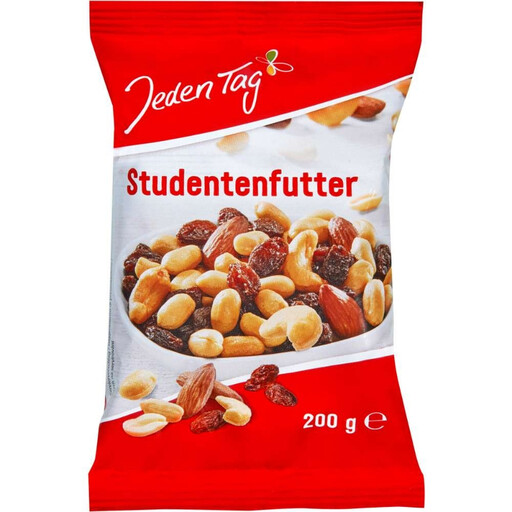
This selection is for a ready-to-eat snack combining raisins and nuts, rather than plain dried fruit. If protein is important to you, compare the nutritional information and the portion you plan to eat on the specific pack.
 No image available
A ready-to-eat snack with raisins and nuts, for when you want more than just dried fruit.
Pack size: 200 g. Before buying, check the protein content per portion, as well as the ingredients and allergen labelling.
Don’t assume plain dried fruit is a high-protein snack just because of the product type. The examples considered here from EDEKA, ALDI SÜD and REWE contain 1.5 to 2.8 g of protein per 100 g; if you have a specific protein target, look at the nutritional values for the whole snack combination and the portion you plan to eat.
Dried fruit can be one fruit component in a varied diet. The German Nutrition Society and the Federal Centre for Nutrition emphasise the importance of regular, varied meals for breastfeeding parents; one snack cannot meet all your needs on its own.
Check the ingredients list and labelling on the specific pack. The sugar value in the nutritional information includes naturally occurring fruit sugars too; you can’t tell from this alone whether sugar has been added or sulphur dioxide has been used.