What should you look for when buying?
When stocking the office, first establish which substances need to be avoided. You can then compare ingredient preferences and pack formats in a more informed way.
| Criteria |
What to check when buying |
Who it matters to |
| Allergens and sulphites |
Check the ingredients, highlighted allergens and any trace warnings on the specific pack. If necessary, also look for information about sulphur dioxide and sulphites. |
When I’m buying snacks for colleagues who need to avoid a particular substance, the label must address that specific requirement. Around 50% of consumers put this allergen and sulphite check first. |
| Ingredients and added sugar |
Check the ingredients list for added sugar and other ingredients; consider the “of which sugars” figure in the nutrition information separately. |
For my desk stash, I want a clear recipe with no added sugar, without confusing that with being sugar-free. Around 30% of consumers prioritise this question about ingredients. |
| Office supplies |
Compare fruit types and pack sizes; for shared snacks, look for clear labelling that makes each product easy to identify. |
For meetings and the shared kitchen, I want to choose packs whose contents are easy to identify. Around 20% of consumers focus on this kind of stock planning. |
Brands to help guide your search
The ranges below can help you find dried fruit. Whether a particular option meets a specific allergen requirement depends on its labelling.
Seeberger
Seeberger offers dried fruit, including an apricot option specifically labelled as unsulphured.
- The brand distinguishes product lines such as “Pure Dried Fruit” and “Apricots – Unsulphured”.
- Seeberger’s claim that many dried fruits contain no added sugar doesn’t automatically apply to every variety. Check the ingredients and allergen information on each pack.
EDEKA
EDEKA24 lists a range of dried fruits, including apricots, currants, mango and dates.
- You can compare different fruit types when choosing supplies for the office.
- A range category doesn’t mean that every product in it has the same recipe or allergen labelling.
ALDI SÜD: FARMER NATURALS und NATURLIEBLINGE
ALDI SÜD provides product information for FARMER NATURALS prunes and NATURLIEBLINGE dates.
- The listed products show different fruit types and pack sizes, making it easier to compare quantities.
- Information about individual products doesn’t mean these brands are generally suitable for a “free from” diet; the labelling on each option is what matters.
Dried fruit for office snacking at Joybuy
This selection includes individual dried fruit varieties in different pack sizes. If a particular allergen or sulphites need to be avoided in the office, check the label on each pack before choosing; the fruit type or a short product name isn’t enough.
 No image available
Seeberger Pitted Deglet Nour Dates, 500 g
A single fruit variety may suit you if you want to check the ingredients carefully for your office supplies. This option is a 500 g pack of pitted Deglet Nour dates.
If you have a specific allergen requirement, the information on the current pack – including any trace warnings – is what matters.
View at Joybuy
 No image available
Haoxiangni Grade 2 Fresh-Locked Pitted Red Dates Original Flavour, 280 g
This pitted option may suit you as a single-fruit office snack, and the pack contains 280 g. Check the current packaging to see whether it meets your ingredient preferences.
A general allergen claim doesn’t tell you whether there may be traces. So check the label for the substance you need to avoid.
View at Joybuy
 No image available
Changsi Dried Red Dates, 500 g
The 500 g pack is an option if you’re looking for a single fruit variety for the office. The product title says Red Dates, while the description says Golden Jujube; check the exact fruit name on the packaging.
For specific allergen requirements, check the current ingredients and trace information here too.
View at Joybuy
 No image available
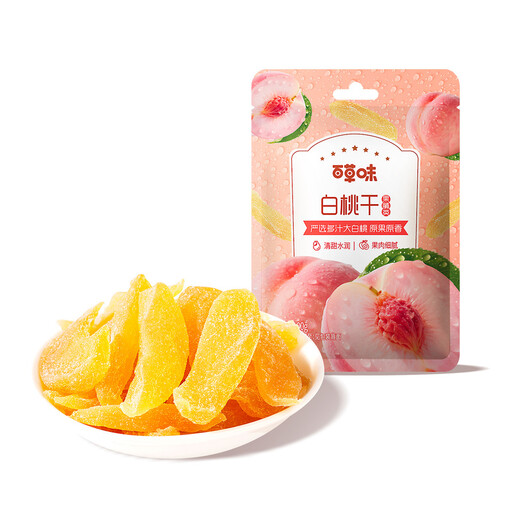
Be&Cheery Dried White Peach, 100 g
This 100 g pack contains dried white peach for a fruity snack. Sugar is listed as an ingredient in this option, so it won’t suit you if you’re looking for dried fruit with no added sugar.
If you need to avoid allergens, check the current pack labelling, including any trace warnings.
View at Joybuy
Frequently asked questions
Is unsulphured dried fruit automatically allergen-free?
No. “Unsulphured” refers to sulphur treatment, not all allergens or possible traces. Check the ingredients and labelling on the specific pack for the substance that needs to be avoided.
What sulphite information matters on packaged dried fruit?
Under EU Food Information Regulation (EU) No 1169/2011, sulphur dioxide and sulphites are among the substances listed in Annex II that must be labelled when present at concentrations above 10 mg/kg or 10 mg/l. If sulphites matter to your choice, check the information on the specific pack; the term “dried fruit” alone doesn’t tell you.
What does “May contain traces of …” mean?
This warning indicates possible unintended presence, not a standard ingredient. According to the Allergy Information Service, there are no precise, uniform rules for this type of trace labelling. If you have a relevant allergy, you therefore can’t determine whether a product is suitable for you from a general product name or a “free from” claim.
Is dried fruit with no added sugar sugar-free?
No. Dried fruit can contain naturally occurring sugars even without added sugar. If this distinction matters to you, check both the ingredients list and the “of which sugars” figure in the nutrition information.
How can you make sure ingredients in a shared snack cupboard are identifiable?
Store dried fruit according to the instructions on the pack and make sure the labelling for every option is accessible. Keeping packs separate and clearly labelled makes it easier to identify what’s what; with open bowls of mixed snacks, it’s harder to tell which ingredients and potential cross-contact risks relate to each snack.


