What should you look for when buying?
First decide whether you want dried fruit simply to provide a sweet fruit component, or whether you’ll also include a source of protein in your break. Then compare the ingredients, nutritional values and practicality of the specific pack.
| What matters to you |
What to check |
Who it matters to |
| Protein in your break |
Check the protein per 100 g and per planned portion; assess any additional source of protein separately. |
After a workout, I want to know how much protein my whole break contains, rather than relying on the fruit alone. For around 36% of consumers, protein is the top priority. |
| Sugar and ingredients |
Distinguish sugar as an ingredient from the “of which sugars” figure; check for sulphur dioxide if relevant. |
With sweetened berries or fruit mixes, I want to know what has been added to the fruit. Ingredients are the main concern for around 29% of consumers. |
| Practicality at the office |
Compare portion size, texture and storage instructions after opening. |
For my desk break, I need fruit that’s easy to take with me and eat in the amount I want. Around 21% of consumers put this practical question first. |
| Easy to buy again |
Check the pack size and preferred variety at your chosen retailer. |
If I regularly prepare a lunchbox, I want to be able to buy a suitable variety again without having to search around. This is the top priority for around 14% of consumers. |
Dried fruit as part of your fruit intake at Joybuy
These dried fruits could make a sweet fruit addition to your office break. If protein is a priority for you, include a separate source of protein and check the information on the relevant pack.
 No image available
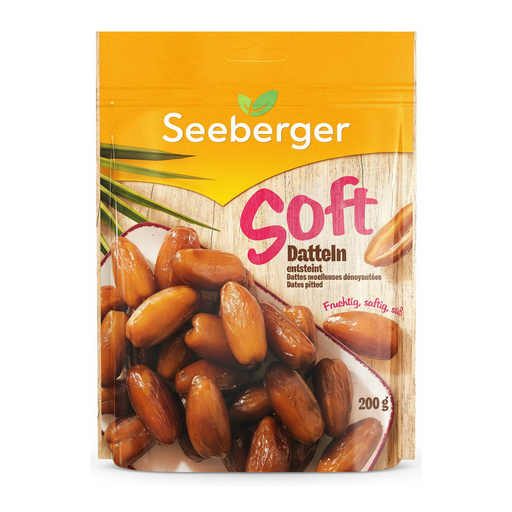
Seeberger Soft Deglet Nour Dates 200 g
A soft date variety to add fruit to your office break. The pack contains 200 g; check the label for ingredients and nutritional values based on the portion you plan to eat.
View at Joybuy
 No image available
Changsi Dried Red Dates 500 g
Dried red dates as a fruit component if you’re looking for a larger pack to last for several breaks. The pack contains 500 g; check the ingredients, nutritional values and storage instructions for this specific product.
View at Joybuy
 No image available
PHILIPPINE BRAND Dried Mango 100 g
Dried mango for a fruit portion during your office break. The pack contains 100 g; if you want to avoid added sugar or sulphites, check the ingredients and allergen information before choosing.
View at Joybuy
Frequently asked questions
Are dried fruits on their own a high-protein choice for a lunchbox?
The plain dried fruits covered here shouldn’t be your only choice if you have a protein target. REWE lists 2.3 g of protein per 100 g for its Medjool dates, while ALDI SÜD lists 2.2 g per 100 g for one dried mango product. Consider your whole break and add a separate source of protein if needed.
How can you include dried fruit in a protein-focused office break?
Use dried fruit as the fruit component and add a separate item whose protein content fits your plan. The German Nutrition Society gives fruit with yoghurt or muesli as an example of a snack; if you’re preparing your break in advance, check the storage instructions for the foods you choose too.
Does “no added sugar” mean dried fruit is low in sugar?
No, the claim doesn’t tell you the total amount of sugar. REWE lists 67 g of sugar per 100 g for its Medjool dates. Read the ingredients list alongside the “of which sugars” figure in the nutritional information, and take your portion into account.
How can I spot sulphur dioxide or sulphites in dried fruit?
Check the ingredients and allergen information on the specific pack rather than relying on the colour or brand. For example, EDEKA lists sulphur dioxide for one of its Herzstücke mixed fruit products; you can’t assume that other varieties have the same ingredients.
How should I store dried fruit for an office break?
Follow the storage instructions on the specific pack and reseal it as directed after opening. For easy transport, pack the portion you want separately in advance.


