People who regularly keep snacks at the office
If dried fruit is often eaten at your desk or in the shared kitchen, think about whether the pack can be stored properly before and after opening, and whether you’ll finish it all.


A large pack of dried fruit can work well as an office staple if it’s used regularly and stored appropriately once opened. For sharing, it’s also important to have a clear ingredients list, the ‘of which sugars’ figure per 100 g, and a way to portion it out that keeps the product information accessible to everyone.
If dried fruit is often eaten at your desk or in the shared kitchen, think about whether the pack can be stored properly before and after opening, and whether you’ll finish it all.
If you want to choose between fruit types and recipes, check the ingredients list and the ‘of which sugars’ figure per 100 g. The North Rhine-Westphalia Consumer Advice Centre points out that dried fruit can be high in sugar.
If a pack is being shared, keep the ingredients, allergen and ‘may contain’ information accessible where the snacks are served. This is especially important if anyone needs to avoid certain ingredients or sulphites.
First, work out how much dried fruit is actually eaten at the office. Then consider the ingredients and product information, as well as how it will be served, to find a pack that works in everyday use.
| Criterion | What to check when buying | Who it matters most to |
|---|---|---|
| Pack size and how quickly it will be used | Pack weight and storage instructions; if the pack has been opened, consider how soon it should be used. | If I eat dried fruit regularly at the office, I don’t want to open a pack that will be left unfinished. For around 42% of consumers, regular consumption is the main factor when choosing. |
| Ingredients and sugar | Ingredients list, ‘of which sugars’ per 100 g, and any information about sulphur dioxide or sulphites. | When choosing a snack, I want to know what it contains besides fruit and how its sugar content is shown. Around 33% of consumers prioritise this information. |
| Sharing with the team | Portion format and accessible ingredients, allergen and ‘may contain’ information after opening. | If several people will be helping themselves, they should be able to check the product information before eating. Around 25% of consumers put this need first. |
An office supply is only practical if it’s stored properly and used up. For Seeberger mango strips, for example, REWE advises keeping them away from heat and moisture.
Before buying, think about who will use the pack and where it will be kept once opened. Follow the storage instructions for the specific product.
Information about added sugar doesn’t tell you the total sugar content. According to the North Rhine-Westphalia Consumer Advice Centre, dried fruit can be high in sugar.
Check the ‘of which sugars’ figure per 100 g and consider how much of the pack will be eaten at a time.
Without the original packaging, colleagues may no longer be able to check the ingredients, allergen or ‘may contain’ information.
Keep the pack where the snacks are served, or copy all the information onto the storage container. If you know of any intolerances, always check the information on the specific product.
Seeberger offers dried fruit in a range of pack sizes. Its selection includes mango, dates, figs, prunes and sultanas.
REWE sells dried fruit under own-label brands such as ja!, REWE Bio and REWE Beste Wahl, as well as from other brands.
EDEKA publishes ingredients and nutritional information for some dried fruit products. Its Gut & Günstig sultanas contain 99.5% sultanas and sunflower oil.
Lidl’s Alesto range includes nuts and dried fruit, including mango strips.
ALDI SÜD offers FARMER NATURALS prunes in a 500-g pack. ALDI Nord’s TRADER JOE'S range includes dried fruit and a nut and fruit mix in individual portions.
This selection includes portioned dates and larger packs of jujubes, prunes and sultanas. For everyday office use, consider not just the type of fruit, but also the portion format and the instructions for storing the pack once opened.
 No image available
The 30 portion packs are easy to split up for individual office snacks. The dates are described as whole fruits with stones, so take care when eating them.
 No image available
The 500-g pack could suit a regularly used office supply. According to the product information, the contents should be used immediately after opening, so bear this in mind if you’re planning to use it over several days at the office.
 No image available
The 500-g pack makes a handy store cupboard option if prunes are eaten regularly at the office. The product information warns that, despite being described as ‘pitted’, stones or pieces of stone may still be present.
 No image available
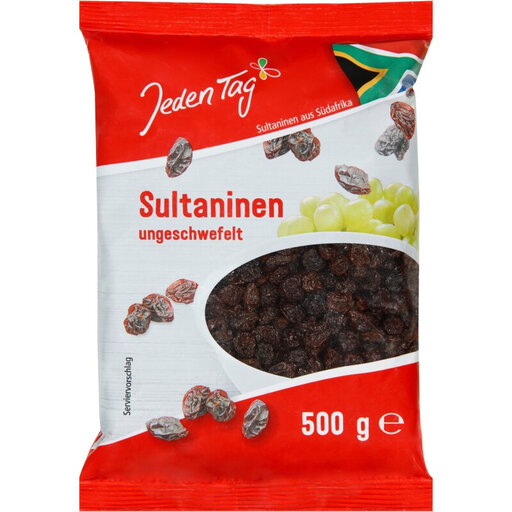
The 500-g pack is a good fit for a regular office snack if the sultanas are used soon after opening. According to the product information, the pack should then be sealed airtight and used within a few weeks.
A 500-g pack is most practical when the fruit is eaten regularly and the opened pack is stored according to its instructions. Before buying, check that you have a suitable place to keep it and that you’ll be able to use it within the time specified for that product.
No. Information about added sugar doesn’t tell you the total sugar content. Dried fruit contains naturally occurring sugars, so the ‘of which sugars’ figure per 100 g is the one to use when comparing products.
Before serving dried fruit for everyone to share, check the ingredients, allergen and ‘may contain’ information on the specific pack. The Federal Ministry of Agriculture, Food and Home Affairs explains allergen labelling on packaged foods; for sulphites, always refer to the information on the product you’ve chosen.
Keep the original pack beside the storage container, or copy all the information across. Follow the product’s storage instructions too; for Seeberger mango strips, for example, REWE advises keeping them away from heat and moisture.