Snack buyers comparing calories
You want to order dried fruit and compare different pack sizes using the energy value per 100 g. You also want to distinguish plain dried fruit from coated fruit snacks.


If you’re ordering dried fruit online for a calorie-conscious snack, start by comparing the energy values per 100 g, then check the ingredients and sugar information. In the examples listed by REWE and EDEKA, soft prunes and soft apricots contain between 230 and 239 kcal per 100 g, while chocolate-coated apple rings contain 412 kcal per 100 g. This is a comparison of individual products, not a ranking of entire fruit categories. ‘No added sugar’ does not mean sugar-free or automatically low in calories.
You want to order dried fruit and compare different pack sizes using the energy value per 100 g. You also want to distinguish plain dried fruit from coated fruit snacks.
You check for added sugar and read the ingredients list, but you also want to know how much sugar and energy the finished product contains per 100 g.
You’re planning a food shop and checking whether the pack size, availability and storage advice suit your needs. When your order arrives, you compare the details with the packaging.
When comparing dried fruit, first check the nutritional values using the same basis. Then look at the ingredients and pack details for the item you actually want to order.
| What matters | What to check when buying | Who it matters most to |
|---|---|---|
| Comparing energy values | Compare kcal per 100 g and distinguish plain dried fruit from coated products. Pack size alone won’t show you how the energy values differ. | When I’m planning to have dried fruit as a snack, I want to compare the energy values of different packs on a like-for-like basis. For around 50% of consumers, this is their main consideration. |
| Sugar and ingredients | Read the ingredients list and check the sugar value per 100 g. If needed, also check the allergen information on the specific pack. | I want to know whether sugar has been added, without overlooking the sugar that occurs naturally. Around 30% of consumers focus mainly on ingredients and sugar information. |
| Ordering and storage | Check the delivery location, pack size and product-specific storage instructions. When your order arrives, compare the details with the label. | I need the pack to suit my order and how I plan to use it. For around 20% of consumers, this practical consideration takes priority. |
This claim refers to added sugar, not the sugar naturally present in the fruit. On its own, it also doesn’t tell you whether the product is low in calories.
Use it as a guide to the ingredients, and also compare the sugar and energy values per 100 g in the nutrition information.
Among the individual products listed by REWE, chocolate-coated apple rings contain 412 kcal per 100 g, while Seeberger Soft Prunes contain 230 kcal per 100 g. The fruit and recipes are different, so these figures don’t establish a general ranking for dried fruit.
If the energy value matters to you, check the coating and ingredients list before comparing products by their fruit name.
According to Verbraucherzentrale, removing the water concentrates the sugar and calories per 100 g. A crisp texture doesn’t mean a low energy value.
Choose the product type for the texture you prefer, and check the nutrition information per 100 g to compare energy values.
REWE displays information based on the selected location. For the products described, EDEKA notes that availability can vary between stores and packaging information may differ.
Before ordering, check the location, product and pack size. When your order arrives, compare the ingredients, nutritional values and storage instructions with what you’re looking for.
Seeberger offers products including soft prunes and dried apple rings. When choosing, the specific product type matters more than the brand name alone.
REWE’s online range includes various dried fruits, freeze-dried fruits and coated fruit snacks.
EDEKA stocks its own dried fruit products, including organic soft apricots and pitted dried prunes.
This selection includes soft dried prunes in three pack sizes, Deglet Nour dates and a dried fruit mix. For a calorie-conscious comparison, check the latest nutrition information per 100 g for each option. Ingredients and pack size may also influence your decision.
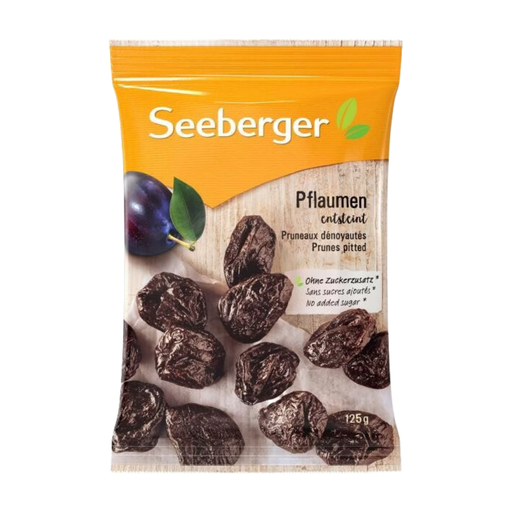 No image available
The 125 g pack is worth considering if you’d like to order a smaller amount of soft, pitted prunes.
Check the latest ingredients list carefully: the product information gives conflicting details about the preservative potassium sorbate.
 No image available
This 500 g option could suit you if you’re looking for a larger pack of soft dried prunes and have checked the storage instructions in advance.
According to the product description, stone fragments may still be present despite the prunes being pitted.
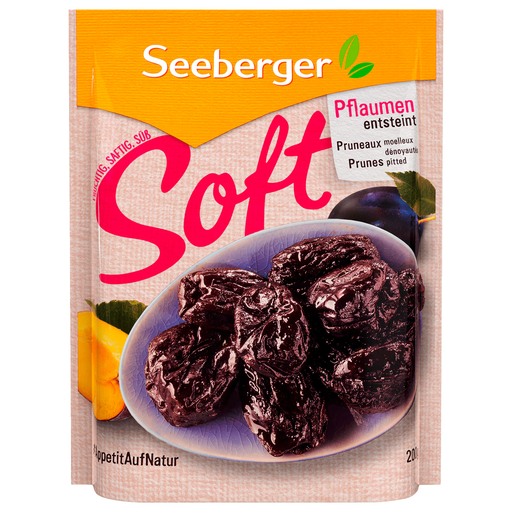 No image available
The 200 g pack is another option if you enjoy soft, pitted prunes as a snack.
For this Seeberger product, REWE lists 230 kcal and 28 g of sugar per 100 g. The claim ‘no added sugar’ doesn’t mean the prunes are sugar-free.
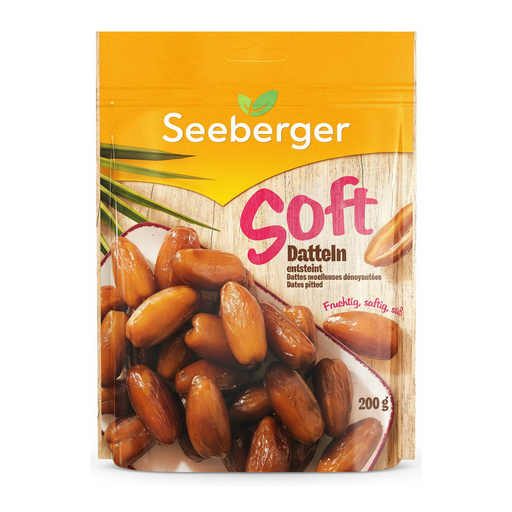 No image available
If you prefer dates to prunes, this 200 g option is made with the Deglet Nour variety.
Compare the energy and sugar values per 100 g with those of the prunes, rather than assuming the nutritional values from the type of fruit or a claim about added sugar.
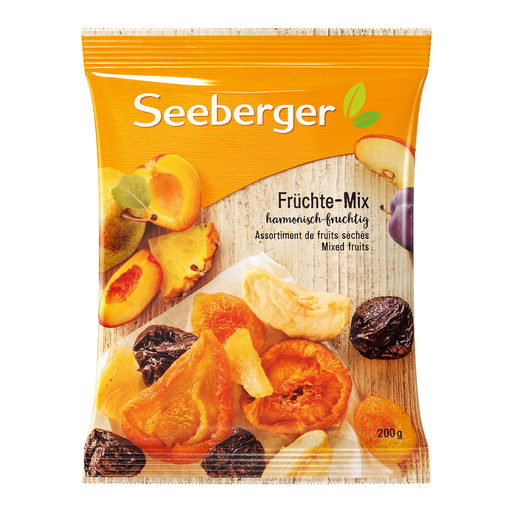 No image available
This 200 g mix is worth considering if you’d like several types of dried fruit in one pack.
For this option, pay particular attention to the latest information about sugar and sulphites, as well as the nutritional values per 100 g.
No. ‘No added sugar’ doesn’t mean sugar-free, as the fruit’s natural sugar is still there. The energy and sugar values per 100 g are also important when choosing.
Not necessarily. According to Verbraucherzentrale, removing the water concentrates the sugar and calories per 100 g. If you enjoy its crisp texture, still compare the nutritional values with those of other products.
Before ordering, read the ingredients and allergen information for the specific product, then check the packaging when it arrives. The products listed by REWE show why this matters: Farmer's Snack Pflaume lists dried, pitted prunes as an ingredient; the ingredients list for chocolate-coated apple rings includes sugar and milk ingredients, as well as soya and sulphur dioxide.
Check the delivery location you’ve selected and the details for the specific product. REWE displays information that depends on your location. For the products described, EDEKA notes that availability may vary by store and that online information may differ from the packaging. So, when your order arrives, check the pack against your requirements for ingredients, nutritional values and storage.