Who should pay particular attention to pack information?

Families avoiding a specific allergen

If nuts, milk, gluten or sulphites need to be avoided, it’s the labelling on the pack you choose that matters, not the general description ‘dried fruit’. Germany’s Federal Ministry of Agriculture, Food and Regional Identity lists 14 major allergens that must be declared, including sulphur dioxide and sulphites.

Parents looking to avoid added sugar

A snack with no added sugar can still contain naturally occurring sugars. The Verbraucherzentrale (German consumer advice centre) distinguishes between ‘no added sugar’ and ‘sugar-free’; the ‘of which sugars’ figure in the nutritional information is also useful for comparisons.

Families looking for an easy snack

For after school, portion size and texture can make all the difference. Traditional dried fruit and crunchy freeze-dried fruit offer different textures, so check the ingredients and portion size for both.

What should you look for when buying?

First, identify the ingredient you want to avoid. Then compare sugar information, snack format and pack size to find an option that suits your after-school routine.

What matters to you What to check when buying Who it matters most to
Allergens and sulphites Ingredients, highlighted allergens and any ‘may contain’ statements on the pack; check for ‘unsulphured’ if needed. If I need to avoid a particular ingredient, I need information about the exact variety I’ve chosen, rather than a general ‘free from’ claim. Around 36% of consumers put this specific exclusion first.
Added sugar The ingredients list and the ‘of which sugars’ figure per 100 g and, if provided, per portion. For a snack with no added sugar, I want to know what has been added without overlooking the naturally occurring sugars. This is the main concern for around 29% of consumers.
Snack format and portion Soft or crunchy fruit, pack size and whether the portion is suitable for how you plan to eat it. After school, the snack should be ready to eat and have a texture that works for you. Around 21% of consumers prioritise this everyday practicality.
Availability and pack size Whether the variety you want is available where you shop, and whether the pack size suits how you plan to use it. If I want to pack a snack regularly, my chosen variety needs to be easy to find and the pack needs to suit how quickly we’ll use it. Around 14% of consumers prioritise this practical choice.

Which common misconceptions can make choosing harder?

  • Assuming a general ‘free from’ claim is enough

    Unsulphured apricots, a nut-free product and a snack with no added sugar meet different needs. None of these claims on its own confirms that a product is suitable for every allergy or intolerance.

    Before you buy, decide what needs to be avoided, then check the ingredients, highlighted allergens and any ‘may contain’ statements on the individual pack.

  • Confusing ‘no added sugar’ with ‘sugar-free’

    Dried fruit contains naturally occurring sugars. The Verbraucherzentrale also points out that removing water from freeze-dried fruit concentrates the sugar and calories per 100 g.

    As well as checking for added sugar, look at the ‘of which sugars’ figure in the nutritional information and the suggested portion size.

  • Assuming fruit mixes are always unsulphured

    EDEKA’s dried fruit mix lists sulphur dioxide as an ingredient and sulphur dioxide or sulphites in the allergen information. You can’t assume that other varieties have the same ingredients as a mix.

    If you need to avoid sulphites, check the current pack of the specific mix or the variety explicitly labelled as unsulphured.

  • Relying on an online product page instead of checking the pack

    Information can vary between varieties and suppliers. ALDI SÜD notes that its apricots may come from different suppliers, while EDEKA warns that pack information may differ.

    Use product pages to help you shortlist options, but check the labelling on the current pack before making a decision that relates to an allergy.

Which brands offer useful pointers?

Seeberger

Seeberger offers both traditional and freeze-dried fruit. For an after-school snack, the specific variety matters more than the brand name.

  • The product page for its unsulphured apricots describes them as ‘unsulphured’ and ‘with no added sugar’.
  • Seeberger also sells sweetened fruit varieties; the information for its apricots does not apply to the entire range.

EDEKA Herzstücke

The ingredients and information for individual varieties and mixes in this own-brand dried fruit range can be compared.

  • The ingredients and allergen information are listed for its dried fruit mix.
  • This mix lists sulphur dioxide and sulphites. EDEKA also points out that the information on the pack is the one to follow.

REWE Bio / REWE Beste Wahl

The REWE range includes sultanas, apple crisps and freeze-dried strawberries from these own brands.

  • The different fruit formats give you a starting point for comparing ingredients and texture.
  • A range overview cannot confirm whether an individual variety is suitable for a specific allergen exclusion.

NATURLIEBLINGE – KLEINE SCHÄTZ (ALDI SÜD)

This own brand includes dried fruit such as apricots.

  • The apricot product page lists a pack size of 200 g and nutritional information.
  • ALDI SÜD notes that the product may come from different suppliers. For ingredients, allergens and nutritional values, check the information on the specific product.

Dried fruit for an after-school snack

These Joybuy products are individual types of dried fruit for an after-school snack. If you need to avoid specific ingredients or allergens, always check the information on the relevant pack.

Haoxiangni Grade 2 Fresh-Locked Original Flavour, pitted red jujube dates, 280 g

Haoxiangni Grade 2 Fresh-Locked Original Flavour, pitted red jujube dates, 280 g

An option if you’re looking for pitted jujube dates as a single-fruit snack after school. If you need to avoid a specific allergen, check the current pack, including any ‘may contain’ statements.

View on Joybuy

Seeberger pitted Deglet Nour dates, 500 g

Seeberger pitted Deglet Nour dates, 500 g

For families planning to serve pitted dates as a snack. If you need to avoid sulphites or other ingredients, compare the information on the current pack, including any ‘may contain’ statements, with your specific needs.

View on Joybuy
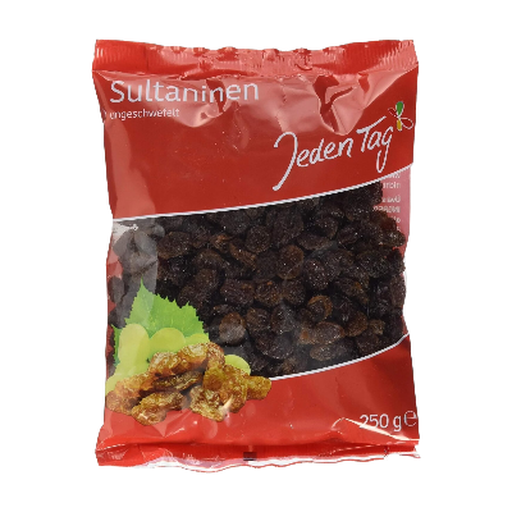
Jeden Tag sultanas, 250 g

Jeden Tag sultanas, 250 g

Sultanas are an option if you’re looking for a single-fruit snack to take with you. The product description warns that they may pose a choking hazard to young children, so check the warnings on the pack and make sure they’re suitable for the child’s age. If you need to avoid an allergen, the information on the current pack is important here too.

View on Joybuy

Frequently asked questions

Is dried fruit automatically free from allergens?

No. The type of fruit alone tells you nothing about all the ingredients or possible traces. For the specific ingredient you need to avoid, check the ingredients list, highlighted allergens and any ‘may contain’ statements on the pack you’ve chosen.

Do sulphur dioxide and sulphites have to be declared?

Yes. Germany’s Federal Ministry of Agriculture, Food and Regional Identity lists sulphur dioxide and sulphites among the major allergens that must be declared. If you need to avoid them, check the ingredients and allergen information for the specific dried fruit variety; ‘unsulphured’ on its own is no substitute for checking.

Is dried fruit with no added sugar sugar-free?

No. Dried fruit contains naturally occurring sugars, so ‘no added sugar’ means something different from ‘sugar-free’. If needed, compare the ‘of which sugars’ figure per 100 g with the portion you plan to serve.

When are freeze-dried fruits a good snack option?

Freeze-dried fruit is an option if you’re looking for a crunchy texture. The Verbraucherzentrale points out that removing water concentrates the sugar and calories per 100 g. So, as well as checking the ingredients and allergens, look at the nutritional information and portion size.