People who want to avoid sulphites
If you want to avoid sulphur-treated dried fruit at your picnic, ‘unsulphured’ is a useful first clue. The labelling on the pack you choose is what matters most.


For a picnic in the park, don’t choose dried fruit based solely on claims such as ‘unsulphured’ or ‘no added sugar’. Check the ingredients, allergen information and any ‘may contain’ warnings on the specific pack. A short ingredients list makes it easier to choose, but it doesn’t automatically answer questions about sulphites, other allergens or the fruit’s natural sugars.
If you want to avoid sulphur-treated dried fruit at your picnic, ‘unsulphured’ is a useful first clue. The labelling on the pack you choose is what matters most.
If you’re bringing dried fruit for yourself or someone else, check the declared allergens and any ‘may contain’ warnings. For example, EDEKA says its unsulphured sultanas may contain traces of peanuts and tree nuts.
If you don’t want sweetened fruit mixes, compare the ingredients lists. Dried fruit with no added sugar still contains the fruit’s natural sugars.
First, work out which ingredient or potential contact is most important to you. Then compare the ingredients list, allergen information and pack format for the dried fruit you’re considering.
| What matters to you | What to check when buying | Who it matters most to |
|---|---|---|
| Sulphites | Look for ‘unsulphured’ and check the ingredients for sulphur dioxide or sulphites. | If I want to avoid sulphur-treated dried fruit, I need clear labelling rather than judging by colour. This is the top priority for around 36% of consumers. |
| Peanuts and tree nuts | Read the allergen information and any ‘may contain’ warnings on the specific pack. | If I’m bringing snacks for someone with an allergy, I also need to consider possible traces. This is the main concern for around 29% of consumers. |
| Added sugar | Check the ingredients list for sugar and other sweetening ingredients; the nutrition information shows the total sugar content. | I want to avoid added sugar without assuming that ‘no added sugar’ means ‘low in sugar’. This is the top priority for around 21% of consumers. |
| Portability | Check the pack size, resealability and storage instructions against your picnic plans. | What matters most to me is being able to take the dried fruit along and store it easily. This takes priority for around 14% of consumers. |
The claim refers to sulphuring, not to all allergens or possible traces. EDEKA says its unsulphured sultanas may contain traces of peanuts and tree nuts.
If you have an allergy, check the ingredients, highlighted allergens and ‘may contain’ warnings on the specific pack.
A mix may contain other ingredients. The Seeberger fruit mix sold by REWE lists sugar, sodium metabisulphite and sulphur dioxide, among other ingredients.
Compare the full ingredients list if you want to avoid added sugar or sulphur-treated ingredients.
A no-added-sugar claim doesn’t tell you the total sugar content: the fruit’s natural sugars are still there.
Compare the nutrition information per 100 g for the variety you choose, and consider how much you plan to take with you.
Lidl describes Solevita as a brand of fruit drinks. For dried fruit, Lidl lists brands such as Alesto.
Look in the relevant snack category, then check the information for the individual product.
Seeberger offers individual dried fruit varieties and fruit mixes, among other products; ingredients vary by variety.
REWE sells dried fruit and seeds under its own product ranges, as well as from other brands.
The range includes unsulphured mango strips and sultanas, among other products.
Alesto is a Lidl brand offering nuts, dried fruit and snacks.
These dates and jujubes are dried fruit options for a picnic in the park. Check the labelling on the pack to decide whether it meets your requirements for sulphites, allergens or added sugar.
 Image unavailable
If you’re looking for pitted dates for your picnic, this 500-g pack is one option. Check the information on sulphites, allergens and possible traces on the specific pack.
 Image unavailable
The pitted red dates in this 280-g pack are another option for your picnic. Check the ingredients and information on sulphites, allergens and possible traces on the pack.
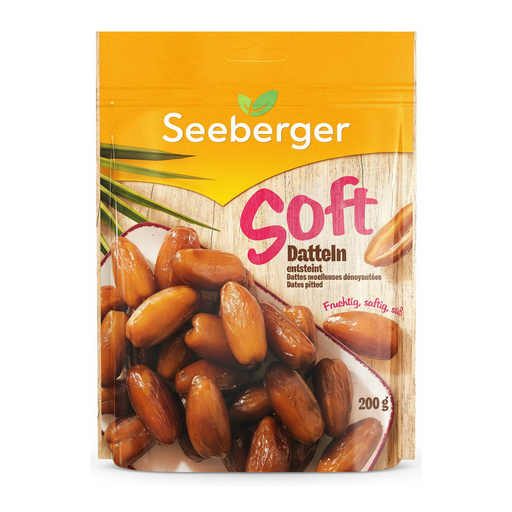 Image unavailable
If you’d like to take a 200-g pack of Deglet Nour dates with you, this variety is worth considering. Check the ingredients, sulphite information and possible allergen traces before choosing.
 Image unavailable
These jujubes are a 500-g option to take along on your picnic. As well as checking the ingredients and allergen information, read the storage instructions for after opening.
 Image unavailable
The dried red dates in this 500-g pack are another picnic option. Check the ingredients list and information on sulphites, allergens and possible traces to decide whether they meet your requirements.
No. ‘Unsulphured’ doesn’t tell you anything about other allergens or possible traces. For example, EDEKA says its unsulphured sultanas may contain traces of peanuts and tree nuts.
Check the ingredients list and allergen information on the pack for sulphur dioxide or sulphites. Don’t rely solely on the colour of the fruit or a general description of the range.
No. Dried fruit still contains the fruit’s natural sugars. If sugar content matters when you’re choosing, compare the nutrition information per 100 g and take your portion size into account.
Look for an explicit ‘gluten-free’ claim on the specific pack rather than assuming it is gluten-free simply because it is fruit-based. EU Implementing Regulation No. 828/2014 sets this claim at a gluten content of no more than 20 mg/kg when sold to the final consumer.
Follow the storage instructions on the pack you choose, and protect the dried fruit from heat and moisture. The unsulphured Seeberger apricots sold by REWE are listed as needing to be stored in suitably protected conditions.