What should you look for when buying?
Start by comparing nutritional information on the same basis: per 100 g. Then consider the ingredients, pack size and how you plan to use the fruit to decide which product suits your lunch.
| Criterion |
What to check |
Who it matters most to |
| Energy and portion size |
Compare kcal per 100 g and decide in advance how much you want to snack on. |
When I snack while working, I don’t want to decide how much to eat as I reach into the pack. Around 36% of consumers put energy and portion size first. |
| Sugar and ingredients |
Check the ‘of which sugars’ figure per 100 g alongside the ingredients list; the sugar figure alone doesn’t tell you whether sugar has been added. |
For my lunch, I want to know whether the product contains sweetening ingredients as well as fruit. Sugar and ingredients are the main consideration for around 29% of consumers. |
| Sulphur dioxide and sulphites |
Check the ingredients list and allergen information on the specific pack. |
If I need to avoid sulphites, the labelling determines whether a particular variety is suitable. This check is a priority for around 21% of consumers. |
| Texture and use |
Choose between fruit to eat on its own and a topping, and bear the pack size in mind. |
I might want something crunchy for my bowl, but prefer a different texture for eating on its own. Around 14% of consumers prioritise how they’ll use the fruit. |
Dried fruit at Joybuy
This selection includes dried plums, jujubes and apricots as additions to a work-from-home lunch. Before buying, compare the nutritional information and ingredients for each variety. The pack size can help you plan your snack portions.
 No image available
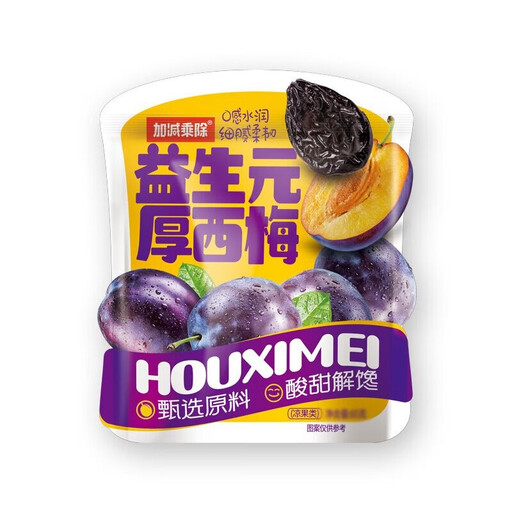
Jia Jian Cheng Chu Prebiotic Thickened Prunes, 65 g
Dried plums for anyone looking to include a 65 g pack in their lunch plans. Check the ingredients and nutritional information before deciding on a portion.
View at Joybuy
 No image available
Haoxiangni Grade A No-Wash Jujubes, 500 g
Dried jujubes for anyone who prefers a larger pack and wants to portion out their snacks. The pack contains 500 g; for a calorie comparison, check the nutritional information per 100 g.
View at Joybuy
 No image available
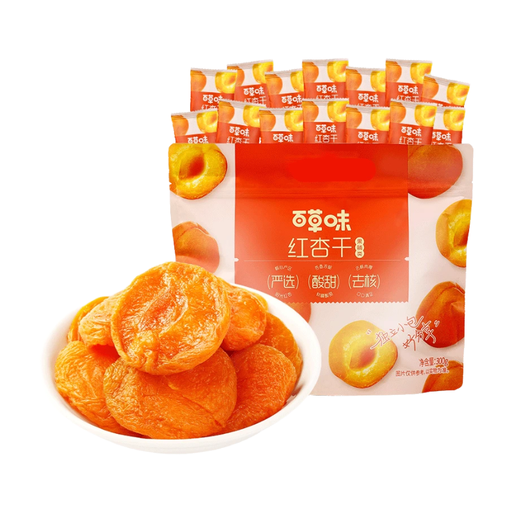
Be&Cheery Dried Red Apricots, 300 g
Dried apricots for anyone who would rather choose a single type of fruit than a mix. The pack contains 300 g; check the energy, sugar and ingredients for the specific variety, and portion out some for lunch if you wish.
View at Joybuy
Frequently asked questions
Are dried fruit products automatically low in calories because they’re made from fruit?
No. Removing the water concentrates the sugar and energy, so the German Nutrition Society recommends smaller portions than for fresh fruit. Compare the kcal per 100 g when choosing, and bear in mind how much you actually plan to eat.
Which of the products mentioned has the lowest energy value?
Of the four product examples mentioned, EDEKA Herzstücke mixed dried fruit has the lowest stated value, at 252 kcal per 100 g. EDEKA lists 263 kcal for its apricots and 294 kcal for GUT&GÜNSTIG dried plums; ALDI SÜD gives 319 kcal per 100 g for FARMER NATURALS pineapple. This ranking applies only to the varieties listed.
How can I spot added sweetening ingredients?
Check the ingredients list as well as the ‘of which sugars’ figure in the nutrition table. According to the Verbraucherzentrale (German consumer advice centre), the sugar figure includes the total sugar content; on its own, it doesn’t distinguish between naturally occurring and added sugar.
What should I check for sulphur dioxide and sulphites?
Check the ingredients list and allergen information on the specific pack of dried fruit. EDEKA explicitly lists sulphur dioxide and sulphites as allergens in its partially sulphur-treated mixed dried fruit and sulphur-treated apricots.
How should I plan dried fruit for a work-from-home lunch?
Portion out the amount you want in advance rather than eating straight from a larger pack while you work. The German Nutrition Society recommends smaller portions because dried fruit contains more sugar than fresh fruit. Whether you eat it on its own or add it to yoghurt or muesli can help you decide which texture to choose.


