Students focused on protein
If you’re planning supper around your training, choose a protein source first. Dried fruit can then add flavour without taking the place of that main ingredient.


Dried fruit can add a sweet touch to a student supper, but it shouldn’t replace the meal’s protein source. If protein is a priority around your training, plan your main protein ingredient first – for example, beans or a suitable dairy or soya product. Then choose dried fruit based on its ingredients, portion size and how you’ll use it.
If you’re planning supper around your training, choose a protein source first. Dried fruit can then add flavour without taking the place of that main ingredient.
If you’re buying ingredients for several meals, think about whether the pack size suits your needs and whether you’ll use it all. A small snack pack and a larger pack for several dishes serve different purposes.
You can add dried fruit to porridge, yoghurt or a savoury dish, for example. Depending on the product, added sugar and sulphur dioxide or sulphites on the ingredients list may affect your choice.
For a protein-focused supper, choose your main protein ingredient first. Then decide whether you want the dried fruit as an ingredient for several meals, a ready-to-eat snack or a topping.
| What to consider | What to check when buying | Who it matters most to |
|---|---|---|
| Protein source | Compare the protein per 100 g and per planned portion; choose the dish’s main protein ingredient separately. | If I’m eating after training, I don’t want dried fruit to replace my protein ingredient; this is likely to be a priority for around 34% of consumers. |
| Portion and pack size | Check that the pack size suits how you plan to use it across several meals. | On a tight food budget, I want to use a pack for later meals too; this is likely to be a priority for around 33% of consumers. |
| Ingredients and sugar | Check the ingredients list for added sugar and sulphur dioxide or sulphites; read the ‘of which sugars’ figure per 100 g in the nutrition information. | If I’m choosing between different fruit mixes, I want to know what else they contain besides fruit; this is likely to be the main concern for around 20% of consumers. |
| Use and texture | Decide whether you want a soft ingredient for a dish or a crunchy topping. | Between lectures and supper, I need something that fits into my meal without any preparation; ease of use is likely to come first for around 13% of consumers. |
Product information shows why protein should come first: ALDI Nord lists 1.85 g of protein per 100 g for dried dates, while EDEKA lists 2.7 g per 100 g for a dried fruit mix. These figures apply to the examples shown, not to all dried fruit. So for a protein-focused meal, it’s better to pair the fruit with another protein source than to rely on it alone.
The protein figures listed by ALDI Nord and EDEKA for dried dates and a dried fruit mix are 1.85 g and 2.7 g per 100 g respectively. So fruit added to a dish won’t take the place of a protein ingredient chosen specifically for your supper.
For example, plan a dish with beans first, then decide whether dates or other dried fruit would go well with it.
Even with no added sugar, dried fruit contains naturally occurring sugars. Removing the water means there’s more sugar per 100 g than in the equivalent fresh fruit.
Read both the ingredients list and the ‘of which sugars’ figure in the nutrition information, and take the portion you plan to use into account.
Even a familiar dried fruit mix can contain sulphur dioxide: EDEKA lists it in the product information for its dried Herzstücke fruit mix.
Check the ingredients and allergen information on the specific pack, especially if you need to avoid certain ingredients.
The ranges below include different types of dried fruit and nut and fruit products. For your meal, always check the information on the specific product you choose.
Seeberger offers dried fruit including dates, apricots, plums, sultanas and figs.
REWE’s dried fruit and seeds category includes REWE Bio sultanas and apple crisps, as well as freeze-dried strawberries from REWE Beste Wahl.
EDEKA lists dried Herzstücke fruit mix and sweetened GUT&GÜNSTIG cranberries as two different dried fruit products.
Lidl describes Alesto as a brand of nuts and dried fruit.
ALDI Nord offers nuts, dried fruit and nut and fruit mixes under the TRADER JOE'S brand.
These mixes are suited to the snack or topping part of your decision: they combine dried fruit with nuts, but don’t automatically replace the main protein source in a supper. If you’re on a tight food budget, it’s also worth checking whether the pack size suits how much you plan to use.
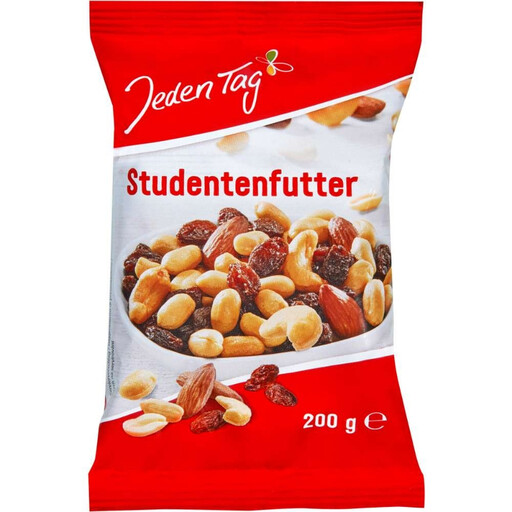 No image available
This nut and raisin mix could work as a snack alongside supper, but not as your only protein source. The pack contains 200 g; if you have allergies, check the information on the specific pack.
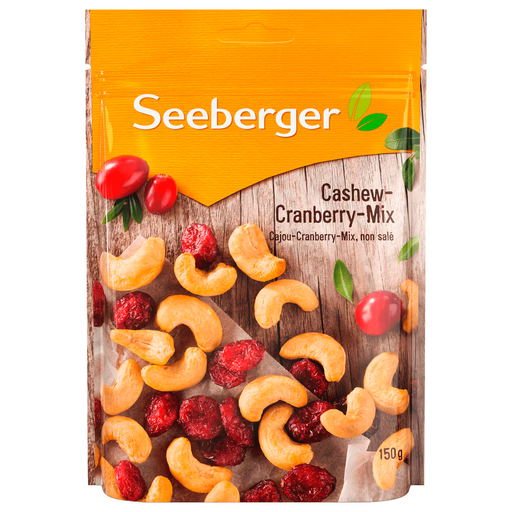 No image available
This cashew and cranberry mix can be enjoyed as a snack or added to a fruit and nut dish. The pack contains 150 g; if you want to avoid added sugar or certain allergens, check the ingredients and information on the packaging.
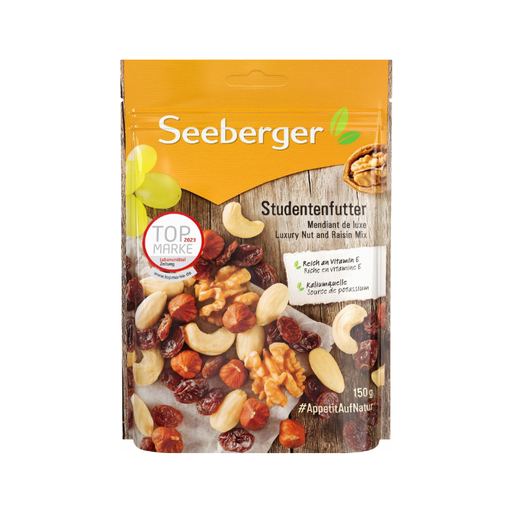 No image available
This trail mix is a ready-to-eat option between lectures and supper; make sure you’ve chosen the meal’s main protein source separately. The pack contains 150 g. Check the packaging for ingredients, allergens and storage instructions.
No. The dried fruit examples above aren’t suitable as the only protein source in a supper. ALDI Nord lists 1.85 g of protein per 100 g for dried dates, while EDEKA lists 2.7 g per 100 g for a dried fruit mix. Choose the dish’s main protein ingredient separately.
No. Dried fruit can contain naturally occurring sugars even when no sugar has been added. Alongside the ingredients list, check the ‘of which sugars’ figure per 100 g, and consider how much you’ll add to your meal.
Check the ingredients and allergen information on the specific pack. EDEKA lists sulphur dioxide in its dried Herzstücke fruit mix, but that doesn’t mean all dried fruit contains the same ingredients.
Freeze-dried fruit works well when you’re after a crunchy topping, rather than a protein source for your dish. The Verbraucherzentrale notes that removing the water concentrates the sugar and energy per 100 g, so compare the nutritional information and the amount you plan to use.