Movie-goers who prioritise protein
You’re looking for a post-workout snack whose protein content you can work out from the nutritional information for your portion. Fruit flavour alone isn’t enough to make it the right choice.


Plain dried fruit makes a tasty sweet cinema snack, but it isn’t automatically a high-protein choice after exercise. EDEKA’s dried fruit mix contains 2.7 g of protein per 100 g. If protein is your priority, compare the nutritional information for the specific snack and the portion you plan to eat. Dried fruit can add flavour and texture, but even a fruit and nut mix isn’t necessarily labelled as ‘high protein’ just because it contains nuts.
You’re looking for a post-workout snack whose protein content you can work out from the nutritional information for your portion. Fruit flavour alone isn’t enough to make it the right choice.
You mainly want to take dried fruit along for its flavour and convenience. The snack doesn’t have to provide a significant amount of protein.
You want to check specifically for added sugar or sulphur dioxide. The ingredients list and, where relevant, the allergen information on the specific pack are what matter.
A good choice if: You mainly want a sweet fruit snack at the cinema.
Keep in mind: Fruit flavour tells you little about the protein content. EDEKA states that its dried fruit mix contains 2.7 g of protein per 100 g.
A good choice if: You want to snack on dried fruit together with nuts or seeds.
Keep in mind: The ingredients vary from one mix to another, and the presence of nuts doesn’t automatically make a product high in protein.
A good choice if: Protein after exercise is your main priority and dried fruit is just an extra.
Keep in mind: Compare the protein content and portion size of the specific snack instead of assuming its name tells you how much protein your portion provides.
| What to consider | What to check | Who it matters to |
|---|---|---|
| Protein content | Compare the protein per 100 g with the amount in the portion you plan to eat. Under EU Regulation (EC) No 1924/2006, a product can only be labelled ‘high protein’ if at least 20% of its energy value comes from protein. | If I want to make protein a specific part of my cinema snack after exercise, I need a clear amount, not just a fruity flavour. Around 36% of consumers would consider protein content their main priority. |
| Sugar and portion size | Compare the sugar and energy figures per 100 g with the amount you actually plan to eat. For processed varieties, check the ingredients too. | When I’m having other snacks on a film night, I want to be able to choose how much dried fruit to take with me. For around 29% of consumers, keeping an eye on sugar and portion size would come first. |
| Texture and convenience | Choose between soft dried fruit, crunchy varieties and mixes, and check how easy the specific product is to eat. | I want a snack I can eat without any preparation during the film, with a texture I enjoy. Around 21% of consumers would prioritise how suitable a snack is for the cinema. |
| Ingredients and sulphites | Check the ingredients list and allergen information on the specific pack for sulphur dioxide, sulphites and any other ingredients you need to know about. | If I want to avoid certain ingredients, I need to be able to rely on the information for the specific mix. For around 14% of consumers, this would be their most important consideration when buying. |
Dried fruit can contain protein, but the amount may not meet your needs for a snack. For example, EDEKA’s dried fruit mix contains 2.7 g of protein per 100 g.
If protein is important to you, compare the protein content with the portion you plan to eat. The term ‘high protein’ has specific requirements under EU Regulation (EC) No 1924/2006.
Nutritional information is often given per 100 g, but you may eat a different amount while watching a film. EDEKA states that its dried fruit mix contains 46 g of sugar per 100 g.
Decide how much to take with you before the film, then work out the sugar and energy figures for that portion.
Recipes vary: according to the product information, EDEKA’s dried fruit mix contains sulphur dioxide and sulphites.
If you need or want to avoid particular ingredients, check the information on the exact pack you’re buying. A label such as ‘unsulphured’ applies only to the specific variety described that way.
Seeberger offers a range of dried fruit formats, including soft fruit, freeze-dried fruit and fruit mixes.
The dried fruit mix is a specific example of a sweet dried fruit snack.
The dried figs in the 200-g pack are one example from ALDI SÜD’s dried fruit range.
Lidl sells nuts and dried fruit under the Alesto brand, making it relevant if you’re looking for fruit and nut combinations.
These three Seeberger mixes combine dried fruit and nuts, and could make convenient cinema snacks that need no preparation. If you’re aiming for a certain amount of protein, check the amount in your portion: a fruit and nut combination alone doesn’t mean a product can be labelled ‘high protein’.
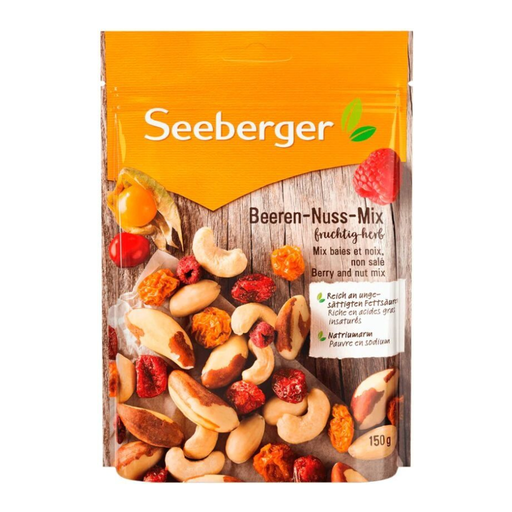 No image available
A cinema snack for when you fancy eating berries and roasted nuts together. To support your protein goal, compare the nutritional information on the pack with the portion you plan to eat, and check the allergen information.
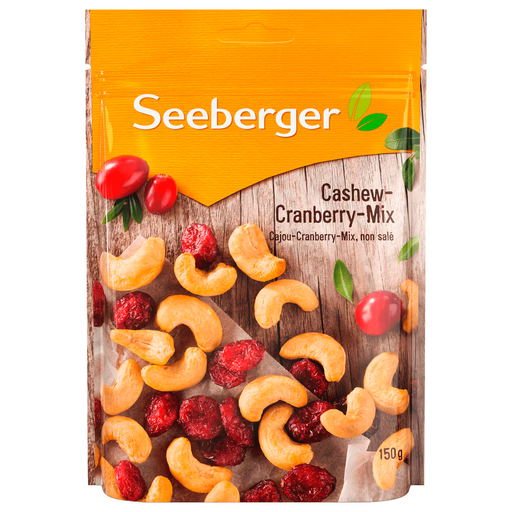 No image available
A handy ready-to-eat mix if you’d like to take cranberries and cashews with you. Check the protein per 100 g and per portion, along with the ingredients and allergen information on the pack.
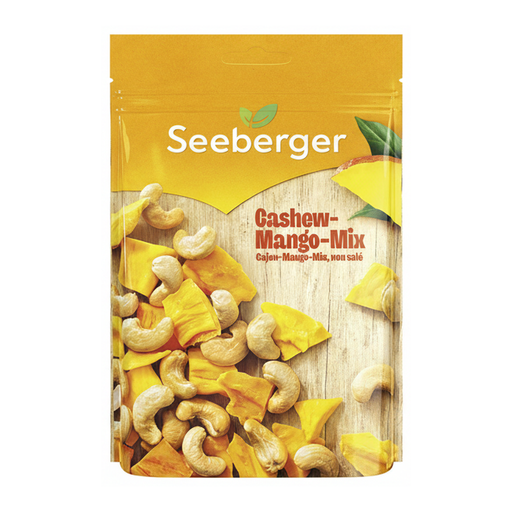 No image available
An option if you’d like to pair dried mango with cashews. Before buying, check the nutritional information for the portion you plan to eat, as well as the ingredients and allergen information for the specific mix.
No. Containing some protein doesn’t automatically make dried fruit ‘high protein’. EDEKA’s dried fruit mix contains 2.7 g of protein per 100 g. Under EU Regulation (EC) No 1924/2006, a product can only be labelled ‘high protein’ if at least 20% of its energy value comes from protein.
Choose based on the protein content and the portion you plan to eat, rather than the fruit or nut ingredients alone. Dried fruit can add flavour, but if you choose a fruit and nut mix, check the protein content of that specific mix too.
If sulphur dioxide or sulphites are relevant to your choice, check the ingredients list and allergen information on the specific pack. EDEKA’s dried fruit mix lists both; this doesn’t tell you anything about other products.
Follow the storage instructions on the pack and seal it carefully once opened. For longer-term storage, check the best-before date and the instructions for the specific product.