Stocking up for a group
If you’re planning snacks for several people or days on the road, you can divide a larger pack into smaller containers at home. The key question is whether you’ll actually use the amount during or after your trip.


A 500 g pack of classic dried fruit is a good choice if you’re sharing with others, travelling for several days or can portion it up in advance. A smaller pack may be more practical if you just want a snack with no preparation, while freeze-dried fruit is worth considering if you prefer a crunchy texture. Whichever option you choose, check the ingredients, sugar per 100 g and the type of packaging to help you decide.
If you’re planning snacks for several people or days on the road, you can divide a larger pack into smaller containers at home. The key question is whether you’ll actually use the amount during or after your trip.
If you want to avoid certain additives, check the ingredients on the specific pack, paying particular attention to added sugar and sulphur dioxide. The per-100 g figures are useful for comparing nutritional values.
If you just need a snack for the journey or prefer crunchy freeze-dried fruit, you could choose a smaller pack. Texture and convenience matter more than having a large supply.
First, work out how much dried fruit everyone will eat and whether you can portion it up before setting off. Then you can check the ingredients, nutritional information and texture you’re looking for.
| What matters | What to check | Who it matters to |
|---|---|---|
| Amount to stock up on | Pack weight and whether you can portion it in advance. | If several people are sharing, I want to pack enough for the journey without leaving a large bag open in the car. Around 44% of consumers prioritise choosing the right amount to stock up on. |
| Ingredients and sugar | Ingredients list, sugar per 100 g and, where applicable, the sulphur dioxide labelling. | If I’m choosing based on specific ingredients, I want to know what the fruit contains. For around 33% of consumers, this information comes first. |
| Texture and portion size | Whether the fruit is dried or freeze-dried, the pack size and the type of closure on the specific pack. | If there’s no time to decant it, I want a portion that’s easy to handle on the go. I also check how it’s processed if I’m after a crunchy snack. Around 23% of consumers put this first. |
Dried fruit naturally contains sugar. Verbraucherzentrale NRW points out that removing the water can concentrate a lot of sugar in a small amount of dried fruit.
Check the sugar per 100 g and think about how much you want to pack for the journey.
Sulphur dioxide can help preserve the colour of dried fruit. According to Verbraucherzentrale NRW, unsulphured fruit can look browner, so colour alone doesn’t tell you which ingredients have been used.
If you want to avoid sulphur dioxide, check the labelling and look specifically for unsulphured fruit.
Freeze-dried fruit has a different, crunchy texture and is also available in smaller packs. A small pack won’t provide the same quantity for a group of travellers as a large bag of classic dried fruit.
First decide whether you need a supply to share or individual crunchy portions, then choose the pack size to suit.
The Seeberger range includes classic dried fruit in various pack sizes, as well as individual types of freeze-dried fruit.
ALDI SÜD sells classic dried fruit in 500 g packs under the FARMER NATURALS brand.
Alongside nuts and other snacks, Lidl also offers dried fruit under its Alesto brand.
EDEKA24 sells dried fruit from its EDEKA Herzstücke own-label range alongside products from other brands.
REWE sells dried fruit from its own label and other brands, including a range of berries and fruit formats.
These Joybuy products are classic dried fruit in 500 g packs. Choose the fruit you prefer for your road trip, then divide it into smaller portions before setting off.
 No image available
For a supply of dates to last several days on the road: this pack contains 500 g of pitted Deglet Nour dates. Portion them before setting off if you like, and check the ingredients and nutritional information on the pack.
 No image available
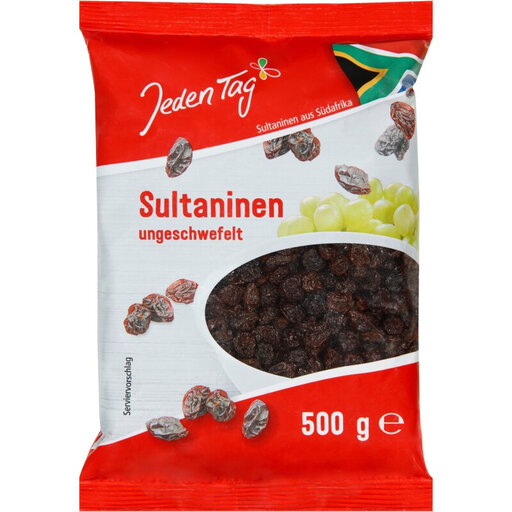
For anyone travelling with you who wants to pack sultanas as a snack: this bag contains 500 g. Before buying, check the ingredients list and consider how you’ll store the contents after opening.
 No image available
For a supply of soft dried prunes: this 500 g pack is labelled as pitted. Even so, watch out for any possible fragments of stone when eating them, and check the ingredients on the specific pack.
 No image available
For travellers who’d prefer to pack jujubes instead of the other fruits listed: this pack contains 500 g. The product name doesn’t specify that they’re pitted, so check their form and storage instructions before buying.
A 500 g pack is a handy option if several people are sharing, you’re travelling for several days or you’ll use the rest afterwards. For a single snack break, a smaller portion may be easier to manage.
No. Dried fruit contains natural sugars, so ‘no added sugar’ doesn’t mean sugar-free. Compare the sugar per 100 g in the nutritional information for the products you’re considering.
Look for sulphur dioxide on the labelling and check the ingredients list. According to Verbraucherzentrale NRW, sulphur dioxide can help preserve colour; you can’t reliably tell what’s in the fruit from how pale or dark it looks alone.
Pack weight, the ingredients list and nutritional information per 100 g make it easier to compare similar dried fruits. Lebensmittelverband Deutschland explains that ingredients are listed in descending order by weight, while using the same reference quantity makes nutritional comparisons easier.