Anyone planning a specific snack portion
You want to take a set amount of dried fruit on a longer journey, rather than keep snacking from a larger bag. What matters is the pack size and the calories in the portion you actually eat.


If you want to keep track of your calorie intake on a car journey, choose dried fruit based on the portion you actually plan to eat and check the nutritional information for that amount. A short ingredients list can help you spot added sweeteners. However, according to the Verbraucherzentrale, removing water concentrates the sugar and calories per 100 g, even in freeze-dried fruit.
You want to take a set amount of dried fruit on a longer journey, rather than keep snacking from a larger bag. What matters is the pack size and the calories in the portion you actually eat.
You want to spot added sugar and distinguish it from the fruit’s natural sugars. To do that, check the ingredients list alongside the nutritional information.
You’re looking for a crunchy fruit snack to enjoy on the go. Freeze-dried fruit could be a good option, but its texture doesn’t tell you how many calories are in your portion.
First, decide how much you want to snack on during the car journey. Then compare the ingredients and nutritional information for the specific product. Choosing your preferred texture is a separate consideration.
| Criterion | What to check when buying | Who it matters to |
|---|---|---|
| Calories per portion | Calories per 100 g and the weight of your planned portion. If you’re buying a larger bag, portion some out before you set off. | When I snack during a journey, I want to know how much I’m eating overall. Portion control is the top priority for around 44% of consumers. |
| Ingredients and sugar | Check the ingredients list for added sweeteners, and read the “of which sugars” figure alongside the portion size. | I don’t want to choose a product with added sweeteners, but I also know not to confuse natural fruit sugars with added sugar. This is a key priority for around 33% of consumers. |
| Texture and portability | Choose the drying method, product format and packaging to suit how you want to handle your snack on the go. | For my journey, I mainly want a crunchy snack that’s easy to take with me. This is the most important criterion for around 23% of consumers. |
Once the water has been removed from dried fruit, the sugar and calories are concentrated per 100 g. EDEKA and the Verbraucherzentrale point out that this is particularly relevant when you eat straight from a large pack.
Compare the calories for the amount you actually plan to take with you and eat.
Dried fruit still contains natural fruit sugars, even when no sugar has been added. Other varieties may contain additional sweetening ingredients.
Read the ingredients list together with the “of which sugars” figure in the nutritional information, rather than relying on a claim on the front of the pack alone.
Freeze-dried fruit has a different texture. However, according to the Verbraucherzentrale, removing water also concentrates the sugar and calories per 100 g in this type of fruit.
Choose it for the crunch you’re after, and check the calories for your planned portion.
If you have sensitivities, check the labelling for the specific product. EDEKA notes that dried fruit may be treated with sulphur.
Before buying, check the ingredients and allergen information on the current pack. If you’re buying loose fruit, ask to see the information provided.
Seeberger offers a range of dried fruit, fruit crisps, soft fruit and freeze-dried fruit.
ALDI SÜD’s own-brand range includes dried apricots, dates and figs.
EDEKA provides consumer information about dried fruit, but general guidance is no substitute for comparing individual products.
These dried fruit options could make a handy snack for a car journey. The pack sizes can help you plan, but your calorie intake will depend on how much you eat and the nutritional information on the individual pack.
 Image unavailable
The 80 g pack is easy to plan as a snack for your journey. Check the nutritional information to see how many calories are in the amount you actually eat, and be sure to read any allergen information on the pack.
 Image unavailable
These soft mango slices are a good option if you prefer this texture on the go. The pack contains 100 g, so use the nutritional information to decide how much to snack on, and check the ingredients and allergen information on the specific pack.
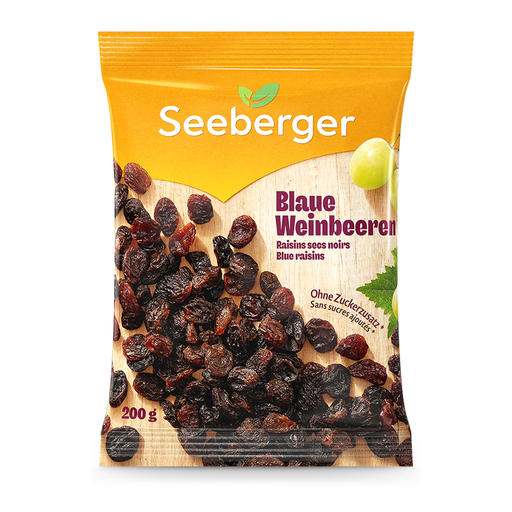 Image unavailable
If you want to portion out snacks before setting off, you can divide the 200 g pack into smaller amounts. Check the nutritional information for your chosen portion, along with the ingredients on the specific pack.
No. According to EDEKA and the Verbraucherzentrale, removing water concentrates the sugar and calories per 100 g. That’s why the calories in the portion you actually plan to eat are what matter for a car journey.
No. It still contains natural fruit sugars. As well as checking the ingredients list, look at the “of which sugars” figure in the nutritional information.
It’s a good choice if you prefer a crunchy texture. That doesn’t mean it’s lower in calories: according to the Verbraucherzentrale, removing water also concentrates the sugar and calories per 100 g in freeze-dried fruit.
If you have an allergy or sensitivity, check the information on the specific pack. EDEKA notes that dried fruit may be treated with sulphur. If you’re buying loose fruit, ask for the allergen information.
Follow the storage instructions on the pack and reseal it carefully after opening. Before you set off, you can put your planned snack portion into a separate, clean, sealable container.