Travellers keeping an eye on fat
You want to pack dried fruit for a longer journey, so you compare the fat content per 100 g. You check the sugar, ingredients and portion size separately.


If you’re looking for dried fruit with little fat for a car journey, start with classic varieties without nuts and compare the nutritional information per 100 g. For example, EDEKA lists its soft apricots as containing 0.6 g of fat per 100 g; sugar and ingredients are separate factors to consider. Freeze-dried fruit is an option if you’re after a crunchy texture and can keep the opened pack dry and tightly sealed.
You want to pack dried fruit for a longer journey, so you compare the fat content per 100 g. You check the sugar, ingredients and portion size separately.
You prefer freeze-dried fruit and can protect an opened pack from moisture. For its freeze-dried red berries, REWE recommends resealing the bag tightly after opening.
You check every pack for added oil, sugar and preservatives, or need to take account of allergen information about sulphur dioxide and sulphites.
Start by comparing the fat content per 100 g for the same product variety. Then consider the ingredients, sugar information and how easy the pack is to handle to find the right snack for your journey.
| Criteria | What to check when buying | Who it matters to |
|---|---|---|
| Fat content | Compare the fat per 100 g on the nutritional information for the variety you’re considering; don’t treat a fruit and nut mix as equivalent to plain dried fruit. | If I mainly want to keep an eye on fat while travelling, I need the figure for the specific pack, rather than judging by its appearance. For around 33% of consumers, this is likely to be the top priority. |
| Ingredients and allergens | Check the ingredients list and allergen information for oil, added sugar, sulphur dioxide and sulphites. | When buying a fruit mix, I want to know what it contains besides fruit; allergen information is particularly important if I have a relevant sensitivity. Around 27% of consumers are likely to prioritise checking the ingredients. |
| Texture and storage | Choose between soft dried fruit and crunchy freeze-dried fruit; check the seal and storage instructions. | If I’m stopping several times during the journey, I want to keep the texture I prefer and be able to manage the opened pack. For around 20% of consumers, this is likely to be the most important criterion. |
| Sugar and energy | As well as fat, compare “of which sugars” and energy per 100 g; portion out the amount you want before setting off. | If I snack from a pack over a longer period, I don’t want to judge sugar and energy by the fat content alone. Around 20% of consumers are likely to give these figures top priority. |
A low fat content doesn’t tell you how much sugar a product contains. REWE points out that sugar and energy are concentrated in dried fruit because the water has been removed.
Compare fat, “of which sugars” and energy per 100 g, and portion out as much as you need for the journey.
EDEKA’s Fruchtiges Mischobst contains sunflower oil, potassium sorbate and sulphur dioxide as well as fruit. The product name alone doesn’t tell you everything about the recipe.
For the pack you choose, read both the ingredients list and the highlighted allergen information.
Moisture can affect its crunchy texture. For its freeze-dried red berries, REWE recommends storing them somewhere dry and away from light, and resealing the pack after opening.
Reseal the opened pack straight away and follow the storage instructions for the product you’ve bought.
ALDI SÜD notes that the nutritional information for its dried fruit may vary between suppliers. So, for an accurate comparison, check the pack you’re actually buying.
Before buying, check its nutritional information, ingredients and pack size.
These ranges feature different types of dried fruit and recipes. The information on each individual pack is what matters when comparing them.
Seeberger offers classic and freeze-dried fruit, including mango, apricots and berries.
The REWE range includes a variety of dried fruit and freeze-dried fruit snacks.
EDEKA provides information on a range of dried fruit products, including mixed fruit and soft apricots.
Alesto’s range includes dried fruit such as mango strips.
ALDI SÜD sells dried fruit under this name, including figs in a 200-g pack.
This selection includes dried mango and red dates, also known as jujubes, as fruit snacks for when you’re out and about. When choosing between varieties, consider the ingredients, other nutritional information and how to store the pack after opening, as well as the fat content.
 Image unavailable
Soft mango strips are a good option if you’d rather not have a crunchy fruit snack on your journey. Before buying, check the ingredients and allergen information, as well as the fat and sugar per 100 g.
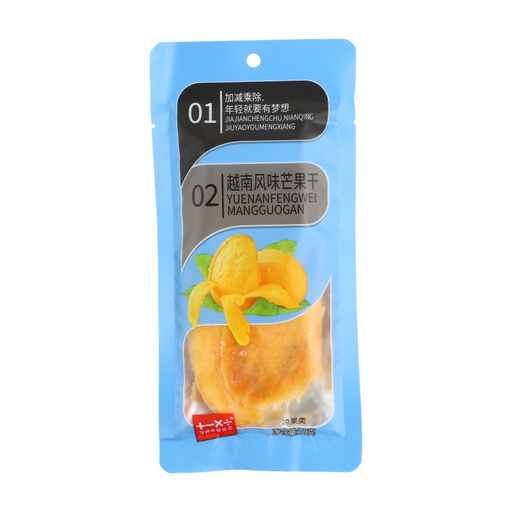 Image unavailable
The 70-g pack is a handy option if you want to take a smaller amount of dried mango with you. Check the ingredients and allergen information for this variety, and compare sugar and salt per 100 g as well as fat.
 Image unavailable
Pitted red dates, or jujubes, are an option if you’d prefer this fruit to mango for your journey. The pack contains 280 g; check whether it can be resealed after opening, and compare the fat and sugar per 100 g.
 Image unavailable
These dried red dates, or jujubes, are an option if you want to take a 500-g pack on a longer journey. If you’ll be stopping for several snacks, check the pack’s seal and compare fat, sugar and energy per 100 g.
“Low fat” refers to fat content, not sugar or energy. Under the Annex to EU Regulation (EC) No 1924/2006, the nutrition claim for solid foods is subject to a limit of 3 g of fat per 100 g. For your selection, also compare the other nutritional information on the specific pack.
Check the ingredients list and the highlighted allergen information on the pack. EDEKA lists sulphur dioxide and sulphites in its Fruchtiges Mischobst; this doesn’t tell you what other dried fruit products contain.
Reseal the pack tightly and follow its storage instructions. For its freeze-dried red berries, REWE recommends storing them somewhere dry and away from light after opening, to stop moisture affecting their crunchy texture.
No. The fat content doesn’t tell you how much sugar a product contains. REWE explains that sugar and energy in dried fruit are concentrated because the water has been removed. So, for each variety, compare the fat, “of which sugars” and energy figures using the same 100-g basis.