Families planning break-time portions
When dried fruit goes into a school bag, it’s the amount that will actually be eaten that counts – not just the calories per 100 g.


Dried fruit isn’t automatically low in calories: removing the water concentrates the sugar and energy per 100 g. So, for a school break, what matters is the amount you actually pack. Compare the nutritional information and distinguish unsweetened fruit from products with added sugar or sweeteners. If needed, check the allergen information too.
When dried fruit goes into a school bag, it’s the amount that will actually be eaten that counts – not just the calories per 100 g.
If you want to avoid added sugar or other sweetening ingredients, check the ingredients list alongside the nutritional information. ‘No added sugar’ doesn’t mean sugar-free.
If sulphur dioxide or sulphites are relevant to your choice, check the ingredients list and allergen information on the specific pack.
First, decide how much dried fruit should fit into the whole break-time meal. Then compare the nutritional information and ingredients for the specific products you’re considering. Texture and packaging are additional factors to bear in mind.
| Criterion | What to check | Who it matters to |
|---|---|---|
| Portion and energy | Compare the calories per 100 g with the amount you’ll actually pack. | If I’m taking the whole pack, I want to avoid treating all of its contents as a portion without meaning to. Around 31% of consumers prioritise portion control. |
| Sugar and ingredients | Check the ingredients list, sugar and energy values; distinguish unsweetened from sweetened options. | For a school break, I’m looking for fruit with no added sweeteners, while recognising that it still contains natural sugars. This choice of ingredients comes first for around 31% of consumers. |
| The whole break-time meal | Decide whether the dried fruit should be a small part or a larger part of the meal you take with you. | After a small breakfast, I don’t want the snack I pack to consist only of a small portion of dried fruit. Around 23% of consumers are most concerned with putting together the whole break-time meal. |
| Sulphites and other ingredients | Read the ingredients list and allergen information on each specific pack. | If sulphur dioxide or sulphites matter to my choice, I need to check the labelling before packing it. Around 8% of consumers focus primarily on this ingredient-related concern. |
| Texture and transport | Choose between classic, soft and freeze-dried fruit; check how easy multi-portion packs are to use. | For my break-time routine, what matters is whether I prefer to take soft or crunchy fruit. This practical preference is the deciding factor for around 7% of consumers. |
The Verbraucherzentrale notes that the fruit’s natural sugar remains when it is dried and becomes more concentrated per 100 g.
As well as checking the ingredients list, look at the sugar and energy values in the nutritional information, and bear in mind the amount you pack.
Freeze-drying also removes water. So, on its own, a light, crunchy texture tells you nothing about the calories per 100 g.
Choose a texture that suits your break-time routine, and compare energy, sugar and portion size separately.
The approximately 260 kcal cited by Schule + Essen in the DGE quality standard refers to the whole snack for children aged 10 to under 19, not to dried fruit alone.
Portion it out before packing, and consider the amount alongside the other parts of the break-time meal.
Ingredients can vary between different dried fruits and mixes. EDEKA lists sulphur dioxide or sulphites in the product information for its dried fruit mix.
Check the ingredients list and allergen information on the specific pack. For medical questions, seek individual professional advice.
The range includes different types of dried and freeze-dried fruit. For a school break, the specific product matters more than the brand name.
REWE’s range overview lists classic dried fruit, fruit crisps and freeze-dried fruit.
The dried fruit mix is a good example of how to read nutritional values, ingredients and allergen information together.
The product information for the dried apricots lets you compare energy, sugar and fibre for this specific option.
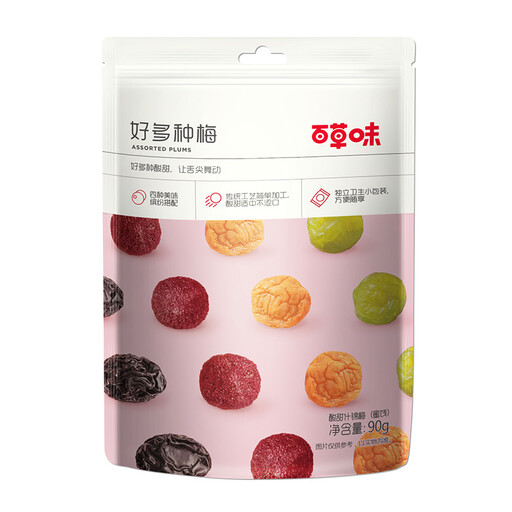
The option below is a ready-to-eat plum snack with added sugar and sweeteners. For a calorie-conscious school break, consider its ingredients and the amount you actually take with you.
 No image available
This ready-to-eat plum snack can be portioned out before a school break; the pack isn’t labelled as a single portion.
The ingredients include sugar and sweeteners. Also check the nutritional information on the specific pack, including the salt content.
No. Removing the water concentrates the sugar and energy per 100 g. For a school break, consider the nutritional information alongside the amount that will actually be eaten.
No. Fruit contains natural sugars, which remain when it is dried. The Verbraucherzentrale advises not to confuse added sweeteners with the total sugar content. Check the ingredients list and nutritional information for details.
There’s no one-size-fits-all amount of dried fruit. In the DGE quality standard, Schule + Essen gives around 260 kcal as a guide for the whole snack for children aged 10 to under 19. How much dried fruit you pack also depends on what else is included.
Check the ingredients list and allergen information for the specific dried fruit. EDEKA lists sulphur dioxide or sulphites in the product information for its dried fruit mix.