Study snackers keeping an eye on fat
You want to choose dried fruit for a study break and compare the fat content per 100 g, rather than assuming that crunchy fruit crisps are low in fat just because of their name.


If you’re looking for low-fat dried fruit for study breaks, compare the nutrition information per 100 g and check the ingredients for oil in fruit crisps. A low fat content doesn’t tell you how much sugar a product contains. If you want to avoid sulphites, check the labelling as a separate selection criterion.
You want to choose dried fruit for a study break and compare the fat content per 100 g, rather than assuming that crunchy fruit crisps are low in fat just because of their name.
You want to know whether a product contains anything besides fruit, and understand the difference between a no-added-sugar claim and the sugar content shown in the nutrition table.
You specifically check dried fruit for sulphur dioxide and sulphites, so clear ingredient and allergen information is important to you.
When choosing dried fruit for a study break, start by deciding which factor matters most to you. You can then check the fat content, sugar and ingredients, sulphites, and texture for each individual product.
| What to check | What to look for when buying | Who it matters to |
|---|---|---|
| Fat and oil | Compare the fat content per 100 g and check the ingredients for oil in fruit crisps. | If I want a sweet fruit snack rather than an oil-roasted crunchy snack while studying, fat content is my priority. Around 40% of consumers put low fat content first. |
| Sugar and ingredients | Check the sugar content per 100 g and read the full ingredients list; don’t assume that ‘no added sugar’ means ‘sugar-free’. | I want to know what’s in the pack besides fruit, and how much sugar it contains, before my study break. Around 30% of consumers care most about this. |
| Sulphur dioxide and sulphites | Check the ingredients and allergen information for sulphur dioxide or sulphites. | If I want to avoid sulphites, I need to be able to check the specific product clearly. This is the main buying criterion for around 20% of consumers. |
| Texture and pack size | Choose between soft fruit, freeze-dried pieces and fruit crisps, and check the pack size. | For my study break, a particular texture or suitable pack size matters more than the lowest fat content. Around 10% of consumers prioritise this. |
The two figures can differ considerably: EDEKA lists 1 g of fat and 68.1 g of sugar per 100 g for its unsulphured mango strips.
Before choosing a variety, compare the fat and sugar figures in the same nutrition table, per 100 g.
Crunchy fruit crisps aren’t the same as simply dried fruit. Seeberger describes its banana chips as roasted in coconut oil and sweetened with added sugar.
For fruit crisps, check the ingredients list and the fat content on the specific pack, rather than choosing based on the type of fruit alone.
Added sugar and sulphuring are two different things. REWE’s listing for Seeberger unsweetened mangoes includes sodium metabisulphite as an ingredient.
If you want to avoid sulphites, check the ingredients and allergen information on the specific product as well as its sugar content.
The brand name alone doesn’t tell you about a product’s fat content, ingredients or sulphites. These examples show why it’s worth checking each individual product.
Seeberger offers a range of dried fruit and fruit crisps, with different products processed in different ways.
The REWE range includes dried fruit from various brands and own-label ranges, including sultanas, mango and banana chips.
EDEKA lists dried fruit products with different ingredients and information about sulphuring.
An ALDI SÜD example of prunes gives you another specific comparison point for simply dried fruit.
This selection includes dried mango, prunes, apple rings and jujube dates for a study break. Check the current label for each product if fat, sugar, other ingredients or sulphites are important to your decision.
 Image unavailable
An option if you’re looking for dried mango in a 100 g pack for your study break. Check the current pack information for fat, sugar and sulphites.
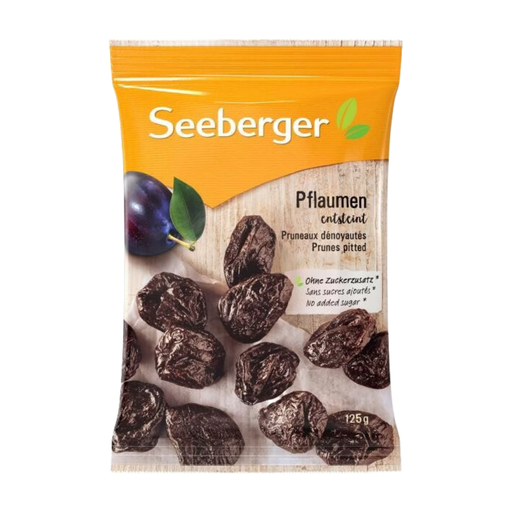 Image unavailable
For a study break with soft prunes; the pack contains 125 g. Please note that the occasional stone fragment may remain even in pitted prunes. Check the current label for ingredients and nutrition information.
 Image unavailable
A fruit option in an 80 g pack if you prefer apple rings for your study break. Compare the nutrition information and, in particular, check the ingredients and allergen information if you want to avoid sulphites.
 Image unavailable
For anyone choosing jujube dates for several study breaks; the pack contains 500 g. Before buying, check the nutrition information and make sure this pack size suits how you plan to use them.
 Image unavailable
Another jujube date option for study breaks, this time pitted and supplied in a 280 g pack. If you’re comparing them with other dried fruit, check the ingredients and nutrition information on the current pack.
No. Dried fruit still contains natural sugars, even when no sugar has been added. Removing the water concentrates the sugar in the dried product. So compare the sugar content per 100 g in the nutrition table.
For packaged products, check the ingredients and allergen information for sulphur dioxide or sulphites. Lebensmittelklarheit explains that sulphuring must be indicated for sultanas; when choosing a product, check the label on the specific pack.
No. Seeberger describes its banana chips as roasted in coconut oil. To see whether a particular product fits your fat target, compare its fat content per 100 g and check the ingredients list.
When comparing dried fruit, the most useful details are the ingredients list, nutrition information per 100 g and, where relevant, allergen information. Also check the pack size and any storage instructions if you’re planning to take the snack along for study breaks.