Train travellers keeping an eye on fat
You want to choose dried fruit for travelling with a low fat content per 100 g. Check the specific product too to see whether the pack is easy to portion and stow during your journey.


For a train journey, traditionally dried fruit can be a good choice if you want a ready-to-eat snack that’s low in fat. Compare the fat content per 100 g on the specific pack, then check the sugar, ingredients and any allergens relevant to you. A low fat figure tells you nothing about the sugar content or whether the packaging is practical for travelling.
You want to choose dried fruit for travelling with a low fat content per 100 g. Check the specific product too to see whether the pack is easy to portion and stow during your journey.
You pay attention to what goes into fruit mixes and want to spot ingredients such as sulphur dioxide or added oil. The ingredients list and allergen information on the pack are what matter.
You prefer freeze-dried fruit to soft dried fruit. Along with texture, consider your planned portion and the sugar and energy figures per 100 g when choosing.
For a dried fruit snack on the train, start by checking the fat content per 100 g. Then decide what matters most to you: ingredients and allergens, your planned portion or a crunchy texture.
| Criterion | What to check | Who it matters to |
|---|---|---|
| Fat content | Compare the fat per 100 g on the pack. According to the European Commission, the claim ‘low fat’ for solid foods means no more than 3 g of fat per 100 g; ‘reduced fat’ does not mean the same thing. | If I mainly want a low-fat snack for my train journey, I need a comparable figure rather than a marketing claim. This is the top priority for around 33% of consumers. |
| Ingredients and allergens | Read the ingredients list and check the highlighted allergens. For fruit mixes, look in particular for added oil and sulphur dioxide or sulphites. | When buying a fruit mix, I want to know what else it contains and whether any allergens relevant to me are highlighted. Around 27% of consumers make this their main priority. |
| Sugar and portion size | Compare the ‘of which sugars’ figure per 100 g and think about how much you want to eat during your journey. ‘No added sugar’ does not mean sugar-free. | For a snack between meals, I want to know how the sugar content fits with my planned portion. Around 20% of consumers focus on this first. |
| Texture and packaging | Choose between soft dried fruit and crunchy freeze-dried fruit. Check whether the specific pack is easy to open, stow and, if necessary, reseal while travelling. | On the train, I want the texture I prefer and packaging that’s practical for my journey. This is the top priority for around 20% of consumers. |
Drying removes water. The consumer advice centre notes that this can concentrate sugar and energy per 100 g, particularly in freeze-dried fruit.
Compare fat, ‘of which sugars’ and energy per 100 g in the nutrition table, and take into account the portion you plan to bring with you.
The mixed fruit described by EDEKA contains sunflower oil, potassium sorbate and sulphur dioxide as well as fruit. The product name alone doesn’t tell you everything about its ingredients.
Before buying, read the ingredients list and check the highlighted allergens on the specific pack.
Dried fruit contains naturally occurring fruit sugars, even when no sugar has been added. The consumer advice centre notes that these contribute to the stated sugar content.
Use the claim as an indication of the recipe, and also check the ‘of which sugars’ figure in the nutrition information.
Seeberger offers traditionally dried, unsulphured and freeze-dried fruit. Ingredients and nutritional values depend on the specific variety.
EDEKA Herzstücke offers traditional mixed fruit. EDEKA describes one product as coming in a resealable 250-g bag.
REWE’s own-label range includes various dried fruits and fruit crisps, including sultanas, apple crisps, strawberries and mango strips.
Alesto is a Lidl own label for nuts, dried fruit and snack mixes. Its range also includes mango strips.
ALDI SÜD’s FARMER NATURALS range includes dried prunes in a 500-g pack.
This selection features traditionally dried fruit that could make a suitable snack for a train journey. Check the information on each product’s pack and make sure its size and closure suit your journey.
 No image available
An option if you prefer red dates as a dried fruit snack for your journey.
Pack size: 500 g. Compare the fat and sugar per 100 g, and consider whether you’d like to decant a smaller portion for your journey.
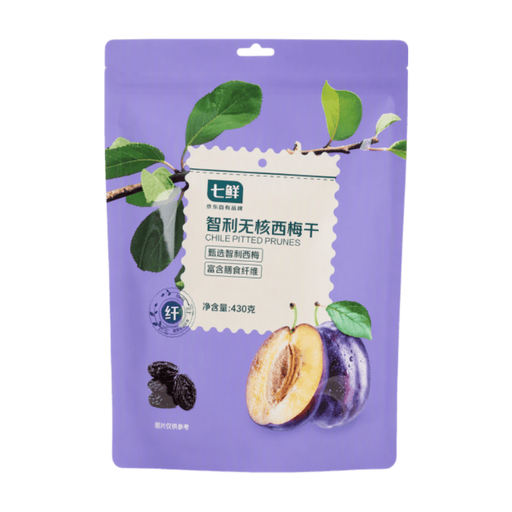 No image available
A good choice for a train journey if you prefer pitted prunes.
Pack size: 430 g. Check the nutrition information per 100 g and the ingredients, and plan how much to take with you.
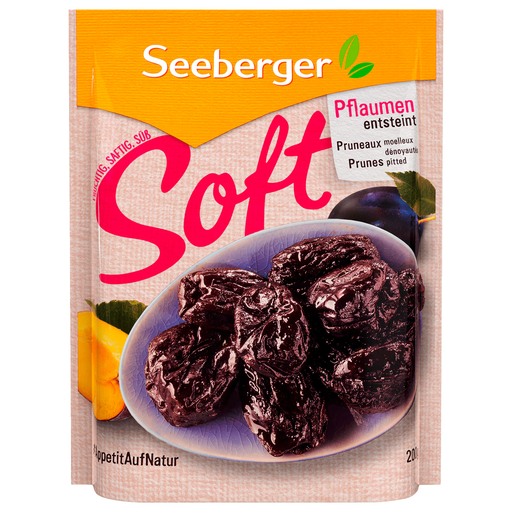 No image available
An option for travellers who prefer soft, pitted prunes.
Pack size: 200 g. Compare the fat and sugar per 100 g, and check whether the pack is resealable for your journey.
 No image available
An option if you’d like to enjoy soft mango strips on your train journey.
Pack size: 100 g. Along with fat and sugar, check the ingredients and allergen information, particularly if sulphites are relevant to you.
 No image available
A good choice if you prefer dried apple rings to prunes or mango for travelling.
Pack size: 80 g. Compare the nutrition information per 100 g and check the allergen information and pack closure.
No. ‘Reduced fat’ is a comparative claim and doesn’t necessarily mean a low fat content. For your snack, compare the fat per 100 g. For solid foods, the European Commission sets a maximum of 3 g of fat per 100 g for the ‘low fat’ claim.
No. Dried fruit contains naturally occurring fruit sugars, even when no sugar has been added. Compare the ‘of which sugars’ figure per 100 g in the nutrition information and think about how much you’d like to eat during your train journey.
For pre-packed dried fruit, check the ingredients list and the highlighted allergen information. The Federal Office of Consumer Protection and Food Safety explains this labelling. It’s particularly important to check fruit mixes, as the mixed fruit described by EDEKA, for example, contains sulphur dioxide.
Choose traditionally dried fruit if you prefer a soft texture, and freeze-dried fruit if crunch is more important to you. The consumer advice centre notes that sugar and energy figures per 100 g can be concentrated in freeze-dried fruit. Whichever type you choose, also check whether the pack is suitable for your journey.