Calorie-conscious gym-goers
You want a portable fruit snack after a workout and would like to know how much energy your portion provides. Compare the value per 100 g with the amount you actually plan to eat.


If you’d like to take dried fruit with you as a calorie-conscious snack after a workout, compare the energy values per 100 g and decide how much you’ll have. A short ingredients list can make it easier to choose, but it doesn’t tell you how much sugar a product contains. If protein is a priority for you, check the nutritional information separately.
You want a portable fruit snack after a workout and would like to know how much energy your portion provides. Compare the value per 100 g with the amount you actually plan to eat.
You want to spot added sugar and other ingredients rather than relying on the name of the fruit alone. EDEKA24 lists apple as the only ingredient in its apple rings, while one of its cranberry and walnut mixes contains, among other things, sweetened cranberries and sunflower oil.
You’re specifically looking for a protein-rich snack after a workout. ALDI SÜD lists its apricots as containing 2.8 g of protein per 100 g. Check the protein content of the specific product before choosing dried fruit for this purpose.
Start by comparing energy values and portion sizes. Then check the ingredients list and nutritional information to see whether the specific pack meets your other requirements.
| Criteria | What to check | Who it matters to |
|---|---|---|
| Energy and portion size | Compare kcal per 100 g on a like-for-like basis and take your planned portion size into account. | If I want to take a fruit snack with me, I want to know how much energy the amount I actually eat will provide. Around 40% of consumers say this is their top priority when choosing. |
| Ingredients and sugar | Read the ingredients list and the ‘of which sugars’ nutrition value; ‘no added sugar’ does not mean ‘sugar-free’. | When a dried fruit tastes sweet, I want to know whether sugar has been added or whether it comes from the fruit itself. For around 30% of consumers, this is the main consideration. |
| Protein | Check the protein content per 100 g if it’s an important factor in your choice of snack. | After a workout, I’m mainly looking for protein and don’t want to choose a fruit snack for that purpose just because of when I plan to eat it. Around 20% of consumers put this criterion first. |
| Availability | If it’s a product sold in store, check current availability and choose a pack size that suits how you plan to use it. | If I want to buy the same snack regularly, I need to be able to find it when I shop. Around 10% of consumers prioritise availability. |
Removing water concentrates the sugars and energy per 100 g. The Verbraucherzentrale also points this out for freeze-dried fruit.
Compare the kcal per 100 g and factor in your intended portion, rather than assuming that a light pack contains little energy.
Dried fruit can naturally contain sugar even when no sugar has been added. The two statements don’t mean the same thing.
Check the full ingredients list and the ‘of which sugars’ value in the nutritional information.
A walnut and cranberry mix listed by EDEKA24 contains sweetened cranberries and sunflower oil as well as nuts. Its recipe is therefore different from a product made with just one type of dried fruit.
Compare the ingredients and nutritional information for the specific products before choosing a mix instead of plain dried fruit.
ALDI SÜD lists its apricots as containing 2.8 g of protein per 100 g. Calling something a ‘post-gym snack’ doesn’t tell you how much protein it contains.
If protein is your main priority, compare the relevant nutritional value with those of other snacks you’re considering.
Seeberger offers a range of dried fruit, including apricots, mangoes and crunchy fruit products.
The category listed by REWE includes own-label and branded products, such as sultanas and freeze-dried strawberries.
EDEKA24 lists products including apricots, dates and mango strips.
ALDI SÜD’s own-brand range includes dried fruit such as apricots, dates and figs.
These two 80 g packs of dried fruit could make handy snacks to take with you. If you’re choosing between them for after a workout, compare the nutritional information on each pack for calories, sugars and protein.
 No image available
These dried apple rings are an option if you’d like to take a fruit snack with you after a workout.
The pack contains 80 g. Check the nutritional information for your planned portion, along with the ingredients and allergen information, particularly if sulphites are relevant to you.
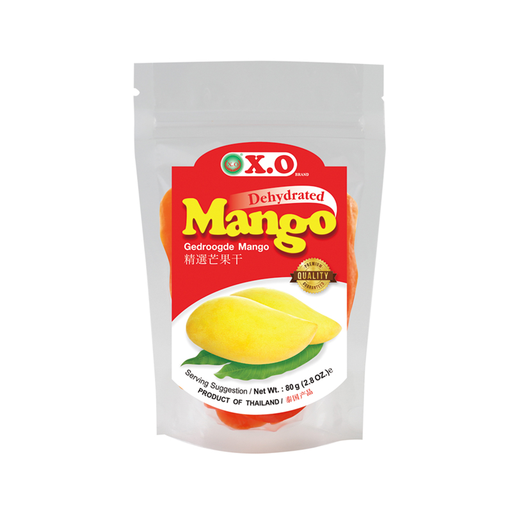 No image available
This dried mango could be a handy fruit snack to take with you after a workout.
The pack contains 80 g. Before choosing, compare the energy, sugar and protein values, along with the ingredients and allergen information on the pack.
For the specific products listed by ALDI SÜD, yes: ALDI SÜD gives its apricots as 260 kcal per 100 g and its mango as 330 kcal per 100 g. This doesn’t mean that all apricot products are lower in calories than all mango products; compare the information on the packs you’re choosing between.
No, you can’t assume that just because they’re freeze-dried. The Verbraucherzentrale points out that removing water concentrates sugars and energy per 100 g, so check the value for the specific product.
No, the statement doesn’t tell you the total sugar content. Dried fruit can naturally contain sugar, so the ‘of which sugars’ value per 100 g can help you compare products.
Follow the instructions on the specific pack. For the dried apple rings listed by EDEKA24, the advice is to store them in a dry place and protect them from heat.