
Lieferung heute & morgen

Qualitätsgarantie

Willkommens-Angebote freischalten: KOSTENLOSE Lieferung | Bis zu 80 % RABATT | Kostenlose 30-Tage-JoyPlus-Testphase
App herunterladen
Dried mango is convenient for eating on the go, at the office or at school, or as a topping for muesli and yoghurt. At the same time, dried mango strips, mango slices and seasoned varieties can differ significantly in their ingredients, texture and nutritional values. Eye-catching packaging or wording such as “tropical” therefore reveals little about the actual composition.
The most common buying mistakes arise from three points:
For a fruit snack, mango should appear as far towards the beginning of the ingredients list as possible. The precise percentage is even more informative: according to the product information, Tuan Dat Mango Dried 100g contains 95% mango and 5% sugar. Philippine Brand Dried Mango 100 g, by contrast, lists 74.99% mango and 25% sugar.
Even with products described as “naturally sweet”, it is worth checking the nutrition table. The flavour may come from added sugar, glucose syrup or maltose syrup. If you are looking for a recipe with a particularly prominent fruit flavour, you can compare products with a high mango content or no added sugar.
Dried fruit contains less water than fresh fruit. This means that carbohydrates and energy are concentrated into a smaller weight. The information on the packaging normally refers to 100 g, even though an individual portion is often considerably smaller.
Examples from the product information:
These values are not a quality assessment. They simply help you choose a suitable portion size. For everyday use, small packs of 50 g to 80 g can be practical; those who eat dried mango regularly may prefer 160 g to 227 g and should reseal the pack carefully after taking out a portion.
Sulphites are used in many dried fruits. They must be identified in the ingredients and allergen information when the relevant thresholds are exceeded. Products such as Tuan Dat, Jia Jian Cheng Chu, Seeberger and Yan Jin Pu Zi mention sulphur dioxide or sulphites.
“Mango without artificial colourings” therefore does not automatically mean “free from all additives”. For example, Tuan Dat describes a recipe without synthetic colourings, but according to the product information it contains sulphur dioxide as a preservative. If you have a known sensitivity to sulphites, checking the ingredients list before buying is particularly important.
For vegan snacks and gluten-free snacks, you should also check the relevant product information. According to its labelling, Tuan Dat is suitable for vegans and is gluten-free. Other products may carry similar statements, but the information applies to individual products and cannot be transferred generally to the entire category.
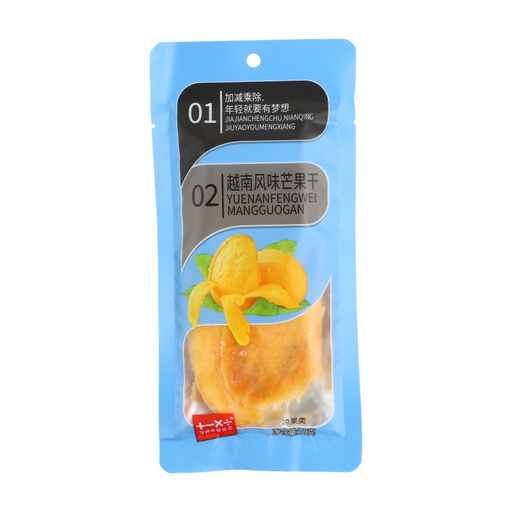
Why this product suits the profile: The 70 g pack is ideal for trying soft dried fruit and for individual snack portions during the day. The product information lists mango, sugar, salt, spices and acidity regulators.
The manageable pack size reduces the risk of buying a large quantity with a level of sweetness or texture that does not suit you. The ingredients list makes the salt, acidity regulators and sulphites clear.
70 g net quantity, soft and chewy strips, and no added fat according to the product information.
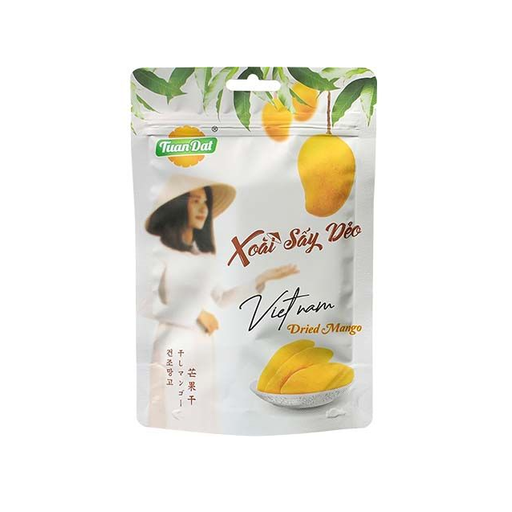
Why this product suits the profile: The stated recipe consists of 95% mango and 5% sugar. The product is described as soft and chewy, making it a straightforward tropical fruit snack.
The high stated mango content and the absence of synthetic colourings make it easier to distinguish from heavily flavoured or coloured varieties. However, sulphites still need to be taken into account.
100 g pack size, 95% mango according to the product information, labelled as vegetarian and vegan, and gluten-free.
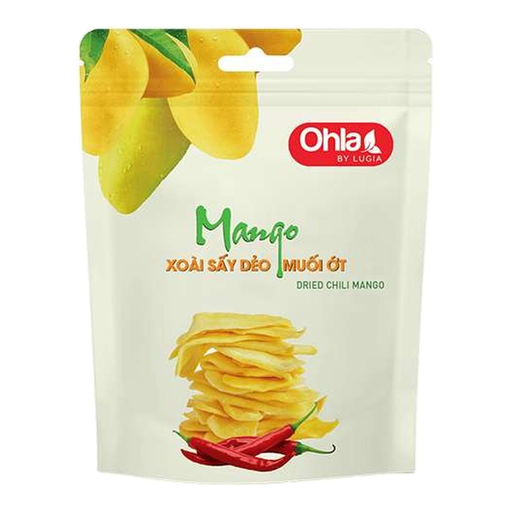
Why this product suits the profile: According to the product description, this seasoned mango combines mango with chilli, while the 200 g pack is designed for regular snacking or sharing.
The flavour is clearly identified as chilli mango. This helps you avoid accidentally ordering plain sweet mango when you are looking for a spicy variety.
200 g pack size, mango and chilli combination, and no artificial flavourings or preservatives according to the product information; however, the ingredients list sodium metabisulphite.
Unopened dried fruit should be stored as stated on the packaging: in a cool, dry place protected from direct sunlight. Once opened, a tightly sealed pack is important to help the mango strips retain their soft texture. Some products also recommend refrigerated storage and consumption within a specified period.
Dried mango slices are ideal for muesli, yoghurt, trail mix or baking recipes. Spicy chilli mango can be served as a snack on its own. If a product contains sulphites, anyone with a corresponding intolerance should check the labelling. The ready-to-eat varieties presented here do not require sourdough, chilling or preparation.
We have compiled a complete, regularly updated list of products that fully meet these strict selection criteria and the safety regulations applicable in the EU.
Dried mango is a concentrated fruit product and, depending on the recipe, often contains a high amount of carbohydrates and sugar. A blanket assessment of its health benefits is therefore not useful. The key factors are the ingredients list, nutritional values and the amount consumed.
The best-before date for unopened packs is shown on the relevant packaging. Once opened, the mango should be sealed airtight and consumed promptly in line with the manufacturer’s instructions. Moisture, heat and direct sunlight can affect its texture and quality.
Small packs of 50 g to 100 g are practical for a rucksack, office or lunchbox. If you want to compare sweet, sour or spicy mango, you should also check the mango content, sugar, salt and sulphites before buying.