
Lieferung heute & morgen

Qualitätsgarantie

Willkommens-Angebote freischalten: KOSTENLOSE Lieferung | Bis zu 80 % RABATT | Kostenlose 30-Tage-JoyPlus-Testphase
App herunterladen
Dried mango is a convenient, ready-to-eat fruit snack for the office, school, travelling or your snack cupboard. However, there are clear differences between dried mango, dried mango slices and spicy varieties when it comes to ingredients, sweetness, texture and pack size. If you only look at eye-catching packaging or terms such as “natural”, you may overlook important details.
Dried fruit naturally contains concentrated carbohydrates because water has been removed. Sugar may also be added. The nutritional information shows whether a product contains, for example, 35, 54 or more than 70 grams of sugar per 100 grams. The description “sweet mango” also says nothing about whether the sweetness comes exclusively from the fruit.
According to their product descriptions, many products do not contain artificial colourings, but may include sulphur dioxide or sulphites as preservatives or antioxidants, for example. These must be taken into account in the ingredients and allergen information. If you have a sulphite intolerance, check the packaging information particularly carefully.
A 200-g pack may be suitable for families or frequent snackers. For occasional snacks on the go, 50 to 100 grams is often easier to manage. Texture and flavour can change after opening. Depending on the product, you may be advised to seal the pack tightly or consume the contents within a specified period.
Fruit content is a useful parameter for comparison. According to the product information, Tuan Dat Mango Dried 100g consists of 95% mango and 5% sugar; sulphur dioxide is also listed. Other products contain not only mango and sugar, but also glucose, maltose, acidity regulators, humectants or flavourings.
For the clearest possible comparison of ingredients, ask yourself:
Many varieties are suitable as vegan snacks and gluten-free snacks. However, you should always check the specific allergen information. “Philippine dried mango” or “Vietnamese dried mango” also describes the style or origin, but does not replace checking the ingredients.
Values per 100 grams make it easier to compare different pack sizes. For the products reviewed, the energy values range from 292 to 454 kcal per 100 grams, for example. A mix with cashews provides more fat and protein than mango alone because of its nut content. According to the product information, Seeberger Cashew & Mango Mix consists of 50% cashew kernels and 50% dried mango pieces.
If you are looking for a pure fruit snack, check the fat content and ingredients list. If you prefer a mix to keep you fuller for longer, you may want to consider nuts. This depends on how you intend to use the product and is not a general assessment of its health benefits.
A soft dried mango is often described as chewy or pleasantly elastic. Moisture content, the way the mango is cut and added humectants all affect the mouthfeel. Sour varieties often contain citric acid or other acidity regulators. Dried mango with chilli combines fruity sweetness with heat and may also contain salt and spices.
Before buying, check:
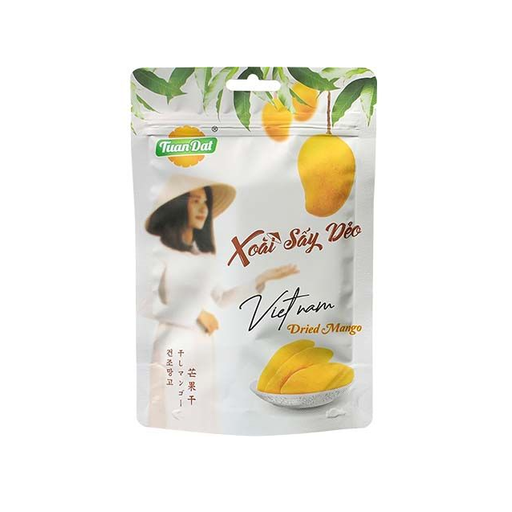
Why this product suits this profile: The 100-g pack offers an accessible introduction to Vietnamese dried mango with a soft, chewy texture.
The stated mango content of 95% can be compared directly with the ingredients list. Sugar and sulphite are clearly declared.
95% mango, 100-g format, vegan and gluten-free according to the product information.

Why this product suits this profile: According to the product information, the large mango slices contain no added sugar and are described as soft and chewy.
The ingredients list names mango slices, potato starch and sodium metabisulphite; no added sugar is listed.
100-g pack, 71 g of carbohydrates per 100 g and mango slices with no stated added sugar.
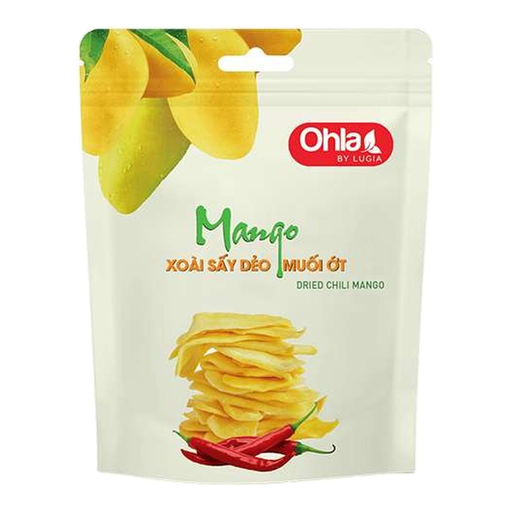
Why this product suits this profile: The 200-g pack is aimed at people who regularly choose a tropical fruit snack with chilli and a sweet and tangy flavour profile.
The heat is clearly identified as a chilli variety. The ingredients and nutritional information list mango, sugar, chilli and sodium metabisulphite.
200-g format, 334 kcal per 100 g according to the product information and explicitly positioned as a spicy mango snack.
We have put together a complete, regularly updated list of products that fully meet these strict selection criteria and the safety regulations applicable in the EU.
According to the product information, some products are gluten-free, including certain pure mango varieties. Others may be labelled differently because of flavourings, spice blends or the production environment. Always check the allergen information on the relevant pack.
The opened pack should be tightly sealed and protected from heat, moisture and direct sunlight. Some products require refrigerated storage and consumption within a specified period. The instructions provided by the relevant manufacturer are authoritative.
For one person or your desk, 50 to 100 grams is easy to portion. Packs of 150 to 227 grams are more suitable for sharing or regular consumption. If you are trying new varieties such as Philippine dried mango, Vietnamese varieties or dried mango with chilli, you can start with a smaller pack.