
Lieferung heute & morgen

Qualitätsgarantie

Willkommens-Angebote freischalten: KOSTENLOSE Lieferung | Bis zu 80 % RABATT | Kostenlose 30-Tage-JoyPlus-Testphase
App herunterladen
In Germany, dried red dates are best known as jujube, Chinese dates or red jujube. However, the fruit varies considerably in size, texture, sweetness and processing. If you choose solely based on eye-catching packaging or the word “premium”, you may easily end up with a pack that is unsuitable for your intended use.
It is therefore worth checking the ingredients list, stone information, pack size and preparation instructions before buying. This makes it easier to assess whether the dried Chinese dates are suitable as a snack, for tea or for cooking.
Removing water from fruit significantly increases the amount of sugar per 100 grams compared with fresh fruit. Among the products considered, the stated carbohydrate content ranges from 64.0 to 80.7 grams per 100 grams, for example. The sugar content also varies considerably from one product to another.
Processed varieties may also contain added sugar, syrup or sweeteners. This applies, for example, to candied jujube, fruit confectionery or snacks with sesame. If you are looking for the shortest possible ingredients list, favour products made with 100% jujube and compare the nutritional information with your own dietary habits.
Many dried red dates are sold with the stone still inside. This can be suitable for tea or soups cooked for a long time, but is less practical when eating them as a snack. Terms such as “pitted jujube”, “pitted” or “seedless” indicate that the stone has been removed. Even so, you should check the specific product description, as the processing method and texture may differ.
Some dates from China can be eaten straight from the pack. Other products must be washed and cooked before consumption according to the packaging instructions. This is particularly important with larger cooking packs. For a quick jujube snack, products that are ready to eat or explicitly labelled “ready to eat” are the better choice.
For an unprocessed snack, an ingredients list stating Jujube 100% is a clear and easy-to-check indicator. Products containing sugar, glucose syrup, maltitol, sesame, walnuts or flavourings are no longer pure dried fruit. This does not necessarily make them unsuitable, but they should match your intended use.
If you have allergies, the allergen information on the relevant packaging is decisive. Some sesame snacks also contain nuts. Product-page information should be checked against the label before buying.
The texture also depends on moisture, ripeness and packaging. Once opened, the pack should be tightly sealed and stored in a dry place.
For occasional tea or a small supply of red dates for snacking, 200 to 500 grams may be sufficient. Frequent users who regularly prepare soups, porridge or desserts may wish to consider larger quantities such as 800 grams or 1 kilogram. Individual portions, such as 30 bags of 30 grams each, make storage and portioning easier, but create more packaging waste.
Nutritional information should always be read per 100 grams. A portion can vary significantly depending on the size of the fruit and cannot be assessed by the number of pieces alone.
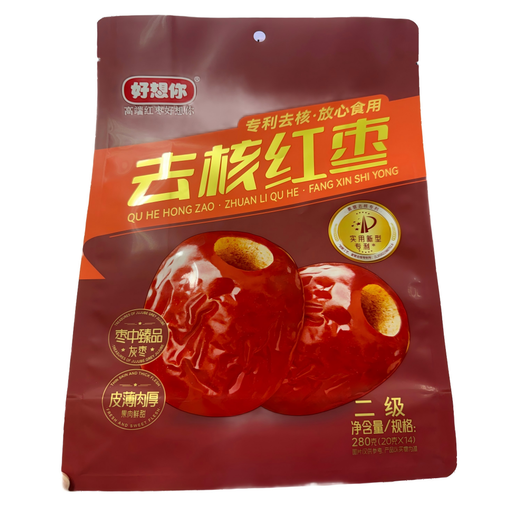
Why this product suits the profile: The 280 g pack combines pitted jujube with a convenient quantity for first recipes, tea or snacking straight from the pack.
The product information lists jujube as the only ingredient and specifies that the fruit is pitted. This removes an extra step when enjoying it as a snack.
280 g net weight, pitted fruit and ready to eat according to the product description.
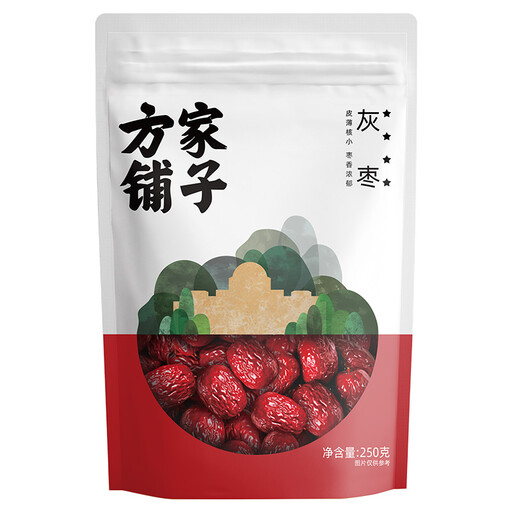
Why this product suits the profile: The pack contains 100% dried Loulan jujube and is described as suitable for snacking, tea, soups, porridge and desserts.
The ingredients list is limited to dried Loulan jujube. The advice to rinse briefly and store in an airtight container makes practical use clear.
250 g pack size, a pure ingredient and stated uses for sweet and savoury dishes.
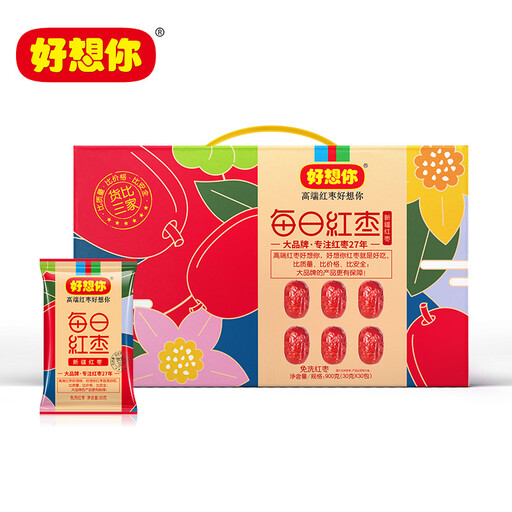
Why this product suits the profile: The 30 individual 30 g bags are ideal for regular use, keeping a supply at home and easy portioning on the go or at home.
The product description specifies whole jujube with the stone. This should be considered before eating the fruit directly and prevents incorrect expectations about its processing.
900 g total quantity, 30 portion bags and, according to the product information, suitable for snacks, tea, porridge, soups and desserts.
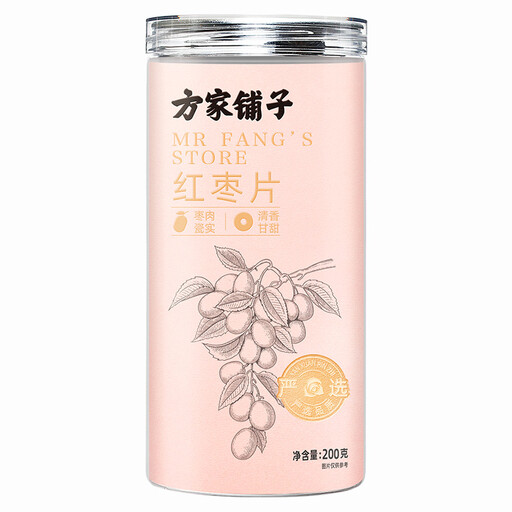
Why this product suits the profile: Pre-cut slices are a practical choice for using jujube in tea, soups, porridge and baked goods when whole fruit is not needed.
The cut format reduces preparation time and the risk of accidentally biting into a stone while cooking or drinking.
200 g of slices, ready to eat according to the product information and intended for tea, soups, porridge, baked goods and desserts.
We have put together a complete, regularly updated list of products that fully meet these strict selection criteria and the safety regulations applicable in the EU.
Dried red dates should be stored in a cool, dry place away from direct sunlight. Once opened, an airtight container is recommended. Moisture can alter the texture and shorten shelf life. The best-before date on the packaging remains the key reference.
For tea, whole or sliced fruit can be infused with hot water. When using jujube for soups and porridge, the fruit is usually cooked with the dish. Whole fruit with stones should be checked before serving. Pitted jujube can also be used in baked goods, desserts, muesli mixes or fillings.
For products with different preparation instructions, such as “cook before consumption”, the information on the label takes precedence. Crispy or candied jujube is generally intended as a ready-made snack and is not automatically suitable for every cooking application.
No. In the Asian food trade, red dates usually refer to jujube or Chinese dates. European dates generally come from a different plant species and differ in shape, flavour and texture.
That depends on the product. Variants explicitly labelled as ready to eat are intended for direct consumption. Products stating “cook before consumption” must be prepared accordingly. With whole fruit, you must also take the stone into account.
The specific best-before date is shown on the packaging. To maintain the best possible quality, the fruit should be stored in a dry, cool, dark place and sealed airtight once opened. If there are changes in smell, colour or surface, the product should no longer be used.