
Lieferung heute & morgen

Qualitätsgarantie

Willkommens-Angebote freischalten: KOSTENLOSE Lieferung | Bis zu 80 % RABATT | Kostenlose 30-Tage-JoyPlus-Testphase
App herunterladen
Dried tropical fruit adds variety to your snack bowl, office drawer or lunchbox. However, products such as soft mango, crunchy banana chips, aromatic guava and dried jackfruit can differ considerably. If you choose based solely on eye-catching packaging or terms such as “natural”, you can easily overlook ingredients, allergens and serving sizes.
This Joybuy Product Recommendation Officer’s buying guide explains what UK consumers should look out for when shopping and which products suit different snacking habits.
When fruit is dried, its natural fruit sugar becomes concentrated as the water is removed. Manufacturers may also add sugar, syrup or seasoning mixes. As a result, dried mango can be considerably sweeter than a variety with no added sugar.
Checking the ingredients list is essential:
For example, the ingredients list for Jia Jian Cheng Chu Philippine Style Dried Mangoes consists of mango, sugar, citric acid and sodium metabisulphite. According to the product information, mango makes up 90 per cent of the product. Seeberger Soft Dried Mango Slices, on the other hand, are described as containing no added sugar, but also contain sodium metabisulphite as an antioxidant.
Marketing terms are no substitute for complete labelling. Fruit snacks with an exotic flavour profile may contain sweeteners, flavourings, salt or oils. This also applies to crunchy products: banana chips and plantain chips are often prepared with vegetable oil and therefore should not be equated with untreated dried fruit.
A 250-g pack can be practical for families or regular users. For occasional snacking, smaller formats may be more suitable, as opened products can quickly lose their crunch depending on the variety, or may need to be refrigerated after opening. With dried fruit, the price per 100 grams is also more informative than the pack price alone.
The ingredients list shows whether you are buying pure fruit, a sweetened snack or a fried product. Dried guava and mango may contain sulphites as preservatives or antioxidants. Anyone with a known sensitivity to sulphites should check the labelling particularly carefully.
It is also worth taking a closer look at products containing palm oil or other vegetable oils. This includes banana chips and plantain chips. The label “vegan” or “vegetarian” describes whether a product is suitable for these diets, but says nothing about its energy, sugar or fat content.
The consistency you prefer depends on how you plan to use the product:
With vacuum-fried products, the method determines the texture. However, the term is no substitute for checking the fat and energy information. According to the product information, MUSHAN Banana Chips contain 35.7 grams of fat and 538 kilocalories per 100 grams. This should be taken into account when planning portions.
Small bags of between 50 and 100 grams are ideal for a rucksack, desk drawer or lunchbox. For several people or use in baking, a 180- or 250-g pack may be more practical.
After opening, follow the instructions on the pack:
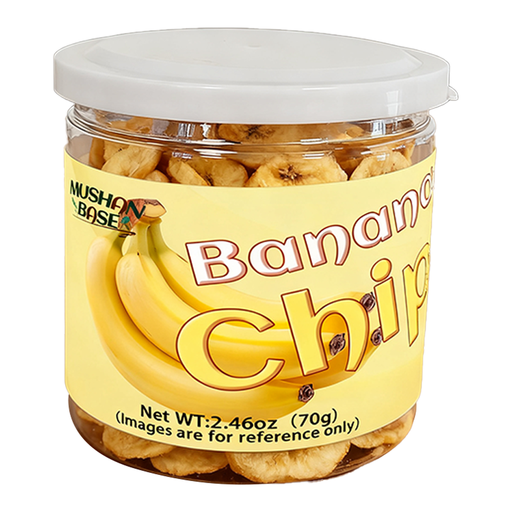
Why this product suits this profile: The 70-g pack is an easy introduction to crunchy fruit snacks and is convenient to take with you when you are out and about.
The ingredients list states 81.1 per cent banana and 18.9 per cent vegetable oil. No added sugar is listed.
Crunchy texture, 70-g format, no listed allergens and versatile enough to enjoy as a snack or yoghurt topping.

Why this product suits this profile: The soft mango strips are ideal for anyone who prefers a chewy texture and a straightforward ingredients list.
The product information indicates that no sugar has been added. At the same time, sulphites are explicitly listed as an allergen warning.
100-g pack, soft strips, 326 kilocalories and 54 grams of sugar per 100 grams according to the product information.
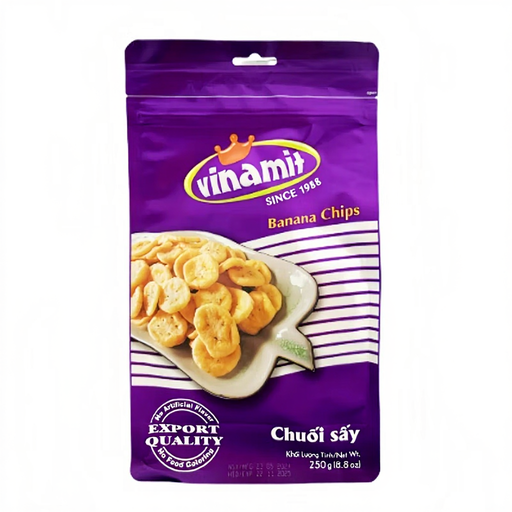
Why this product suits this profile: The larger format is designed for households, offices or anyone who regularly uses banana chips as a topping and snack.
The ingredients list states 98 per cent banana and vegetable oil. After opening, the resealable bag should be sealed tightly.
250-g pack, 98 per cent banana according to the product information, and suitable as a snack, baking ingredient or crunchy topping.
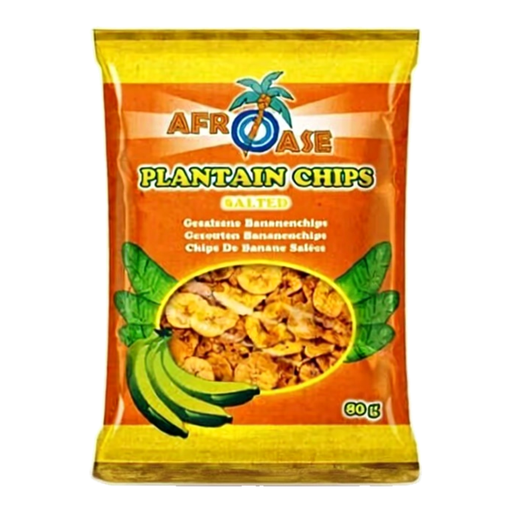
Why this product suits this profile: The salted plantain chips are a great option for anyone looking for a savoury, crunchy snack instead of sweet fruit.
The ingredients list is limited to plantain, palm oil and sea salt. According to the product information, the salt content is 0.9 grams per 100 grams.
80-g pack, 84 per cent plantain according to the product information, no listed allergens and a savoury flavour.
If you prefer soft, sweet-and-sour fruit snacks, dried guava is available, for example, in a 50-g pack from MUSHAN BASE or in 100-g and 180-g varieties from Tuan Dat and OHLA. According to the product information, Vinamit Dried Jackfruit contains 98 per cent jackfruit and can be enjoyed on its own, in muesli or as a dessert topping.
For a spicy combination, TAMARIND HOUSE Spicy Tamarind Banana combines banana, tamarind, chilli, coconut and palm sugar. Be&Cheery Dried Plums, on the other hand, combine sweet and sour notes but contain sugar, salt and sweeteners. The respective ingredients and nutritional information on each product page will help you compare them directly.
We have put together a complete, regularly updated list of products that fully meet these strict selection criteria and the safety regulations applicable in the EU.
Many products consist exclusively of fruit, sugar, oil, salt or acidity regulators and are described as vegan according to the product information. Nevertheless, always check the current ingredients list and any warnings about traces of allergens.
This depends on the product and its packaging. Crunchy chips should be stored dry and sealed airtight. According to the manufacturer’s information, soft mango or guava may need to be refrigerated after opening and consumed within a few days. The instructions on the relevant pack are the authoritative guide.
A direct comparison is only meaningful when based on the nutritional values per 100 grams. Banana chips often contain more fat and energy because of the oil used. Dried mango is usually low in fat, but its fruit sugar and any added sugar can result in a high carbohydrate and sugar content. The specific recipe is what matters.