For a toddler snack, dried fruit is better thought of as a fruit portion than as a targeted source of protein: the nutritional information for two fruit products listed by EDEKA24 falls below the EU criteria for a ‘source of protein’ claim. If protein is your main priority, choose a protein-rich component that’s suitable for your child’s age separately from the dried fruit. When choosing the fruit itself, consider the size and texture of the pieces; according to the Healthy Start Network, whole nuts, seeds and other small, hard pieces are not suitable snacks for toddlers.
Who should take care when choosing?
Parents considering the snack’s texture
You’re looking for dried fruit for a child aged around one to three and checking whether they can chew the pieces safely. With mixes, pay particular attention to whole nuts, seeds and other small, hard ingredients, which the Healthy Start Network warns against for toddlers.
Parents with a specific protein goal
You want to know how much protein a product contains according to its nutritional information, and whether its labelling matches the protein contribution you’re looking for. A fruit name or a single figure in grams won’t answer that question on its own.
Parents considering ingredients and dental health
You compare the ingredients and allergen information on the specific pack. Texture matters too: the consumer advice centre points out that sticky, sweet snacks are less kind to teeth.
What should you look for when buying?
When choosing dried fruit for a toddler aged around one to three, it’s worth checking first whether the pieces are easy to eat, then their actual protein contribution, and finally the ingredients and snacking habits.
| What to consider |
What to check |
Who it matters most to |
| Piece size and texture |
Check how soft the fruit is, whether it’s been pitted and the size of the pieces. Don’t choose whole nuts, seeds or small, hard pieces as a snack for a toddler; the Healthy Start Network advises against them. |
If my child can’t yet chew firm pieces safely, choosing an easy-to-eat snack comes first. This is the top priority for around 36% of consumers. |
| Protein contribution |
Compare the protein and energy values per 100 g on the specific pack. EU Regulation (EC) No 1924/2006 sets the minimum at 12% of the energy value from protein for a ‘source of protein’ claim and 20% for a ‘high protein’ claim. |
I’m looking for a meaningful protein contribution and don’t want to choose dried fruit for that reason based on a figure in grams alone. This is a priority for around 36% of consumers. |
| Ingredients and sticky sweetness |
Read the ingredients list and allergen information. For sultanas, also check for sulphur dioxide or sulphites. Consider whether the fruit might be eaten frequently as a sticky snack between meals. |
If dried fruit is offered regularly, I want to know what’s in it and avoid constant chewing of sticky pieces. These points matter most to around 28% of consumers. |
Which buying mistakes can you avoid?
-
Assuming a protein figure in grams means ‘high protein’
The protein value per 100 g alone doesn’t determine whether a product qualifies for this claim. EDEKA24 lists 2.3 g of protein and 259 kcal per 100 g for Gut & Günstig dried prunes, and 7.6 g and 327 kcal per 100 g for KoRo strawberry slices. That works out to around 3.6% and 9.3% of the energy value from protein respectively; both examples fall below the EU criterion for a ‘source of protein’ claim.
Compare the nutritional information on the specific pack for each variety rather than assuming that the protein value of another fruit product applies.
-
Choosing nut and fruit mixes as a snack for toddlers
A higher protein value doesn’t make whole or coarsely chopped nuts and seeds suitable for toddlers. The Healthy Start Network identifies small, hard foods as a choking risk.
Check mixes for these ingredients. If you want to include nuts, they need to be chopped finely, grated or puréed into a form that’s suitable for a child.
-
Reading only the front of the pack
A picture of fruit doesn’t tell you everything that’s in the product. Food Clarity explains that the ingredients list is where you’ll find out if sultanas have been treated with sulphur dioxide; this information doesn’t have to appear on the front of the pack.
Compare the ingredients list, nutritional information and allergen details. For sultanas, check for sulphur dioxide, sulphites or the E numbers E 220 to E 228.
-
Offering dried fruit to nibble on all the time
The consumer advice centre says sticky, sweet snacks are less kind to teeth. Frequent snacking between meals also doesn’t change the fact that dried fruit won’t necessarily provide the protein you’re looking for.
Offer fruit as a considered part of a snack, and check the pieces before serving.
Brands and retailers to consider
Seeberger
Seeberger sells dried fruit, including mango and apricots.
- You can compare different types of fruit product by product.
- Check the ingredients, nutritional information and pieces for each variety; the brand alone won’t tell you about its protein contribution or whether it’s suitable for a particular child.
REWE
REWE’s online range includes dried fruit in a variety of formats.
- You can compare different products by checking their individual ingredients and nutritional information.
- With mixes, you’ll need to check the ingredients and the size of the pieces separately.
EDEKA
At EDEKA24, dried fruit sits alongside nuts and fruit and nut mixes.
- Specific nutritional information is listed for individual products, such as dried prunes.
- According to the Healthy Start Network, whole nuts from the same category aren’t suitable as a snack for toddlers.
ALDI SÜD
The range includes FARMER NATURALS dried prunes as well as nut and fruit products.
- Dried prunes and mixes are clearly different types of product.
- If you’re choosing a nut and fruit product for a toddler, check it for hard pieces.
ALDI Nord
The range includes dried fruit and nut mixes, including a TRADER JOE’S Protein Nut Mix.
- Pure fruit products and mixes can be considered separately.
- The name of a nut mix doesn’t prove that it meets a particular EU nutritional claim or is suitable as a ready-to-eat snack for a toddler.
Dried fruit as the fruit portion of a snack
This product selection covers soft, pitted dried fruit as a possible fruit portion in a supervised snack. Check that the pieces are suitable for your child before offering them.
 No image available
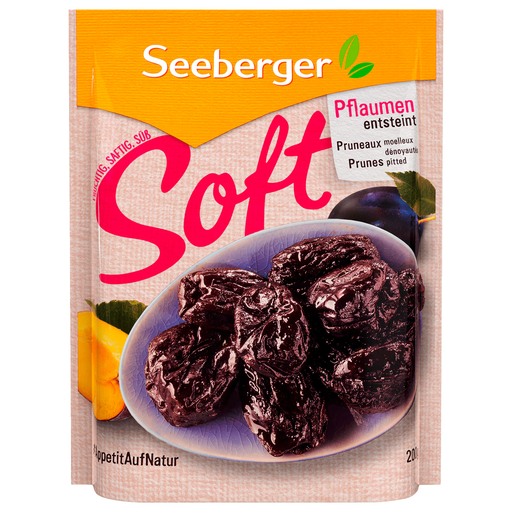
Seeberger soft pitted prunes, 200 g
These prunes could be served as the fruit portion of a supervised snack if your child can chew the pieces safely.
Soft, pitted prunes in a 200-g pack. Check the size of the pieces and look out for any possible fragments of stone before serving.
View at Joybuy
Frequently asked questions
Are dried fruits a high-protein choice for toddlers?
Not just because they contain protein. EU Regulation (EC) No 1924/2006 sets the minimum for a ‘high protein’ claim at 20% of the energy value from protein. Based on the nutritional information listed by EDEKA24, Gut & Günstig dried prunes and KoRo strawberry slices fall below this figure; other products need to be assessed individually.
Can I offer a toddler a nut and fruit mix as it is?
Not if it contains whole or coarsely chopped nuts, seeds or other small, hard pieces. The Healthy Start Network warns that these foods pose a choking risk; if you’re including nuts, they need to be finely chopped, grated or puréed into a form that’s suitable for a child.
How can I tell if sultanas have been treated with sulphur dioxide?
Check the ingredients list rather than just the front of the pack. Food Clarity explains that the relevant information may be listed there; look for sulphur dioxide, sulphites or E 220 to E 228.
Why does texture matter when choosing dried fruit?
Your child needs to be able to chew the pieces safely, so check their size and softness before serving. Sticky, sweet snacks are also less kind to teeth, according to the consumer advice centre, if they’re eaten frequently between meals.


