
Lieferung heute & morgen

Qualitätsgarantie

Willkommens-Angebote freischalten: KOSTENLOSE Lieferung | Bis zu 80 % RABATT | Kostenlose 30-Tage-JoyPlus-Testphase
App herunterladen
Choosing a 1:24 RC drift car can be a challenge given the array of technical specifications and marketing promises. Many beginners invest in a model that looks promising at first glance but quickly leads to frustration. Certain features are often over-promoted, while crucial functions necessary for a controlled drifting experience are missing. This guide will help you understand the essential criteria and avoid common purchasing mistakes.
Before deciding on a model, it's helpful to know the three most common issues that can significantly detract from the driving enjoyment.
To avoid the problems mentioned above, you should look for three core technical features. These determine whether a model is a true hobby-grade RC car for drifting or just a simple toy.
A key feature for ambitious drivers is proportional control. Unlike digital on/off controls, it allows for infinitely variable adjustment of the throttle and steering angle. This means you can apply exactly as much throttle or steer as sharply as the situation demands. This is the fundamental requirement for controlled drifts. In combination with a 4WD remote-controlled car (all-wheel drive), engine power is distributed evenly to all four wheels. The result is more stable handling and better control when initiating and holding drift angles.
An RC car with a gyro is an invaluable aid, especially for beginners. The gyroscope is a small sensor that detects unwanted rotational movements of the vehicle (like the rear end breaking away) and automatically corrects them with minimal counter-steering inputs. The sensitivity of the gyro is often adjustable on hobby-grade models, allowing you to tailor the level of assistance to your improving skills. It helps keep the vehicle on course and provides a sense of control that is essential for the learning process.
The 1:24 scale is a good compromise. The vehicles are compact enough for indoor use but also large enough to be fun on smooth outdoor surfaces like concrete or asphalt. Ensure that the package includes two sets of tires: one set of hard plastic drift tires and one set of rubber tires for normal grip. This allows you to switch flexibly between drifting and racing. Additional features like an RC car with LED lighting, which can be switched on and off via the remote control, enhance the realism and fun factor, especially when driving at dusk.
Based on the criteria above, we have compiled a few models for different user profiles.
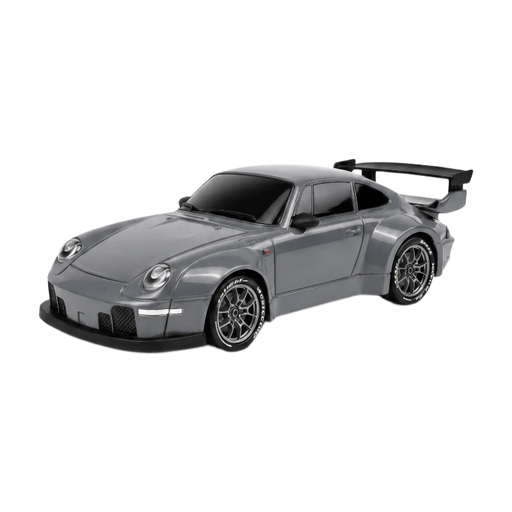
Why This Fits Their Persona: This model is designed for those who want to get serious about the drifting hobby. It offers all the necessary features to learn the technique from the ground up without being held back by technical shortcomings.
It features a fully proportional 2.4G control system, an adjustable gyroscope, and comes with two sets of tires (drift and racing). This directly bypasses all three major pitfalls.
Complete Hobby-Grade Package: All-wheel drive, gyro, proportional controls, and interchangeable tires provide a solid foundation for real drifting. The durable ABS body is impact-resistant.
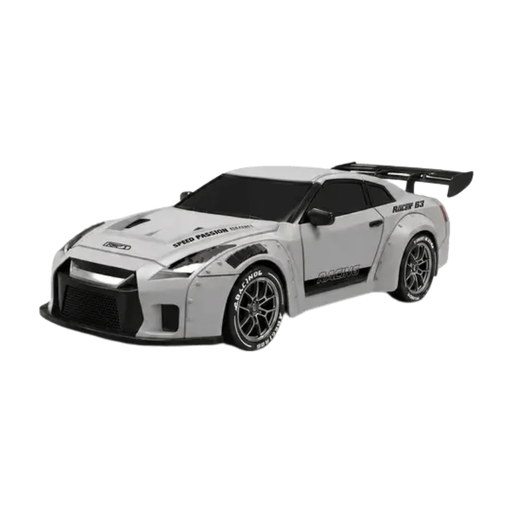
Why This Fits Their Persona: For drivers who not only value technical performance but also appreciate an iconic aesthetic. This model combines the same high-performance technology with the design of a famous sports car.
Technically identical to the retro model, it also offers proportional controls, a gyro, 4WD, and two sets of tires. It proves that appealing design doesn't have to come at the expense of functionality.
Style and Substance: The combination of the GTR wide-body look and full-fledged drift technology makes it a real eye-catcher. The remote-controlled LED lights complete the look.
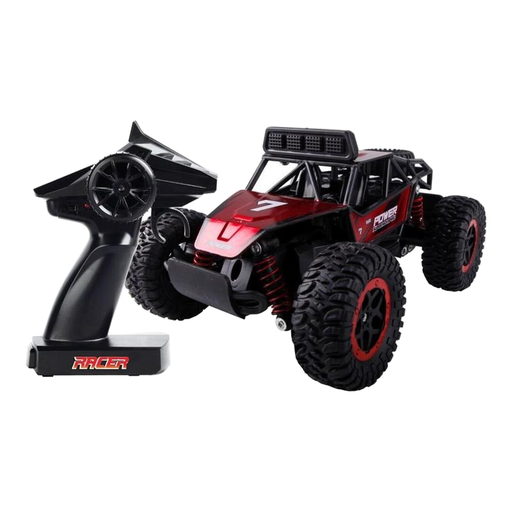
Why This Fits Their Persona: Ideal for kids or absolute beginners who want to try out the RC hobby without immediately specialising in the demanding art of drifting. A good all-rounder for general driving fun.
This model is not marketed as a drift car, thus avoiding false expectations. It's an honest, simple buggy for getting started, but it lacks drift-specific features like a gyro and proportional controls.
Easy Entry Point: The vehicle is ready to run out of the box and offers straightforward fun for indoors and outdoors, with speeds up to 18 km/h and a run time of up to 20 minutes.
We have compiled a complete, up-to-date list of products that fully meet these strict selection criteria and German safety regulations.
The main difference lies in the tuning and components. An RC drift car typically features hard plastic tires with low grip, an all-wheel drive (4WD) system for controlled power delivery, and often a different chassis geometry. Normal RC cars use rubber tires for maximum grip and are designed for speed or off-road capability, not for controlled sliding through corners.
For learning to drift, a gyroscope is highly recommended. It makes getting started much easier by stabilising the vehicle and preventing it from immediately losing control with every small mistake. It acts like a driving aid, allowing the driver to focus on the timing of throttle and steering. Advanced drivers often reduce the gyro assistance or turn it off completely, but for beginners, it's a valuable tool to avoid frustration.
Battery life depends heavily on the model, battery capacity (measured in mAh), and driving style. For the hobby-grade 1:24 scale models presented, the run time per battery charge is typically between 15 and 30 minutes. Continuous driving at high speed or aggressive drift manoeuvres consume more energy than smooth, steady driving. Many sets already include one or more spare batteries to allow for longer sessions of fun.