
Lieferung heute & morgen

Qualitätsgarantie

Willkommens-Angebote freischalten: KOSTENLOSE Lieferung | Bis zu 80 % RABATT | Kostenlose 30-Tage-JoyPlus-Testphase
App herunterladen
As a Joybuy Product Recommendation Officer, I see a daily challenge faced by many people in rental apartments or newly furnished homes: How do you create order and hang items without permanently damaging walls with drill holes? The fear of trouble with the landlord or the hassle of getting tools often means walls remain bare and unused.
This article is designed to offer you a practical guide. We will introduce you to various types of drill-free hooks and explain what to look for when making your selection to find a suitable and reliable solution for your home—whether for the bathroom, kitchen, or hallway.
The range of self-adhesive hooks is vast. To make the right decision, three criteria are particularly important: weight capacity, material, and the intended mounting surface.
The most important characteristic of a hook is its ability to securely hold the desired weight. The maximum weight capacity is specified by the manufacturer and should always be respected. A lightweight adhesive hook for a tea towel has different requirements than a heavy-duty adhesive hook for a heavy bathrobe. Check the product description carefully. As a general rule, larger adhesive surfaces distribute weight more effectively and often provide greater stability.
The material influences not only the appearance but also the durability and suitability for specific rooms.
Not every drill-free wall hook adheres equally well to every surface. For optimal adhesion, a smooth, clean, and non-porous surface is crucial. Tiles, glass, metal, and lacquered wood are ideal substrates. On rough surfaces like textured wallpaper, untreated wood, or porous plaster, adhesive hooks cannot develop their full adhesive strength. Clean the surface thoroughly before installation and let it dry completely. Also, observe the manufacturer's recommended curing time—often 24 hours—before loading the hook.
Based on functionality, material, and design, we have compiled a selection of products that cover a range of different needs.
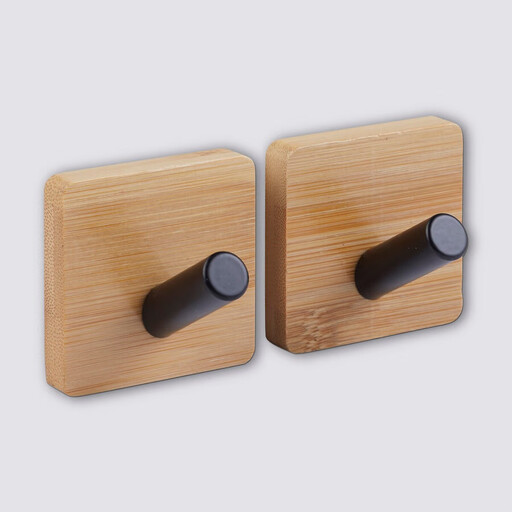
Why it stands out This set from 5five combines the functionality of a steel hook with the natural aesthetic of bamboo. The square base plate made of FSC-certified bamboo gives the hook a warm and high-quality look that sets it apart from purely functional plastic or metal hooks.
Advantages
Who is it for? Ideal for those looking for a stylish storage solution for light items such as keys, tea towels, or small accessories in dry living areas like the hallway, kitchen, or bedroom.
View Product: 5five Bamboo Adhesive Hook Set
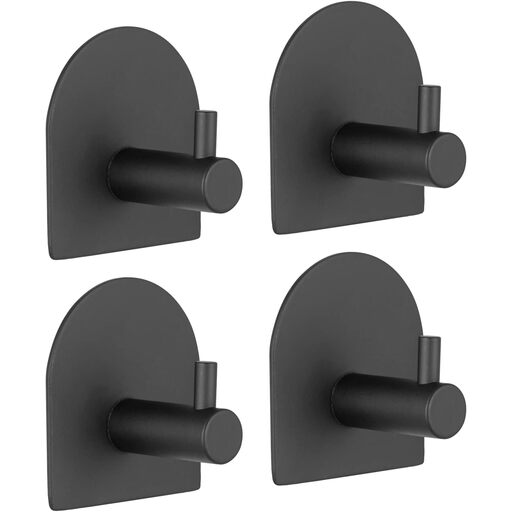
Why it stands out The Ibergrif hooks are designed for high load capacity and durability. Made from stainless steel with a lacquered finish, they are both waterproof and rust-resistant. According to the manufacturer, the maximum weight capacity is up to 10 kilograms per hook, making them a very robust option among adhesive hooks.
Advantages
Who is it for? Perfect for anyone needing a strong and durable mounting solution for humid environments. Those who want to securely hang heavy towels, bathrobes, or kitchen utensils will find this a suitable option.
View Product: Ibergrif Self-Adhesive Hooks
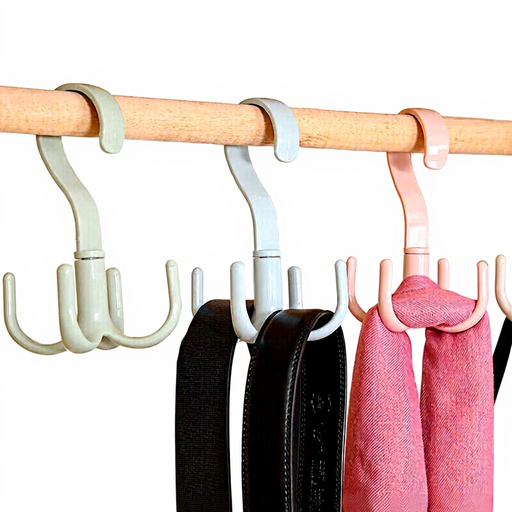
Why it stands out This hook from ochama takes a different approach: instead of sticking, it simply hangs over an edge. The playful octopus design with multiple arms makes it not only useful but also a decorative element. It offers flexible hanging options without any installation.
Advantages
Who is it for? For anyone looking for an extremely flexible and mobile solution. Ideal for hanging bags, headphones, light jackets, or kitchen utensils in places where sticking or drilling is not possible or desired.
Our selection already covers many use cases. However, if you are looking for more specific designs, different materials, or hooks for special purposes, you can find more alternatives in our broader product category.
Discover More Nail Hooks and Fastening Solutions Here
1. How can you remove adhesive hooks without leaving residue? To remove a self-adhesive hook without damaging the wall, you can gently heat the adhesive strip with a hairdryer on a low setting. The heat will soften the adhesive. Then, slowly pull the hook downwards, parallel to the wall, instead of pulling it directly away from the wall. Any remaining adhesive residue can often be removed with a mild cleaning agent or rubbing alcohol.
2. On which surfaces do self-adhesive hooks stick best?Adhesive hooks achieve the best adhesion on smooth, clean, and non-porous surfaces. These include tiles, glass, metal, most plastic surfaces, and smooth lacquered wood. Avoid applying them to textured wallpaper, vinyl wallpaper, untreated plaster, or heavily textured surfaces, as the adhesive cannot form a sufficient bond there.