
Lieferung heute & morgen

Qualitätsgarantie

Willkommens-Angebote freischalten: KOSTENLOSE Lieferung | Bis zu 80 % RABATT | Kostenlose 30-Tage-JoyPlus-Testphase
App herunterladen
Mounting items on walls often presents a challenge for both tenants and homeowners. Drill holes are permanent, create a mess, and can lead to issues during end-of-tenancy inspections. Drill-free hooks offer a practical alternative. They enable quick and flexible organisation in the kitchen, bathroom, and hallway without damaging wall surfaces.
This guide introduces various mounting solutions and offers guidance to help you find the perfect product for your needs. We will examine criteria such as material, load capacity, and installation method to provide you with a basis for an informed decision.
Selecting the right hook depends on several factors. To ensure a reliable and long-lasting installation, the following points should be considered.
The maximum load capacity is one of the most critical product features. Manufacturers typically specify a maximum weight that should not be exceeded. Before purchasing, check if the hook is designed for the weight of the item you plan to hang—whether it's a towel, a bathrobe, or a kitchen utensil. A heavy-duty hook strong enough for heavy coats has different requirements than one for tea towels.
The surface where the hook will be installed is just as crucial. Self-adhesive hooks adhere best to smooth, clean, and non-porous surfaces like tiles, glass, metal, or lacquered wood. Rough surfaces such as textured wallpaper or porous plaster are unsuitable for most adhesive solutions. Special adhesive systems exist for such cases, but their suitability must be verified on a case-by-case basis.
The most common methods for drill-free installation are adhesives and suction cups.
The material affects not only the appearance but also the durability and suitability for specific environments. Stainless steel is rust-proof and robust, making it an excellent choice for bathroom hooks. Plastic models are often more budget-friendly and available in many colours. Hooks with wooden elements, like bamboo, add a visual accent and fit well in living areas or hallways. For adhesive coat hooks in an entryway, a sturdy construction of metal or solid plastic is recommended.
Here is a collection of products that meet different requirements for design, material, and installation type.
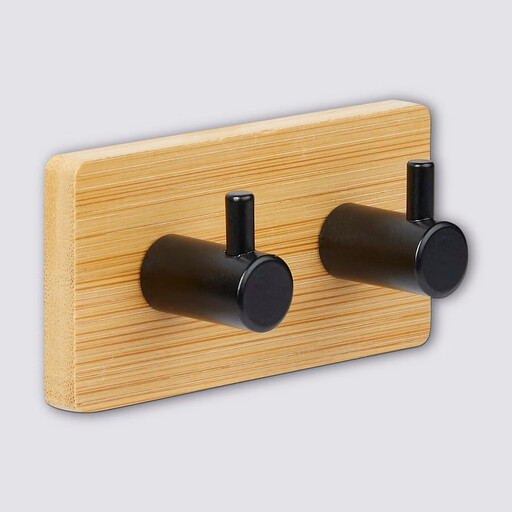
What makes it stand out This double hook from 5five combines the natural look of bamboo with the stability of steel. Its design blends harmoniously into kitchens, hallways, or bathrooms, offering an aesthetic alternative to purely plastic or metal hooks.
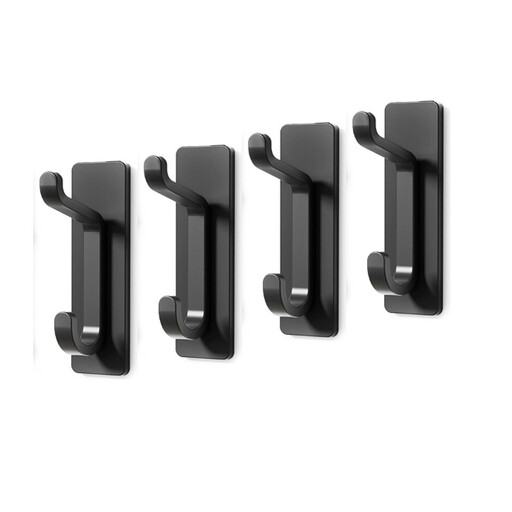
What makes it stand out This set from JORDAN&JUDY includes four stainless steel hooks in a sleek, black design. The hooks are designed for high load capacity and, thanks to their rust-proof material, are ideal as no-drill towel hooks in the bathroom or as coat hooks.
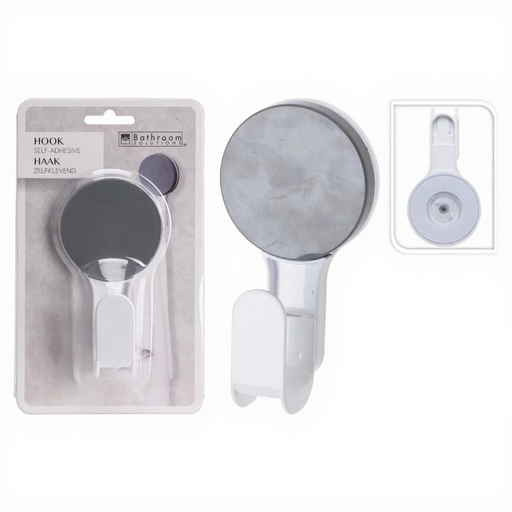
What makes it stand out This hook, made of ABS plastic, uses suction cup technology for mounting. It is specifically designed for extremely smooth, non-porous surfaces like glass, mirrors, or high-gloss tiles. Its greatest strength lies in its flexibility, as it can be removed and repositioned at any time without leaving residue.
The products featured cover common use cases. However, if you are looking for more specific solutions or a wider selection of designs and mounting systems, it's worth exploring our extended range.
? Discover more hooks and label holders in our collection
1. How much weight can drill-free hooks hold? The load capacity varies greatly depending on the product, adhesive, and surface. It can range from under one kilogram for small decorative hooks to several kilograms for special heavy-duty adhesive hooks. It is essential to check and follow the manufacturer's specifications on the packaging to prevent items from falling.
2. How do you remove adhesive hooks without leaving residue? Many modern adhesive hooks can be removed by pulling the adhesive strip slowly and evenly. For more stubborn adhesives, it can help to gently warm the glue with a hairdryer on a low setting. This softens it, making it easier to peel off. Any remaining residue can often be removed with rubbing alcohol or a special adhesive remover. Always test such products on an inconspicuous area first.
3. On which surfaces do self-adhesive hooks work best?Adhesive hooks achieve the best bond on smooth, solid, clean, and dry surfaces. These include tiles, glass, metal, most plastics, and smooth lacquered wood. Surfaces like wallpaper (especially textured types), untreated wood, plaster, or porous stone are unsuitable, as the adhesive cannot form a stable bond or could damage the surface upon removal.