
Lieferung heute & morgen

Qualitätsgarantie

Willkommens-Angebote freischalten: KOSTENLOSE Lieferung | Bis zu 80 % RABATT | Kostenlose 30-Tage-JoyPlus-Testphase
App herunterladen
As a Joybuy Product Recommendation Officer, I see every day how a simple but clever solution can make daily life easier. Drill-free hooks are one such solution, especially for renters, students, or anyone who wants to avoid unsightly holes in their walls. But the market is flooded with products whose promises often exceed their holding power. Before you make a decision you might later regret, it's essential to know the most common pitfalls.
The three most common mistakes when buying drill-free hooks are:
To avoid these problems, you should focus on three fundamental technical parameters instead of trusting marketing promises.
Choosing the right technology is the foundation for a reliable hold. Each method has specific advantages and disadvantages.
The material affects not only the appearance but also the durability, especially in demanding environments.
Always check the manufacturer's specifications for the maximum load capacity and, more importantly, the list of suitable and unsuitable surfaces. A reputable manufacturer will clearly state that its product is not suitable for wallpaper, porous, or uneven surfaces. The load capacity rating should be understood as a maximum value under ideal conditions. Always factor in a safety margin for everyday use.
Here are some products that represent a considered choice for specific use cases, based on their objective features.

Why it's a good fit: Ideal for anyone who wants to combine functionality with an appealing aesthetic. The combination of natural bamboo and steel fits well in modern living spaces and entryways.
This product avoids the pitfall of purely functional, unattractive hooks. It is a deliberate design element that doesn't need to be hidden.
The material combination of steel and FSC-certified bamboo provides a solid base for indoor use.
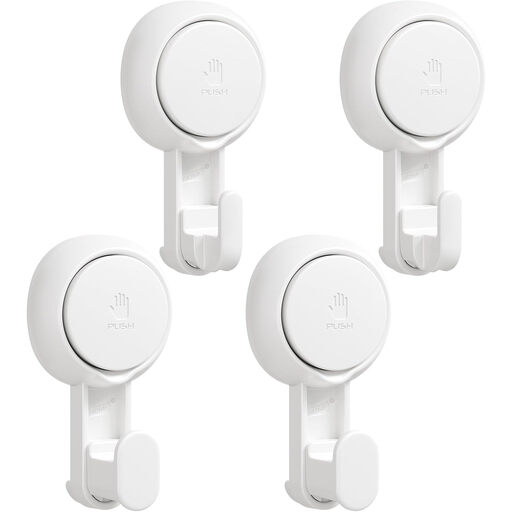
Why it's a good fit: Designed for use in bathrooms and showers. The vacuum suction technology is optimised for smooth tiles and glass, and the material is waterproof.
Directly addresses the problems of adhesion in wet areas and unrealistic load capacities by providing a clear specification for maximum load (up to 5 kg according to the manufacturer) and surface type (smooth, non-porous).
Tool-free installation by pressing it on. The hook can be repositioned multiple times without losing suction power, offering maximum flexibility.
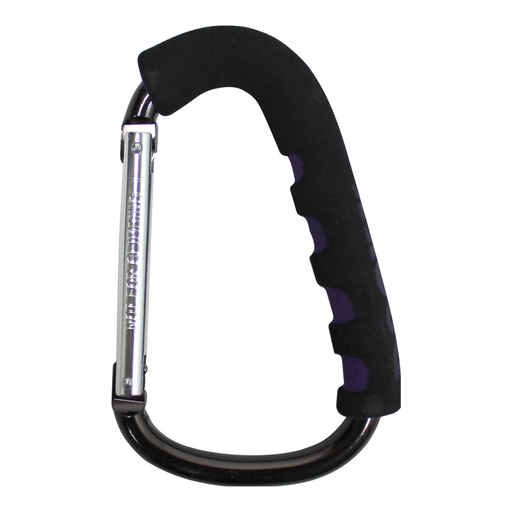
Why it's a good fit: This hook isn't a wall fixture, but a mobile helper. Designed as a **stroller hook**, it securely attaches bags to the handlebar of a stroller or shopping cart.
Completely bypasses the typical problems of wall hooks. Instead, the focus is on mobile stability. The non-slip neoprene layer prevents it from sliding on the handle.
Universal design that fits almost any stroller, buggy, or shopping cart. The robust aluminium ensures high load capacity for mobile use.
We've compiled a complete, up-to-date list of products that meet these strict selection criteria and comply with current regulations.
The load capacity varies greatly depending on the model, mounting technology, and surface. A small adhesive hook for a tea towel might only hold 500 grams, while a high-performance vacuum suction hook on a perfect surface can hold up to 5 kg, according to the manufacturer. Read the product description carefully and do not exceed the recommended load capacity. For heavy items like coats on a self-adhesive coat hook, you should choose models explicitly designed for higher weights.
In most cases, this is not recommended. The uneven structure of textured wallpaper prevents the adhesive from forming a sufficiently large and stable contact area. This leads to a significantly reduced holding power. There is also a high risk of tearing or damaging the wallpaper when the hook is removed. Always adhere to the manufacturer's recommendations for suitable surfaces.
With suction hooks, removal is simple: release the vacuum mechanism, and the hook comes off. With adhesive hooks, it depends on the adhesive. Some models have special pull tabs that stretch the adhesive strip, allowing it to release from the wall without residue. For others, it may help to gently warm the adhesive with a hairdryer to soften it. Then, pull the hook slowly and flat along the wall, rather than pulling it directly away from the wall.