
Lieferung heute & morgen

Qualitätsgarantie

Willkommens-Angebote freischalten: KOSTENLOSE Lieferung | Bis zu 80 % RABATT | Kostenlose 30-Tage-JoyPlus-Testphase
App herunterladen
As a Joybuy Product Recommendation Officer, I see daily how small gadgets can make everyday life easier. Drill-free hooks are one such solution—ideal for renters, students, or anyone who wants to keep their walls intact. But the market is flooded with products whose promises often exceed their holding power. Before you spend money on hooks that fall off the wall after just a few weeks, you should know the common pitfalls.
The three most common problems with drill-free hooks are an overestimated weight capacity, unclear information on surface suitability, and low-quality materials that quickly fail in damp environments. A hook that claims to hold 5 kg but gives up under the weight of a wet towel, or an adhesive pad that doesn't stick to textured wallpaper, are annoying and avoidable mistakes.
To find the right solution, don't be swayed by marketing promises. Instead, focus on three objective parameters: the mounting method, the stated weight capacity in relation to the material, and the texture of the surface where the hook will be installed.
Choosing the right mounting method is the foundation for a stable hold. Each technique has specific requirements for the mounting surface.
The maximum weight capacity is always specified for ideal conditions. A drill-free towel hook in a damp bathroom is subjected to different stresses than a key hook in a dry hallway.
No hook will stick to every surface. Before buying, check carefully which surfaces the product is suitable for.
Here are some recommendations tailored to specific use cases and the criteria mentioned above.
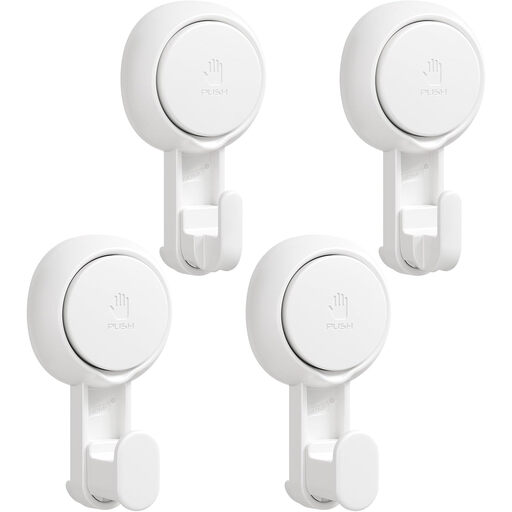
Why This Fits Their Persona: Ideal for renters who need a strong yet residue-free removable solution for the bathroom. Perfect for towels or bathrobes directly on the shower screen or on tiles.
The patented vacuum system ensures reliable adhesion, bypassing the problem of weak suction cups. The product description clearly defines the requirement for a smooth, non-porous surface.
High weight capacity of up to 5 kg (according to the manufacturer), waterproof, and can be repositioned multiple times without leaving adhesive residue.
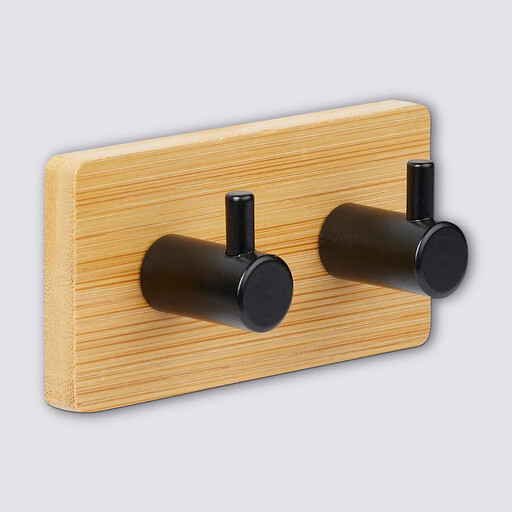
Why This Fits Their Persona: For anyone looking for a functional storage solution that also makes a visual statement. The combination of natural bamboo and steel fits well in modern kitchens or hallways.
This hook avoids the trap of a cheap plastic look by using high-quality materials. The weight capacity is designed for lighter items like keys or tea towels and is not overstated.
Stylish design with natural materials (bamboo, steel). Simple adhesive mounting on smooth surfaces.
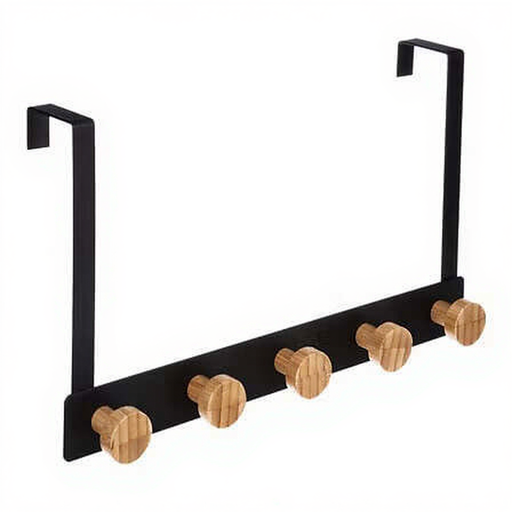
Why This Fits Their Persona: Perfect for anyone who wants to create storage space quickly and without any installation. Ideal for the back of bedroom or bathroom doors to hang jackets, bags, or bathrobes.
This solution completely bypasses the problems associated with adhesive or suction techniques. The only requirement is a suitable door—its function is clear and without hidden drawbacks.
No installation required, ready to use immediately, and offers plenty of storage with five hooks. Can be moved to a different door at any time.
We have compiled a complete, up-to-date list of products that fully meet these strict selection criteria.
1. Can I use suction cup hooks on textured wallpaper? No. Suction cup hooks require a completely smooth, airtight surface to create and maintain a vacuum. Textured wallpaper, porous plaster, or even slightly structured tiles are unsuitable because air can seep in, causing the hook to fall off.
2. How long do adhesive hooks really last? The lifespan of an adhesive hook depends heavily on the quality of the adhesive, surface preparation, the load, and environmental conditions. High-quality adhesive hooks on a clean, smooth surface can last for years. In damp environments or those with significant temperature fluctuations, their lifespan may be shortened.
3. How do I remove drill-free hooks without leaving residue? For suction cups, simply lift the edge to release the vacuum. For adhesive hooks, it depends on the system. Some models have special strips that you can pull to release the adhesive cleanly. For others, gently heating the adhesive pad with a hairdryer can help. You can then try to 'saw' the hook off the wall using dental floss or a thin plastic scraper. Always read the manufacturer's instructions for removal.