
Lieferung heute & morgen

Qualitätsgarantie

Willkommens-Angebote freischalten: KOSTENLOSE Lieferung | Bis zu 80 % RABATT | Kostenlose 30-Tage-JoyPlus-Testphase
App herunterladen
Mounting items on walls without reaching for a drill is a necessity for many renters, students, and homeowners. Whether for towels in the bathroom, kitchen utensils, or decorations, the demand for a simple, damage-free solution is high. However, the market for drill-free hooks is flooded with products whose promises often don't hold up in practice. This guide will help you avoid common purchasing pitfalls and make an informed decision.
Before you spend money on a solution that fails after just a few weeks, you should be aware of the typical problems that occur with low-quality products.
To avoid these problems, you should base your choice on objective criteria. Pay attention to the following three points to find a suitable and durable solution.
The crucial factor is the combination of the adhesive and the surface where the hook will be mounted. A heavy-duty adhesive formula is the basic requirement. However, always check the manufacturer's specifications to see which surfaces the product is recommended for. Smooth, non-porous surfaces like tiles, glass, metal, and painted wood are generally unproblematic. Caution is advised for wallpaper, plaster, or painted walls. These require special adhesive systems designed for such surfaces. Thoroughly cleaning the surface of dust and grease before installation is essential.
The hook's material determines not only its appearance but also its durability, especially in demanding environments.
A good self-adhesive hook is not only easy to install but also to remove. Some systems use stretch-release adhesive strips that can be removed from the wall without residue by pulling them slowly. Others may require gentle heating with a hairdryer to loosen the adhesive. Before buying, check if the manufacturer provides clear instructions for damage-free removal. This is especially important if you live in a rental property.
Based on the criteria above, we have curated some products for different user profiles and use cases.
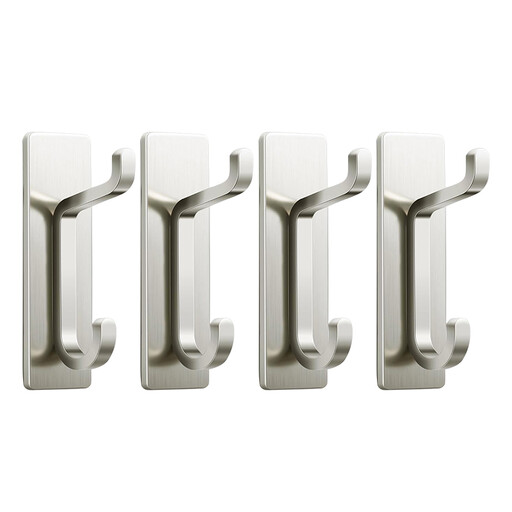
Why it's a match: Ideal for students or renters looking for a functional, durable, and affordable solution for everyday items without a large initial investment.
Using stainless steel bypasses the "Material Deception" pitfall. The material is robust and rust-resistant, making it a reliable choice for kitchens and bathrooms.
The 4-pack offers excellent value for money. The stainless steel construction promises a long service life.
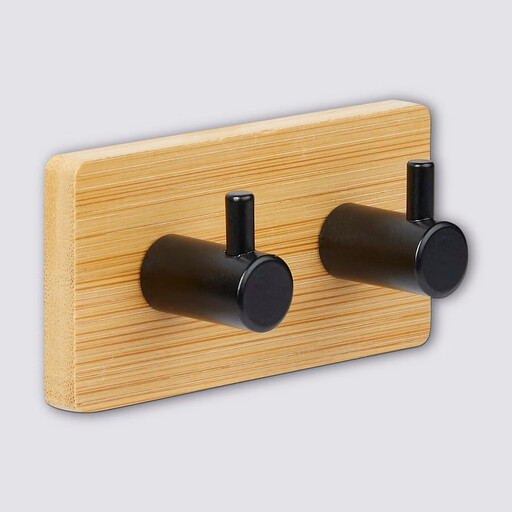
Why it's a match: Perfect for anyone wanting to seamlessly integrate functional everyday items into a modern, natural, or Scandinavian-inspired interior.
This product goes beyond pure functionality. The combination of bamboo and steel offers a specific aesthetic, avoiding the trap of generic plastic hooks that can detract from a room's ambiance.
The material combination of natural bamboo and metal provides a high-end look that stands out from purely functional hooks.
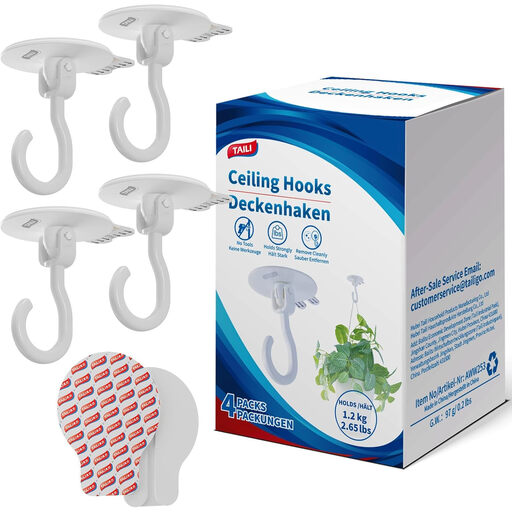
Why it's a match: Solves the specific problem of mounting items like plants or decorations on the ceiling (adhesive ceiling hooks) without drilling—a common challenge for renters.
This product is specifically designed for a non-standard application (ceiling mounting) and addresses the "Residue Nightmare" with its patented, residue-free peel-off adhesive strips.
The 2-in-1 design allows for wall or ceiling mounting with 360° rotation. According to the manufacturer, the removal process is explicitly designed to be damage-free.
We have compiled a complete, up-to-date list of products that meet these strict selection criteria and comply with current safety regulations.
The method depends on the adhesive system. For many models, it helps to gently heat the adhesive with a hairdryer on a low setting. You can then slowly pry the hook off. Another common method is to use dental floss or a thin wire behind the hook and saw through the adhesive. Products with special adhesive strips often require you to pull the tab slowly and parallel to the wall until the hook releases. Always read the manufacturer's instructions.
Adhesive wall hooks adhere most reliably to smooth, clean, and non-porous surfaces. These include tiles, glass, metal, most plastics, and smooth-painted wood. Unsuitable surfaces generally include untreated wallpaper, rough plaster, porous bricks, or fabric surfaces. Always clean the area thoroughly with a suitable agent to remove dust, grease, and moisture before application.
No. For use in humid environments like the bathroom, you should specifically look for products declared as waterproof or suitable for damp rooms. Drill-free towel hooks made from materials like stainless steel or high-quality, water-resistant plastic are the safer choice, as they do not rust and their adhesive is designed for higher humidity.