
Lieferung heute & morgen

Qualitätsgarantie

Willkommens-Angebote freischalten: KOSTENLOSE Lieferung | Bis zu 80 % RABATT | Kostenlose 30-Tage-JoyPlus-Testphase
App herunterladen
Installing a towel holder in your bathroom or rental apartment often presents a dilemma: you need stable storage, but you don't want to drill into and risk damaging your tiles. A drill-free towel holder seems like the ideal solution. However, the market is flooded with products whose promises often fall short of reality. This guide will help you avoid common purchasing mistakes and find a solution that is both functional and aesthetically pleasing.
Many buyers are disappointed after a short time when their new holder falls off the wall or begins to rust. These issues are often due to avoidable flaws that were overlooked at the time of purchase.
To ensure a durable and stable solution, you should check three core parameters before buying. These will help you objectively assess a product's quality.
The type of adhesive is critical. A self-adhesive towel bar should not be equipped with just any adhesive pad. Look for products that use proven systems, such as adhesives from brand-name manufacturers (e.g., 3M VHB) or special mounting adhesives developed by the manufacturer. These are designed for damp environments and offer significantly higher load capacity. Correct installation is just as important: the surface must be completely clean, dry, and free of grease. Adhere strictly to the manufacturer's specified curing time (often 24 to 48 hours) before loading the holder.
For drill-free bathroom accessories, the material is the most important factor for longevity. A towel holder made of stainless steel, preferably SUS 304 stainless steel, is an excellent choice. This material is naturally corrosion-resistant and stands up to bathroom conditions. Pay attention to the surface finish: a brushed finish is often less prone to fingerprints and water spots than a high-polish version. Also, check the edges—they should be smoothly deburred and rounded to prevent damage to towels.
Choosing the right shape depends on your available space and how you plan to use it.
Measure the intended installation spot carefully to ensure the holder fits and does not block a door or shower cabin.
Here are some models tailored to specific needs and room situations.
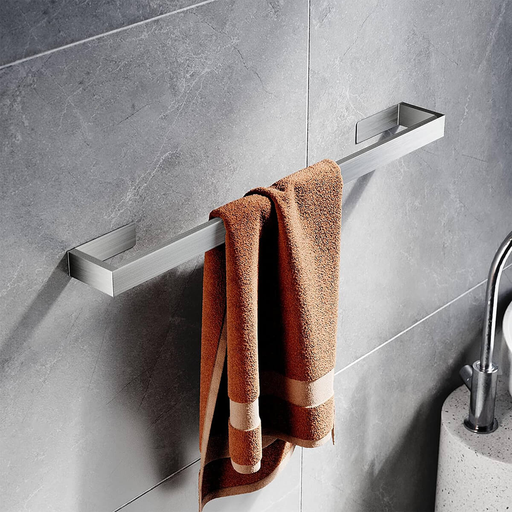
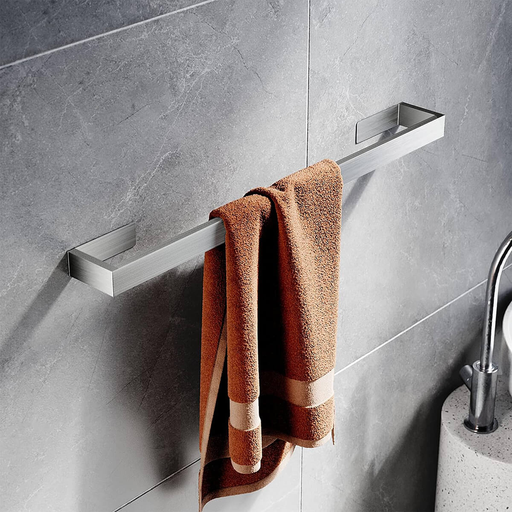
Why This Fits Their Persona: With a length of 60 cm, this towel bar offers enough space to hang several large bath towels at once without them touching. This is ideal for daily use in a family bathroom.
The product is made of brushed stainless steel, bypassing the problem of rust and peeling chrome. The self-adhesive system is designed for permanent wall mounting, avoiding the pitfall of insufficient adhesive strength.
Generous length for multiple towels; durable and low-maintenance stainless steel material.
Why This Fits Their Persona: This compact towel ring is the perfect solution for small bathrooms or guest toilets where a long bar would take up too much space. It is ideal for mounting next to the sink for a single hand towel.
Like the larger version, this ring is made of rustproof stainless steel and uses a reliable adhesive system. This avoids the typical problems of inferior materials and weak adhesion in damp environments.
Space-saving design; uniform, modern look; robust material for longevity.
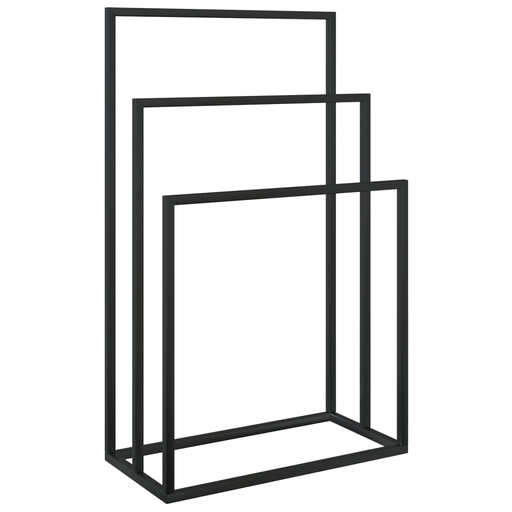
Why This Fits Their Persona: For renters who prefer a mobile solution or for bathrooms with ample floor space, this freestanding rack offers maximum flexibility. It can be easily moved as needed and provides plenty of space on three tiers.
This model completely bypasses the problems of wall mounting. There are no adhesive surfaces that could fail. The sturdy iron construction ensures a stable stand without relying on the condition of the walls.
No wall mounting required; high capacity for multiple towels; mobile and flexible to use.
We have compiled a complete, real-time list of products that fully satisfy these strict selection criteria and UK safety regulations.
The durability of an adhesive towel holder depends heavily on three factors: the quality of the adhesive system, the proper preparation of the surface, and the load. High-quality models applied to clean, smooth, and non-porous surfaces like tiles or glass can last reliably for several years if the installation instructions are followed. It is crucial to thoroughly degrease the surface with rubbing alcohol before application and to allow the adhesive the full curing time (usually 24-48 hours) before it is loaded.
Yes, most self-adhesive holders can be removed. The most common method is to gently heat the adhesive with a hairdryer on a medium setting. The heat softens the glue. You can then carefully run a thin, strong thread (like dental floss) or a plastic scraper between the holder and the wall to cut through the adhesive bond. Any remaining residue can often be removed with special adhesive removers or rubbing alcohol.
Self-adhesive holders adhere most reliably to smooth, hard, and non-porous surfaces. These include:
Installation on wallpaper, painted walls (especially with emulsion paint), rough plaster, or porous surfaces is not recommended. The adhesive may either not bond properly or damage the surface upon removal.