
Lieferung heute & morgen

Qualitätsgarantie

Willkommens-Angebote freischalten: KOSTENLOSE Lieferung | Bis zu 80 % RABATT | Kostenlose 30-Tage-JoyPlus-Testphase
App herunterladen
A drinking cup with lid should work reliably in everyday life: in the car, at the office, on your commute or during exercise. However, eye-catching product claims do not automatically lead to the right purchasing decision. Technical details such as the closure, material, capacity and cleaning requirements are what really matter.
A lid does not necessarily prevent leaks. Check whether the cup has a seal, a lockable closure or a clearly described drinking opening. Especially when choosing a travel cup for bags and backpacks, it is also important to check whether the manufacturer explicitly states that it is leak-proof during transport.
A drinking straw is mainly suitable for cold drinks. With hot liquids, heat can be transferred directly through the straw, creating a risk of injury. Always follow the usage instructions for the specific product.
A 1.2-litre cup reduces the number of refills, but it takes up more space and can be considerably heavier when full. For a car cup holder or desk, 350 to 550 ml is often easier to manage. A larger model may be more suitable for long commutes, training sessions or a full working day.
A stainless-steel thermal cup is not automatically dishwasher-safe or suitable for every type of drink. Likewise, a glass cup with a lid is not necessarily shatterproof. Look for specific information about the grade of stainless steel, type of glass, seals and cleaning requirements.
For plastic models, the product description should include details such as BPA-free, food-safe material and the permitted temperature range. A BPA-free drinking cup may be suitable for cold or lukewarm drinks, but that does not necessarily mean it is intended for hot drinks.
For coffee and tea, you can consider a coffee cup with lid, thermal cup or insulated travel mug. Double-wall vacuum insulation can help retain heat and cold. According to the product information, the LocknLock model made from STS304 stainless steel keeps drinks warm for up to 4 hours at over 60 °C and cold for up to 28 hours at below 8 °C.
These figures should be understood as manufacturer specifications and may depend on factors including the starting temperature, capacity and ambient temperature. With glass cups, the focus is often on a neutral taste and being able to see how much drink is inside. Borosilicate glass is designed to withstand changes in temperature, but it remains a fragile material.
Choose the capacity to suit how you plan to use it:
For use in the car, you should also compare the cup’s diameter with the cup holder available in your vehicle. A tall cup with a large handle may be comfortable to carry, but it could take up too much space in the centre console.
A good lid should open without unnecessary force and close securely. One-handed one-touch systems are practical when driving, but should only be used when the vehicle is stationary. A wide opening makes it easier to add ice cubes and clean the cup.
You should also check:
Hand washing is recommended for the LocknLock thermal cup. According to the product information, it is not intended for carbonated drinks or use in a microwave, oven or freezer.
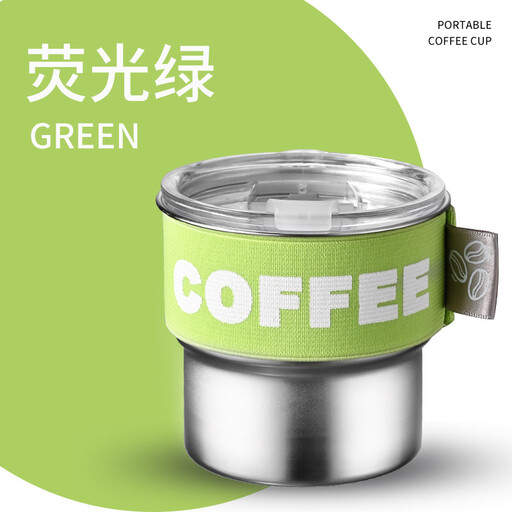
Why this product suits this profile: The cup is designed for use at home and in the office, combining a lid with a heat-resistant silicone sleeve. According to the product information, the body is made from BPA-free polypropylene.
The material details are more specific than a simple marketing claim about heat resistance. Before buying, check the temperature range and closure details.
BPA-free PP body according to the product information, plus a heat-insulating silicone sleeve.
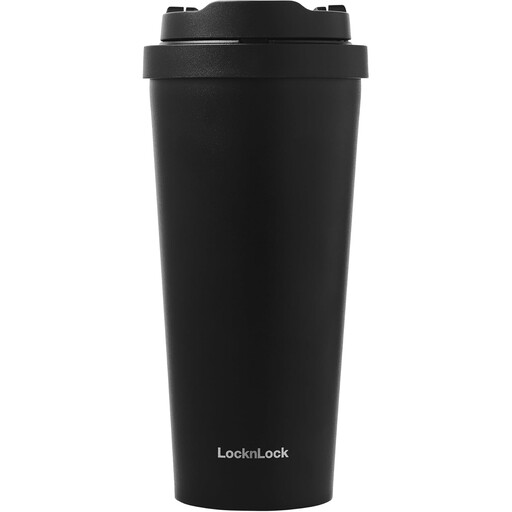
Why this product suits this profile: This stainless-steel thermal cup is designed for coffee, tea and cold drinks. According to the product description, its format is suitable for standard cup holders.
The product details specify a one-touch lid with safety lock, a wide opening and a leak-proof design.
550 ml capacity, double-wall vacuum insulation, STS304 stainless steel and BPA-free construction according to the product information.
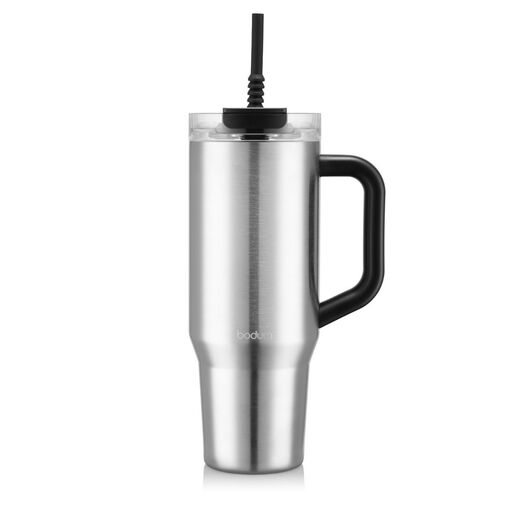
Why this product suits this profile: The large capacity is aimed at commuters, sports enthusiasts and anyone who wants to refill less often over longer periods. The handle, lid and straw make it easier to use on the go.
The description explicitly states the 1.2-litre capacity. This makes it possible to assess in advance whether the weight and space required will suit your everyday routine.
1.2-litre capacity, plus a handle, lid and included straw according to the product description.
If you prefer cold drinks, you can choose a drinking glass with lid and straw or a glass cup with a lid. The 2-piece set with a 750 ml capacity includes a glass, wooden lid and glass straw and, according to the product description, is intended for iced coffee, smoothies and other cold drinks. This model is explicitly not designed for hot liquids.
A smaller option for coffee on the go is the BODUM Travel Mug with a 250 ml capacity. Glass cups with a 500 ml capacity, lid and straw are available for families and children. For all glass options, bear in mind the risk of breakage, cleaning instructions and permitted drink temperature before buying.
We have put together a complete, regularly updated list of products that fully meet these strict selection criteria and the safety regulations applicable in the EU.
For use in the car, choose a model with a diameter that fits your cup holder, a securely closing lid and an easy-to-reach drinking opening. According to the product description, the LocknLock thermal cup is compatible with cup holders. However, you should still check the dimensions of your own vehicle.
Its lifespan depends on the material, seal, closure mechanism and care. Stainless-steel bodies are durable when used correctly, while sealing rings can wear out over time. Check the lid regularly and replace the cup if you notice cracks, deformation or damaged seals.
In addition to the purchase price, the main costs are for cleaning and, where applicable, replacement parts such as seals or straws. Hand washing takes more time, but may be required for certain models. A reusable cup can reduce the use of disposable cups; the actual saving depends on how often you use it, cleaning requirements and the product price.