
Lieferung heute & morgen

Qualitätsgarantie

Willkommens-Angebote freischalten: KOSTENLOSE Lieferung | Bis zu 80 % RABATT | Kostenlose 30-Tage-JoyPlus-Testphase
App herunterladen
A drinking cup with a straw may seem straightforward at first glance. In practice, however, the details determine whether it remains comfortable, hygienic and easy to transport over time. A straw that is too narrow is difficult to clean, an ill-fitting lid can leak in your rucksack, and insulation does not automatically mean that a cup is suitable for hot drinks.
This buying guide explains which features really matter in a reusable drinking cup and which models suit different everyday situations.
With many cups, the lid is tightly sealed, but an opening remains when the straw is inserted. That is why you should check carefully under which conditions the cup is leakproof. For example, the Meoky tumbler explicitly states that complete leakproof protection during transport is achieved when the straw has been removed.
Even a firmly tightened lid cannot prevent pressure building up from carbonated drinks. Many drinking cups with straws are therefore not designed for sparkling water or soft drinks.
A thermal cup with a straw or insulated tumbler can keep a drink at a stable temperature for longer. However, this does not automatically mean that hot liquids can be safely consumed through the straw. Some models are approved exclusively for cold drinks, while others also feature a direct-drinking opening.
With stainless steel drinking cups, follow the safety instructions for the individual product. Hot liquids can cause burns, particularly when consumed directly through a straw.
A straw, sealing ring and gap in the lid create several areas where drink residue can remain. A removable design and a suitable cleaning brush are therefore more important than decorative features. With a glass cup with a straw, you also need to bear in mind that although glass can be taste-neutral, it may break and requires greater care during transport.
For a desk or short journeys, 400 to 550 ml is often sufficient. These sizes usually fit more easily into bags and take up less space in a cup holder. For long commutes, sport and outdoor activities, 720 to 1,000 ml is more practical, as the cup needs refilling less often. Models with a 1.2-litre capacity are suitable for long days, but are correspondingly larger and heavier.
A tapered base is helpful if you plan to use the cup in the car. Before buying, compare the diameter with that of your cup holder.
Fully removable lids, removable straws and a small number of hard-to-reach gaps are practical features. Claims such as “dishwasher-safe” must apply to all parts; with several stainless steel models or those with wooden lids, hand washing is recommended instead.
For transport, look for a securely closing lid, a stable base, a carrying handle or loop, and suitable external dimensions. You should also check whether the straw is intended for cold drinks only.
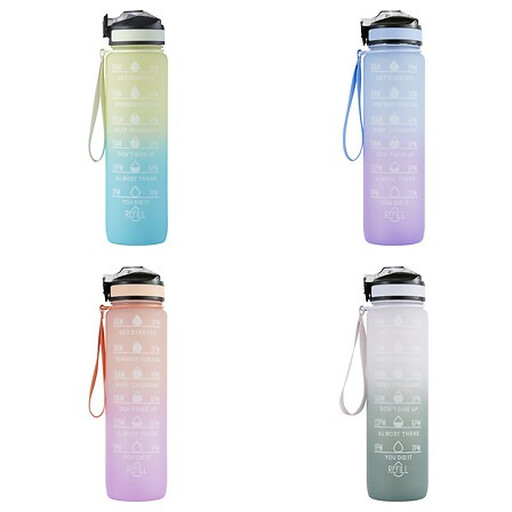
Why this product suits the profile: This 1.0-litre sports water bottle is designed for fitness, walks and outdoor activities. A carrying loop, measurement markings and a one-handed closure make it convenient to use on the go.
The integrated silicone straw can be removed for cleaning. The PETG/PP construction is designed to withstand impacts; nevertheless, check that the lid is firmly secured before transport.
1.0-litre capacity; removable straw, carrying loop and time markings.
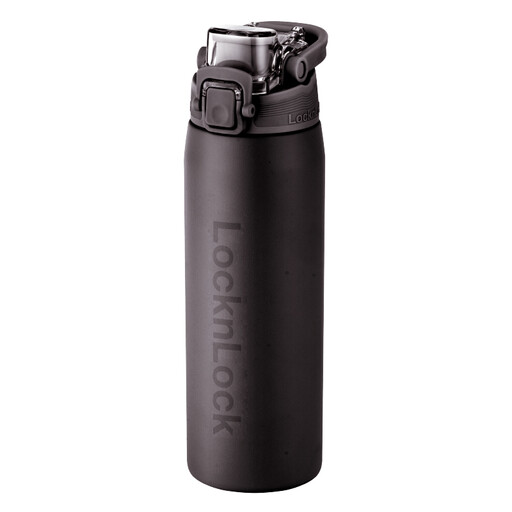
Why this product suits the profile: This stainless steel drinking cup, made from 316 stainless steel, offers a 720 ml capacity for commuting, studying, sport and travel. The straw is designed for convenient drinking while walking.
The care instructions expressly specify hand washing and warn against abrasive cleaners. The lid must be securely closed during transport; carbonated drinks are not recommended.
316 stainless steel; 720 ml capacity; corrosion-resistant construction according to the product details.
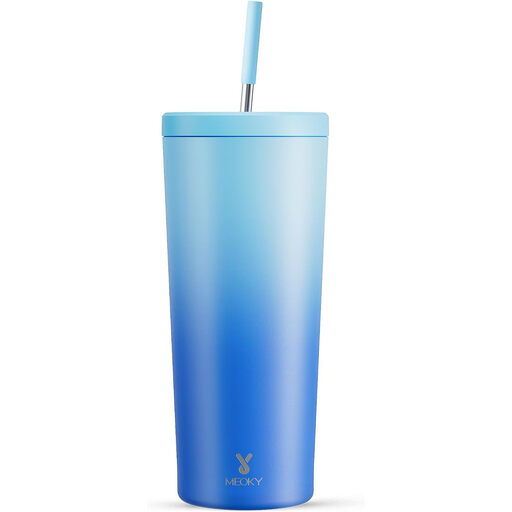
Why this product suits the profile: This insulated 24 oz tumbler, equivalent to around 710 ml, is designed for cold drinks, the office, the car and travel. According to the product details, its tapered base fits many standard cup holders.
The product description distinguishes between drinking through the straw and leakproof transport without the straw. Hand washing and avoiding carbonated drinks are expressly specified.
18/8 stainless steel; double-wall vacuum insulation; non-slip base and tapered shape.
For the office, a glass cup with a straw in a compact size is a sensible choice if the cup will mainly stay at your workstation. Stainless steel or PETG is generally less susceptible to damage in a rucksack. A travel mug with a handle is easier to carry, while a model compatible with car cup holders is particularly useful for commuters.
Before buying, it is worth running through this quick checklist:
We have put together a complete, regularly updated list of products that fully meet these strict selection criteria and the safety regulations applicable in the EU.
It depends on the lid, seal and straw opening. “Leakproof” should always be understood in the context of the specific use. For safe transport, you may need to remove the straw and close the lid completely.
There is no standard service life that applies in every case. It depends on the material, cleaning method and level of daily use. Seals, lids and straws should be checked regularly for cracks, deformation and build-up, and replaced when necessary.
In addition to the purchase price, the main costs are for cleaning and possible replacement parts. A fully dismantlable lid makes care easier. With stainless steel and glass models, replacement seals or straws can extend the service life, provided they are available for the relevant model.