
Lieferung heute & morgen

Qualitätsgarantie

Willkommens-Angebote freischalten: KOSTENLOSE Lieferung | Bis zu 80 % RABATT | Kostenlose 30-Tage-JoyPlus-Testphase
App herunterladen
A drinking glass set needs to perform reliably in daily life, suit a variety of drinks and be easy to clean without much fuss. In practice, however, unclear capacity specifications, unsuitable materials or high-maintenance designs often lead to disappointing purchases. This is especially true for offers that use terms like "heat-resistant", "break-resistant" or "universal use" – it pays to take a close look at the technical details.
A glass with 750 ml is great for large portions of iced tea, lemonade or smoothies, but it takes up considerably more space in your kitchen cupboard. For water with meals, 250 to 400 ml is usually more practical. Wine glasses with a capacity of 20, 38 or 41 cl are also not filled to the brim; they leave room for aroma and movement in the glass.
Standard soda-lime glass, also known as soda-lime glass, is suitable for cold drinks and everyday use. However, it can be damaged by a rapid temperature change. The Tin'Eau Tall Tumbler, for example, explicitly states that the glass is not designed as a heat-resistant glass and should not be subjected to a sudden temperature change of more than 60 °C.
Double-walled glasses may be intended for both hot and cold drinks, depending on the product description. Even so, buyers should check whether the specific model is approved for the microwave, dishwasher or hand wash only.
"Dishwasher-safe" doesn't always describe the optimal care. Harsh detergents and high temperatures can cloud the surface of glass over time. Wooden lids, seals and glass straws often need separate treatment. A drinking glass with a delicate stem or decorative texture may also need more space in the dishwasher than a stackable tumbler.
It's not just the millilitre count that matters. Diameter, height and the construction of the base or handle affect stability, grip and storage.
For transparent glasses, the material specification should be clear. Borosilicate glass is often used for double-walled glasses and is intended for temperature changes, provided the manufacturer states this. A standard soda-lime glass, on the other hand, is not automatically suitable for boiling liquids.
For glass coffee mugs and other glasses for hot and cold drinks, three details are particularly important:
Microwave approval does not necessarily mean the glass is suitable for the oven or for boiling water.
For dishwasher-safe glasses, a gentle or glass programme is recommended. Glasses should be loaded so that they don't knock against each other. Before each use, check for cracks, chips and scratches. Damaged drinking glasses should no longer be used.
For private households, sets of two to six pieces are often sufficient. Hosts and hospitality businesses should also plan for spare glasses. For small servings, 10-cl glasses can be useful, while a 12-pack of plastic champagne glasses reduces weight and breakage risk for outdoor events.
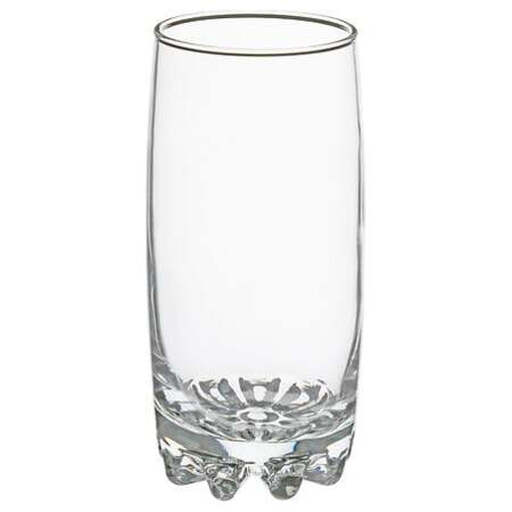
Why this product fits the profile: The transparent tumbler with a 385 ml capacity is suitable for water, juice, iced tea, soft drinks and simple cocktails. This means it covers many everyday uses with a single glass format.
The capacity is clearly stated as 38 cl or 385 ml. At the same time, the limited temperature change and risk of breakage are highlighted.
Soda-lime glass, food-safe, dishwasher-safe and, according to the product details, microwave-safe.
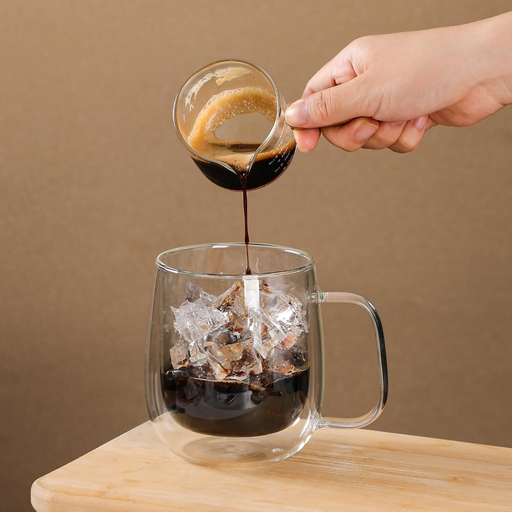
Why this product fits the profile: The double-walled construction and handle combine a clear presentation with a defined capacity of 350 ml. Suitable for coffee, tea, latte, cold drinks and cocktails.
The product description explicitly mentions the double wall, suitability for hot and cold drinks, and dishwasher approval.
Two identical 350 ml glasses, handle and double-walled construction according to the product details.
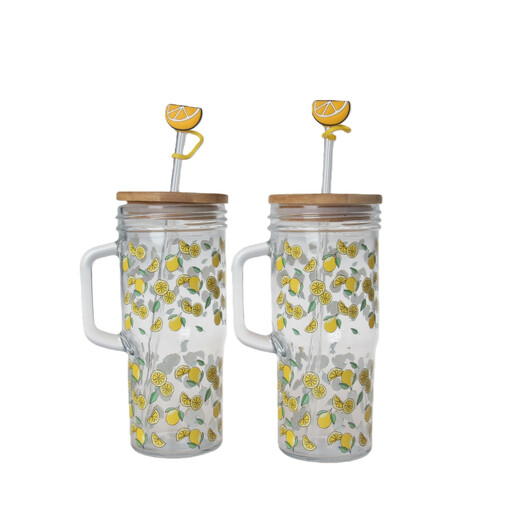
Why this product fits the profile: Two large glass tumblers with handles, wooden lids and glass straws are designed for lemonade, iced coffee, smoothies and other cold drinks.
The limitations are clearly stated: not suitable for hot liquids or the microwave; the wooden lid should not be soaked.
750 ml capacity, handle, wooden lid with rubber seal and glass straw; two glasses per set.
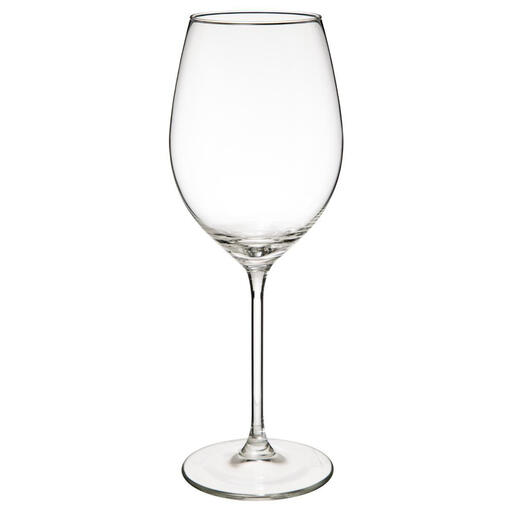
Why this product fits the profile: The tall shape with a 410 ml total volume is aimed at users who want to serve red wine, white wine or rosé in a stemmed glass.
The product data lists height, diameter, material and dishwasher approval. At the same time, it is noted that the glass should not go in the microwave.
410 ml capacity, transparent soda-lime glass and stem construction for wine service.
We've put together a complete, regularly updated list of products that fully meet these strict selection criteria and the safety regulations in force in the EU.
For a small household, four to six glasses are often enough. If you regularly entertain guests, you should plan for extra pieces so that water, wine and cocktail glasses can be used separately. For hospitality businesses, pack size, reorder availability and consistent dimensions are particularly important.
Double-walled glasses with the appropriate manufacturer approval can be intended for coffee, tea or latte. Standard soda-lime glasses should not be filled with boiling water. The key factors are the specific details about heat resistance, microwave use and temperature changes.
The lifespan depends on the material, glass thickness, usage and cleaning. Dishwasher-safe models should be loaded with space between them and other crockery. Cracks, chips and deep scratches are safety reasons to discard a glass. Hand washing can extend the service life of delicate decorations, wooden components or thin stems.