
Lieferung heute & morgen

Qualitätsgarantie

Willkommens-Angebote freischalten: KOSTENLOSE Lieferung | Bis zu 80 % RABATT | Kostenlose 30-Tage-JoyPlus-Testphase
App herunterladen
The choice of drinking glasses ranges from simple water glasses and tumblers to double-walled glasses for coffee and tea. Product photos can look very similar, but there are important differences in material, temperature range, cleaning requirements and capacity. If you choose based only on colour or price, you could end up with a glass that isn’t right for everyday use.
A glass designed for cold drinks isn’t automatically suitable for hot liquids. Soda-lime glass, often used for water glasses and traditional tumblers, can be sensitive to sudden temperature changes. Pouring in boiling water or placing a hot glass straight onto a cold surface can create a risk of thermal shock.
For coffee or tea, check the stated temperature range and type of glass. Borosilicate glass is designed to withstand changing temperatures, provided the manufacturer explicitly says so. You shouldn’t assume this applies to every drinking glass.
“Dishwasher-safe” doesn’t mean a glass will remain unchanged under every programme over time. Some glasses can become cloudy or have their decorative finishes affected by harsh detergents, high temperatures and frequent washing.
Care instructions are especially important for coloured, printed or engraved glasses. For example, the pink-tinted Ina Low Tumbler is listed as hand-wash only, while the transparent version is stated to be dishwasher-safe.
A 300 ml drinking glass has a nominal capacity of 300 ml. But if you fill it to the brim, there’s hardly any room left for ice cubes or a garnish, or for pouring comfortably. For water, juice and soft drinks, 280 to 310 ml is a practical size for many households. Long drink glasses of around 310 ml also leave room for ice and mixed drinks.
A 400 ml glass may be more suitable for cocktails, beer or larger servings. For espresso, liqueur or small desserts, 80 to 150 ml is usually enough.
Check the specific material listed:
For products described as suitable for food contact, check the manufacturer’s information. The Ina Low Tumbler is described as being made from lead-free soda-lime glass and, according to the product information, complies with EU Regulation (EC) No 1935/2004 on materials intended to come into contact with food.
The shape affects stability, handling and what the glass is best used for:
A wide base or sturdy bottom can reduce the risk of a glass tipping over in everyday use. A smooth, even rim helps make drinking more comfortable, though it isn’t always possible to assess this fully from the product description.
Before buying, check whether the glasses are listed as dishwasher-safe. For delicate decorations or coloured surfaces, hand-washing may be gentler. Use soft sponges and mild washing-up liquid. Don’t continue using glasses that are damaged, cracked or chipped.
Take care when stacking glasses: too much pressure can cause scratches or chips. For double-walled glasses in particular, follow the manufacturer’s care instructions.
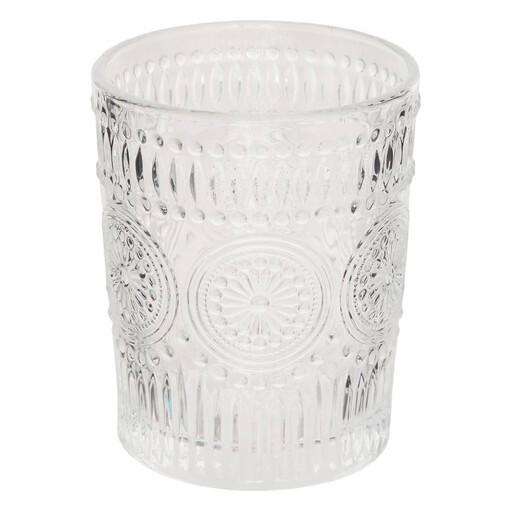
Why this product suits this profile: This transparent 300 ml drinking glass is suitable for water, juice, soft drinks and cold mixed drinks. Its low profile makes it practical for everyday use and smaller households.
The product information gives a temperature range of 0 °C to 80 °C and advises against sudden temperature changes. This version is also listed as dishwasher-safe.
300 ml capacity, a sturdy low-tumbler shape and a clear view of your drink.
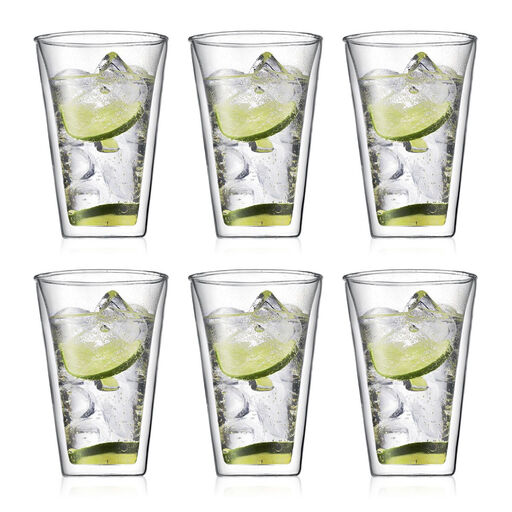
Why this product suits this profile: This set of six double-walled glasses is designed for households that need to serve several people and enjoy a range of drinks.
The double-walled construction is clearly stated, so buyers don’t have to assume a glass has insulating properties based on its decorative design.
Six 0.4 l glasses with a double-walled design, ideal for a versatile household.
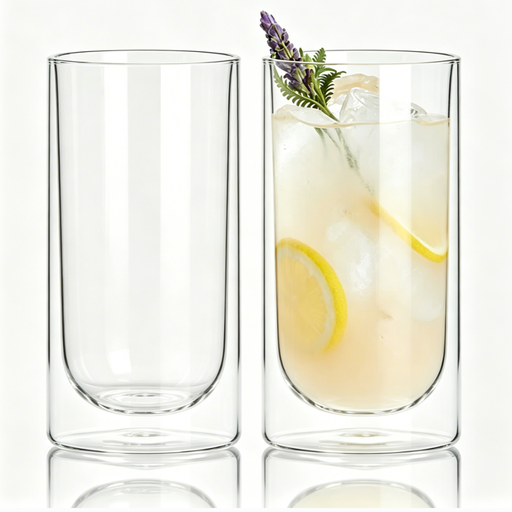
Why this product suits this profile: This compact size is designed for coffee, tea and other hot or cold drinks. It’s a good fit for smaller households, office desks or changing drink routines.
The description specifies double-walled construction and heat-resistant glass. These key features are clearly stated rather than merely suggested by a modern appearance.
Two 280 ml glasses with double-wall insulation, suitable for hot and cold drinks according to the product description.
We’ve put together a complete, regularly updated list of products that meet these strict selection criteria and fully comply with the safety regulations in force in the EU.
For water, juice and soft drinks, 300 to 350 ml suits many everyday needs. If you often add ice cubes or lemon slices, you may prefer a slightly larger glass. For smaller servings or a desk, 200 to 280 ml is often enough.
Double-walled glasses may be designed for hot drinks, provided the manufacturer explicitly says so. Check the material, temperature range and guidance on dishwashers, microwaves and thermal shock. Don’t use a glass for boiling liquids simply because it has a double wall.
A glass’s lifespan depends on its thickness, how it’s used, how it’s cleaned and how it’s stored. Scratches, knocks, frequent sudden temperature changes and incorrect stacking can all shorten its useful life. Check glasses regularly for cracks, chips and visible damage.