
Lieferung heute & morgen

Qualitätsgarantie

Willkommens-Angebote freischalten: KOSTENLOSE Lieferung | Bis zu 80 % RABATT | Kostenlose 30-Tage-JoyPlus-Testphase
App herunterladen
Drinking glasses need to do more in the home, office or hospitality sector than simply look good. The right sizes, clear material specifications and care instructions suited to everyday use are all important. If you choose only by price, looking for a cheap glass set, or by eye-catching design, it is easy to overlook crucial details.
A specification of 300 ml or 400 ml usually describes the maximum capacity. For water, juice or long drinks, however, space is often needed for ice cubes, garnish or a safety margin. A 30-cl glass cannot therefore automatically hold 300 ml of drink when filled to the rim.
For everyday use, drinking glasses between 250 and 400 ml are often a good choice. Small vessels holding 7 to 10 cl are generally intended for espresso, aperitifs or concentrated speciality drinks.
Not every glass is suitable for boiling liquids. Even heat-resistant glass can be damaged by an abrupt change between very cold and very hot temperatures. Pouring boiling water straight into a cold glass can cause thermal shock.
You should therefore check the manufacturer’s specific information on use with hot drinks, in the microwave, freezer and oven. These properties should not automatically be treated as interchangeable.
A product may be described as dishwasher-safe, while harsh detergents, high temperatures or contact with other crockery gradually affect its surface. For printed, textured or double-walled glasses, it is worth checking the care instructions.
If no dishwasher information is provided, the glass should be washed by hand as a precaution. Glasses with damage, chips or cracks should no longer be used.
Classic soda-lime glass is commonly used for water, juice and long-drink glasses. Borosilicate glass is a special type of glass used in many coffee glasses and double-walled glasses. Its properties can make it better suited to temperature changes, but they do not replace the manufacturer’s specific usage instructions.
Every glass should include information confirming its suitability for food contact. For products sold on the German market, information on compliance with the applicable regulations for materials intended to come into contact with food is relevant, such as Regulation (EC) No 1935/2004, where stated by the supplier.
Double-walled glasses have a gap between the inner and outer walls. This can reduce heat transfer to your hand and limit condensation when serving cold drinks. However, the construction is more sensitive to impacts and may generally not be suitable for use in the oven.
A handle makes coffee, tea or hot chocolate easier to hold. For water and cold drinks, classic tumblers often take up less space. You should also check whether the glasses are stackable if storage space is limited.
For private households, a mixed glass set may be more practical than six identical glasses. Offices, cafés and hotels should also consider consistent dimensions, the availability of replacement items and straightforward cleaning.
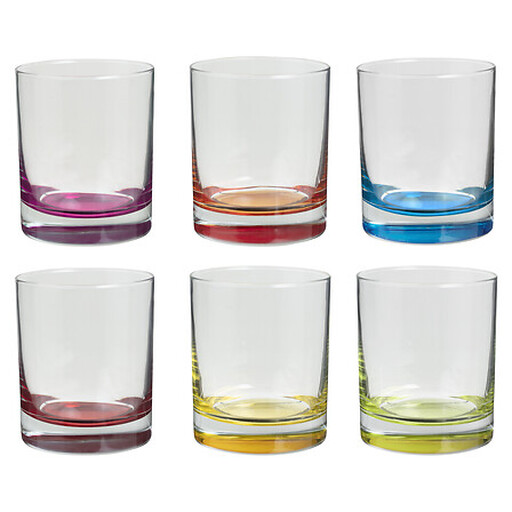
Why this product suits this profile: The set contains six glasses, each holding 30 cl, in a range of colours. This makes it suitable for families, guests or everyday use with water, juice and cold soft drinks.
The capacity is clearly stated as 30 cl per glass. The product information specifies that the model is for cold drinks and lists hand washing as a care option.
Six glasses, 30 cl per glass and easy colour identification; suitable for cold drinks at mealtimes and celebrations.
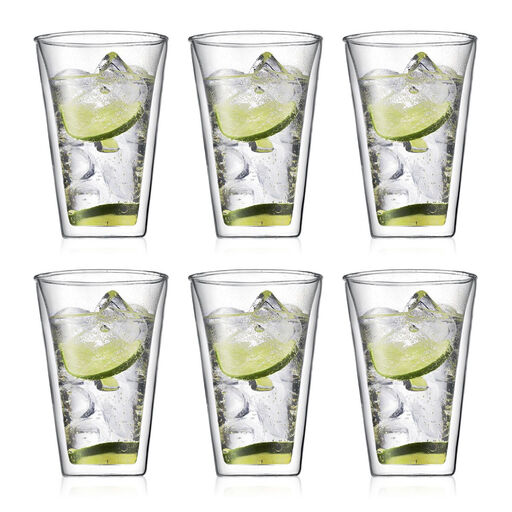
Why this product suits this profile: This six-piece set combines a capacity of 0.4 l with a double-walled design. It is a good fit for households that prefer larger servings and a coordinated look.
The design is explicitly described as double-walled and the size as 0.4 l. Before buying, you should still check the specific care and temperature information on the product page.
Six-piece set and 400 ml capacity; double-walled design for a different feel in the hand compared with standard drinking glasses.
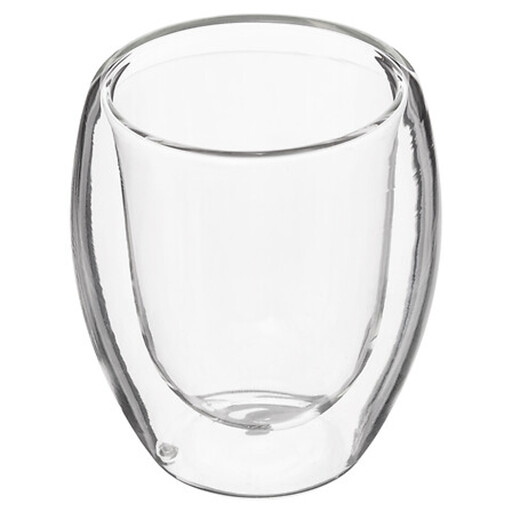
Why this product suits this profile: This two-piece set, holding 7 cl or 80 ml, is designed for espresso and ristretto drinkers, as well as cafés, offices or households with a dedicated coffee area.
The product details specify borosilicate glass, a double-walled design, and suitability for the dishwasher and microwave. At the same time, use in the oven is expressly discouraged and warnings are given about sudden temperature changes.
7 cl capacity, double-walled borosilicate glass and two glasses per set; designed for espresso and small coffee specialities.
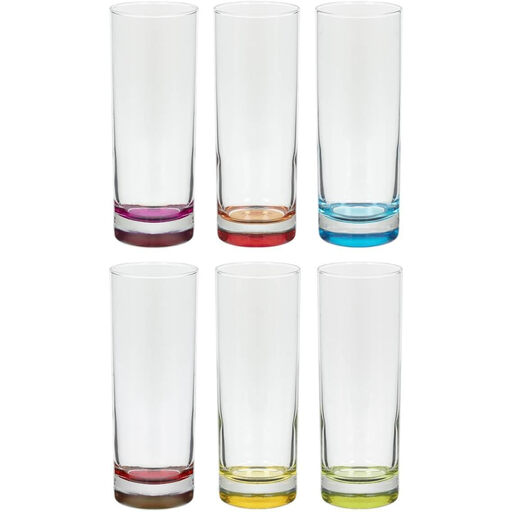
Why this product suits this profile: Each of the six long-drink glasses holds around 310 ml and comes in a different colour. This is practical for entertaining, cocktails or keeping track of glasses when hosting several guests.
The product is clearly described as a 310 ml long-drink glass. It is dishwasher-safe but not suitable for the freezer; use should therefore be limited to the stated applications.
Six-piece set, 310 ml per glass, a variety of colours and stated dishwasher suitability.
We have put together a complete, regularly updated list of products that fully meet these strict selection criteria and the safety regulations applicable in the EU.
To keep drinking glasses usable for as long as possible, a few simple rules are worth following:
This depends on the specific product approval. Double-walled borosilicate glassware is often offered for coffee or tea. Even so, you should check the manufacturer’s instructions for microwave and oven use, as well as temperature changes.
For a two-person household, four to six glasses may be sufficient. If you regularly entertain guests, a set of six or more identical glasses is usually more useful. An additional set of coffee glasses, espresso glasses or long-drink glasses will cover different drinks more effectively.
Some tumblers are dishwasher-safe, while others are intended for hand washing only. The care instructions must be checked separately for each model. Even when dishwasher use is permitted, careful loading can help prevent scratches and clouding.