
Lieferung heute & morgen

Qualitätsgarantie

Willkommens-Angebote freischalten: KOSTENLOSE Lieferung | Bis zu 80 % RABATT | Kostenlose 30-Tage-JoyPlus-Testphase
App herunterladen
A drinking glass set may seem easy to compare at first glance: the number of glasses, capacity and design are usually listed directly in the product description. In practice, however, several details can lead to disappointing purchases. Glasses may be too small for the intended drink, react poorly to changes in temperature or be difficult to clean properly.
This buying guide explains which details really matter before purchasing a glass set. It covers water glasses, juice glasses, coffee glasses, tea glasses, whisky glasses and wine glasses for households, hospitality businesses and events.
A glass with a capacity of 300 ml may hold considerably less liquid once ice cubes, foam or a generous gap at the top are taken into account. For water and juice, around 250 to 400 ml is often practical for everyday use. Cocktails or large cold drinks may call for 500 ml or more.
With coffee glasses and tea glasses, the amount they hold is not the only important factor. A glass with a handle or insulating double wall can make hot drinks easier to handle. This does not automatically mean that every double-walled glass is suitable for use in a microwave, oven or with boiling liquids.
Transparent drinking cups made from PS or PP may look like glass, but they are made of plastic. This can be practical for picnics, outdoor areas or households with children. If you are looking for a traditional glass vessel for hot drinks, check the material and permitted uses carefully.
Even real glass products vary in shape, wall thickness and temperature resistance. Information such as “suitable for hot and cold drinks” should be stated explicitly in the product description. If this information is missing, it is best to be cautious.
Dishwasher-safe glasses make everyday cleaning easier. Nevertheless, sudden temperature changes, harsh detergents, hard knocks or incorrect positioning in the dishwasher can cause scratches and cracks. Delicate wine glasses and thin-walled glass cups usually require more care than sturdy water glasses.
Any visible chips or cracks should be taken seriously. Damaged drinking vessels should no longer be used.
Transparent glass cups, classic tumblers or plastic cups are suitable for water, juice, lemonade and cold mixed drinks, provided the product information confirms the intended use. Coffee glasses, tea glasses or ceramic mugs are suitable options for coffee and tea.
Double-walled designs create an insulating layer of air between the walls. This can reduce the transfer of heat or cold to the outside. However, suitability still depends on the manufacturer’s instructions. A glass described as suitable for cold drinks should not be used for hot liquids without the relevant approval.
Do not base your choice solely on the number of millilitres. Consider how the glasses will be used:
The shape also affects stability, stacking and cleaning. For hospitality and catering, consistent dimensions and easy-to-plan packaging quantities are particularly important.
Check whether the product is described as dishwasher-safe. For some glasses, hand washing is recommended to preserve the decoration, surface or transparency for longer. Instructions such as “not microwave-safe”, “not ovenproof” or “avoid sudden temperature changes” should be followed.
Compact tumblers or stackable drinking cups are practical for households with limited storage space. Stemmed glasses require more room and should be stored so that they do not knock against one another.
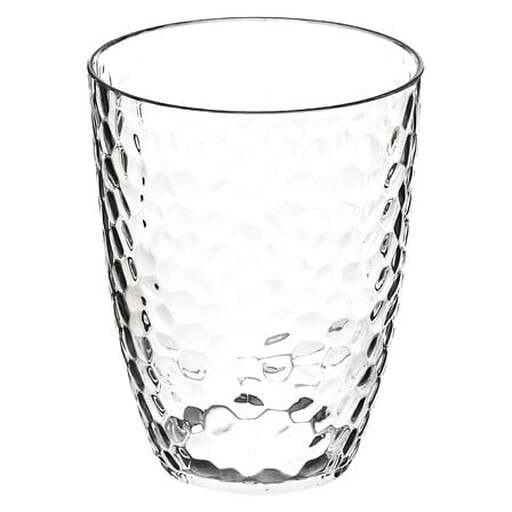
Why this product suits the profile: According to the product information, the transparent PS drinking cup holds 380 ml and weighs 0.055 kg. It is suitable for water, juice and other cold drinks, both indoors and outdoors.
The material is explicitly listed as PS. This avoids the common confusion between plastic and real glass. The cup is not intended for hot drinks without the appropriate manufacturer’s approval.
380 ml capacity, low weight and, according to the description, a shatter-resistant design for everyday use.
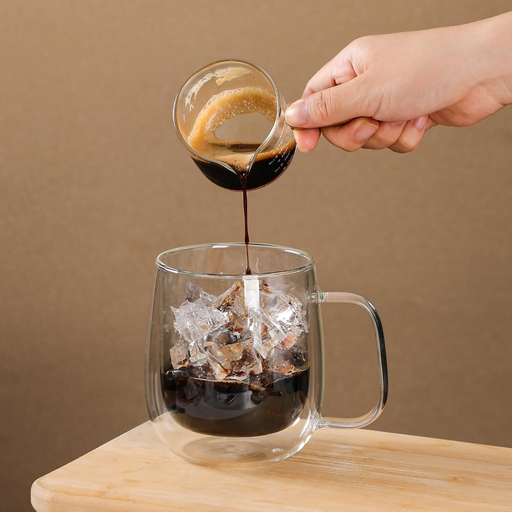
Why this product suits the profile: The two 350 ml glasses feature handles and double walls, and are intended for coffee, tea, hot chocolate and selected cold drinks.
The double wall and handle address a typical challenge when serving hot drinks: according to the description, the outside is more comfortable to hold. Details on microwave use should nevertheless be checked separately.
350 ml capacity, integrated handle and stated dishwasher suitability according to the product description.
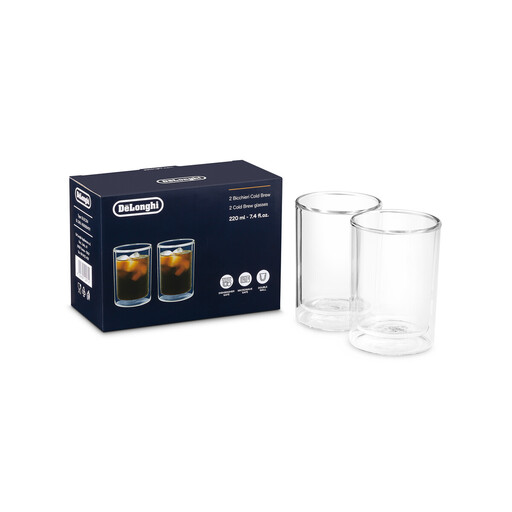
Why this product suits the profile: This set of two is designed for cold brew and other chilled coffee drinks. With a capacity of up to 220 ml each, the glasses are suitable for smaller portions and sharing.
The product name and description specify its intended use for cold drinks. This helps prevent a small specialist glass from being confused with an all-purpose water glass.
Two glasses per set, 220 ml capacity per glass and stated dishwasher suitability.
We have put together a complete, regularly updated list of products that fully meet these strict selection criteria and the safety regulations applicable in the EU.
For everyday family use, sets of matching water glasses or juice glasses are a practical choice, making replacements and setting the table straightforward. Hosts should ensure they have enough glasses and that the dimensions are consistent. A set of two is more suitable for couples or as an addition to an existing collection.
Cafés, restaurants and catering businesses also need information about pack quantities, cleaning and professional use. Small glasses such as the GLASS CUP ANALYA 10CL may be intended for espresso, aperitifs or side dishes, while larger tumblers are better suited to water, juice and soft drinks. For wine, classic stemmed wine glasses with a suitable capacity are more practical than universal drinking cups.
For a two-person household, four to six water glasses can provide a flexible basic set. Anyone who regularly entertains guests should plan for additional glasses. With specialist glasses such as whisky glasses, wine glasses or cold-brew glasses, the number required depends more on the specific occasion.
Only products whose description explicitly mentions both uses are suitable. Double-walled coffee glasses may be designed for hot and cold drinks. Traditional drinking glasses without such information should not be filled with hot liquids. Sudden temperature changes, such as going from very cold to boiling hot, can damage glass.
Dishwasher suitability reduces the cleaning effort, but on its own it says nothing about resistance to breakage, stackability or temperature resistance. You should also check the material, shape, wall thickness and care instructions. Damaged or cracked glasses must be replaced.