
Lieferung heute & morgen

Qualitätsgarantie

Willkommens-Angebote freischalten: KOSTENLOSE Lieferung | Bis zu 80 % RABATT | Kostenlose 30-Tage-JoyPlus-Testphase
App herunterladen
A drinks fridge provides extra storage space for water, soft drinks, beer or wine. However, not every appliance is suitable for every location. A large bottle cooler may take up too much space in the living room, while a compact drinks cooler can quickly reach its capacity limits at a family celebration.
As a Joybuy Product Recommendation Officer, I provide an objective assessment of the key product specifications. This is not about blanket rankings, but about answering one question: which design and features are best suited to your everyday needs?
The stated capacity in litres describes the interior space, but says little about the actual usable storage area. For example, a 46-litre wine fridge may hold up to 15 standard 0.75-litre bottles. Unusually shaped bottles, sparkling wine bottles or large drinks cans require more space, however.
With a 36-bottle wine fridge, you should also check whether the stated capacity is based on standard bottles. With its 95-litre capacity, the SEVERIN WKS 8908 is designed to hold up to 36 bottles of this size. When used for a mixture of cans and differently shaped bottles, the actual capacity may be lower.
Noise levels are stated in decibels (dB or dB(A)). A quiet drinks fridge rated at 39 to 42 dB(A) may be suitable for living rooms or offices. However, perceived noise also depends on the floor, proximity to walls and the compressor’s operating cycles.
For bedrooms or particularly quiet work areas, you should compare this figure especially carefully. A thermoelectric drinks cooler works differently by design from a compressor appliance and often does not have a freely adjustable target temperature.
EU energy efficiency classes range from A to G. You should also look at the stated annual consumption in kilowatt hours. Two appliances in the same class can have different running costs depending on their size, insulation and usage.
A fridge with a metal door may absorb less heat through the door than a model with a large glass front. A glass door does, however, provide a better view of the contents. The specific annual consumption is therefore what matters, not just the energy class.
Height-adjustable shelves make flexible use easier. Also pay attention to the interior width and the distance between the shelves. A drinks fridge for cans needs a different layout from a wine cabinet designed to store bottles horizontally.
A fridge for wine and drinks should cover a temperature range suited to its contents. According to the product specifications, the SEVERIN wine coolers WKS 8907 and WKS 8908 can be set from 4 °C to 18 °C. The Hisense wine cooler operates with two temperature zones ranging from 5 °C to 20 °C.
Dual-zone cooling can be useful if different drinks need to be kept at different temperatures at the same time. An appliance with just one zone is more suitable for a uniform supply.
With a portable cool box or mini fridge featuring thermoelectric cooling, performance is sometimes stated as cooling below the ambient temperature. This is not the same as maintaining a constant, adjustable fridge temperature. At high room temperatures, the interior may therefore remain warmer.
Before buying, measure the width, depth, height and the amount of space needed to open the door. A freestanding drinks fridge also needs sufficient clearance from walls and furniture so that heat can dissipate.
Useful features include:
Appliances with a glass front should not be exposed to direct sunlight for long periods. For unheated garages or sheds, you must take the stated climate class into account.
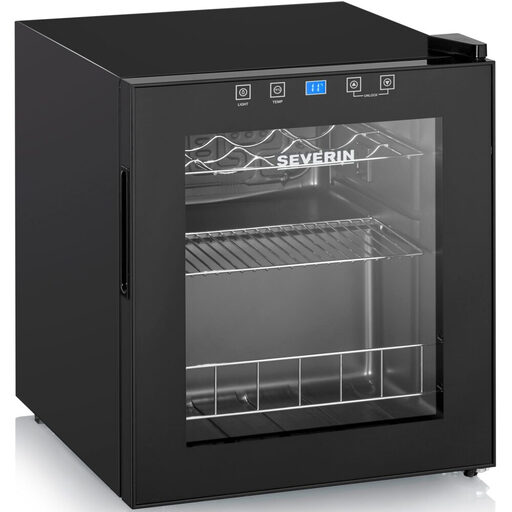
Why this product suits the profile: This compact appliance holds up to 15 standard bottles, making it suitable for smaller flats, offices or a private wine collection.
The product specifications state both the capacity and the number of bottles. The temperature range from 4 °C to 18 °C can be adjusted digitally.
46 litres of usable capacity, touch controls, LED lighting, automatic defrosting and a noise level of 42 dB(A).
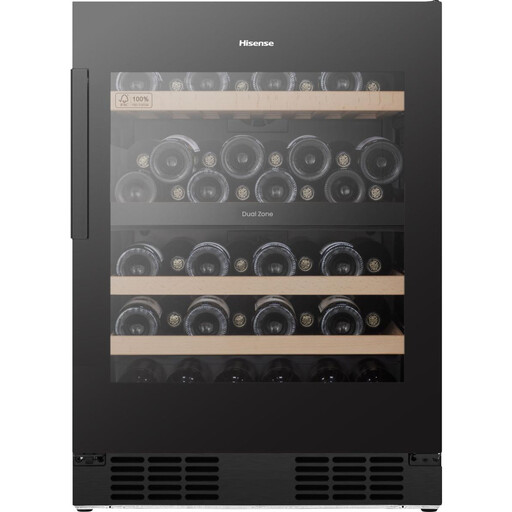
Why this product suits the profile: Two temperature zones, a 128-litre capacity and app control are designed for more extensive wine collections.
The stated N-T climate class specifies a permitted ambient temperature range of 16 °C to 43 °C. This makes it easier to check whether your planned location is suitable.
Dual-zone cooling from 5 °C to 20 °C, 37 dB(A), UV-protected glass door, reversible door and LED display.
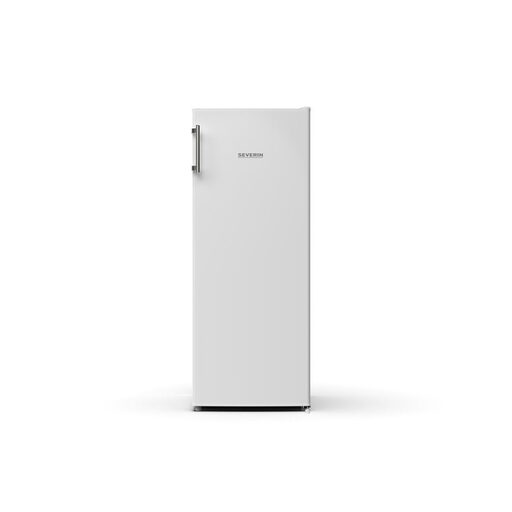
Why this product suits the profile: Its large capacity is designed for families, hosts, offices or smaller catering areas with a regular supply of drinks.
Five height-adjustable shelves accommodate bottles and cans of different sizes. The reversible door hinge makes positioning easier.
225 litres, LED interior lighting, adjustable thermostat and a stated annual consumption of 81 kWh.
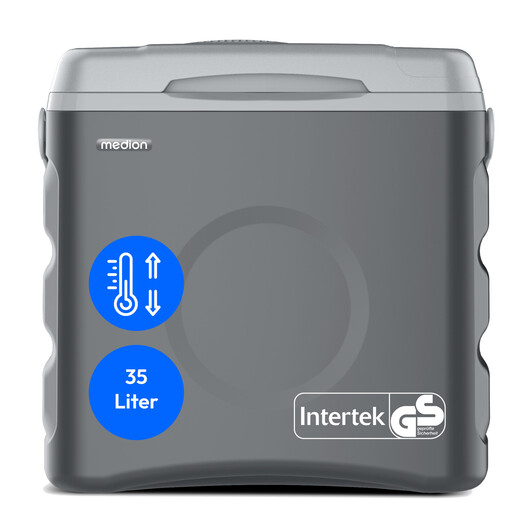
Why this product suits the profile: 12-volt, 230-volt and USB connections are available for camping, car journeys, boats or flexible use.
The cool box is not classified as an appliance with a permanently adjustable fridge temperature. It uses thermoelectric cooling and also offers a warming function.
30-litre net capacity, 12 V/230 V/5 V USB, cooling and warming functions, and a weight of 5.1 kg.
We have put together a complete, regularly updated list of products that fully meet these strict selection criteria and the safety regulations applicable in the EU.
Consumption depends on the size, energy efficiency class, ambient temperature and usage. As a guide, the SEVERIN FKS 8818 product specifications state 81 kWh per year. Actual consumption may differ if the door is opened frequently or ventilation is inadequate. To calculate the cost, multiply the annual consumption by your electricity price per kilowatt hour.
It is not possible to give a definitive lifespan in general terms. Factors include the cooling technology, maintenance, positioning and operating time. A level surface, unobstructed ventilation openings, regular cleaning and avoiding overfilling the interior can help support reliable operation. With a compressor appliance, you should leave it standing upright in accordance with the manufacturer’s instructions before using it for the first time.
A compact mini fridge with thermoelectric cooling does not necessarily maintain a constant target temperature. You should therefore follow the manufacturer’s instructions and the applicable requirements for storing food or breast milk. For sensitive contents, an appliance with a clearly specified temperature range and suitable temperature control is required. A portable cool box may be designed for transport, but does not automatically replace a permanently monitored cooling solution.