
Lieferung heute & morgen

Qualitätsgarantie

Willkommens-Angebote freischalten: KOSTENLOSE Lieferung | Bis zu 80 % RABATT | Kostenlose 30-Tage-JoyPlus-Testphase
App herunterladen
By Joybuy Product Recommendation Officer, July 29, 2026
The search for a new drip coffee maker can quickly become overwhelming. Manufacturers advertise numerous features, but not all of them are truly relevant for daily use. Too often, well-intentioned purchases lead to disappointment: the coffee tastes bitter after a short time, cleaning becomes a chore, or the machine simply doesn't fit your habits. This guide will help you identify the crucial features and avoid marketing traps, so you can find a model that reliably brews aromatic coffee.
Before diving into the technical details, it's wise to understand the most common problems that arise after a purchase. Many of these issues stem from design choices that aren't immediately obvious in the store.
To prevent these problems, you should check three key aspects before buying. These largely determine the functionality and longevity of your machine.
The choice of carafe is one of the most important decisions.
Modern machines offer features that simplify daily life and enhance the taste experience.
A classic coffee machine should be one thing above all: straightforward. Pay attention to the following features:
Based on the criteria mentioned, we have identified a few models that are suitable for different user groups.
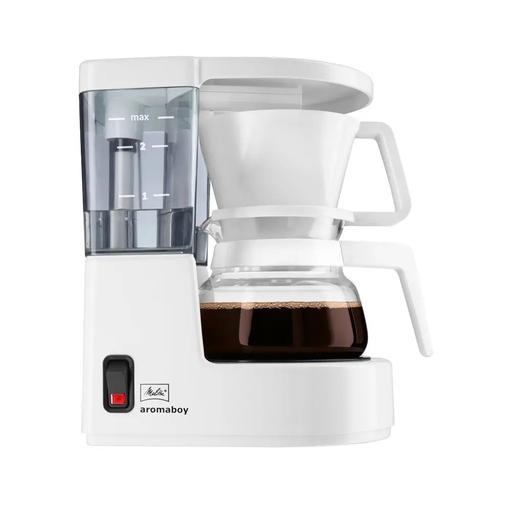
Why it's a great fit: With its capacity for approx. 2 cups and an extremely compact design, this small coffee maker for singles, students, or for use in an RV is ideal. It focuses on the essentials: brewing a small amount of fresh coffee.
The small quantity is usually consumed immediately, which bypasses the problem of coffee turning bitter on the warming plate. The dishwasher-safe parts (glass carafe, filter insert) prevent the cleaning trap.
Space-saving design that fits in any kitchen. Simple operation with an illuminated on/off switch and automatic final shut-off.
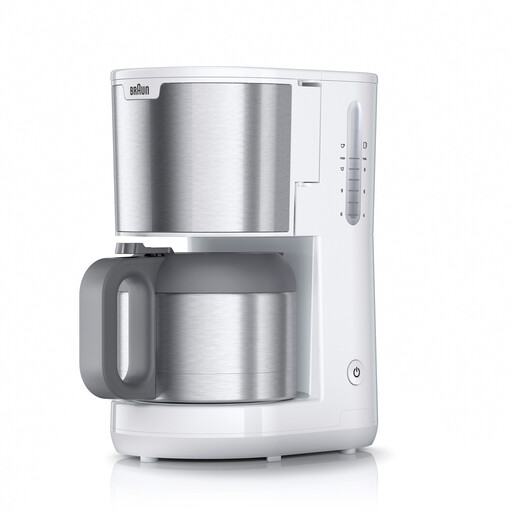
Why it's a great fit: This Braun coffee maker is equipped with a thermal carafe and brews up to 13 cups. It is ideal for families or offices where coffee needs to stay warm and aromatic for an extended period.
The double-walled thermal carafe makes a warming plate obsolete, effectively preventing the coffee from burning. The swing-out filter basket and dishwasher-safe parts minimize cleaning effort.
Braun's OptiBrew system optimizes temperature and brewing time. The drip-stop allows you to grab a cup before the brewing cycle is finished.
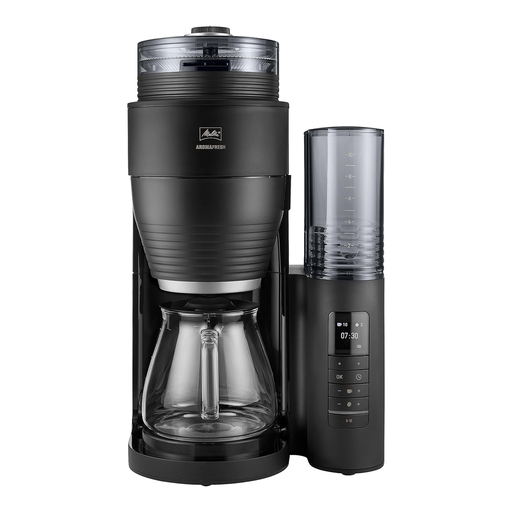
Why it's a great fit: As a drip coffee maker with a grinder, this model offers the freshest aroma. With 11 grind settings and 5 coffee strength levels, the taste can be precisely customized. Ideal for those who want to make no compromises on freshness.
The integrated grinder ensures maximum aroma, bypassing the disadvantage of pre-ground coffee. The removable water tank and detachable grinder make cleaning significantly easier, preventing the cleaning trap.
Integrated ceramic grinder with adjustable grind level. Timer function for programmable brew start and adjustable coffee strength.
We have compiled a complete, up-to-date list of products that fully meet these strict selection criteria and German safety regulations.
1. How often do I need to descale my drip coffee maker? The frequency depends on the water hardness in your area and how often you use it. As a general rule, it is recommended to descale the machine every two to three months. Some models, like the Melitta coffee machine One, have an integrated descaling indicator to remind you. Regular descaling not only ensures the longevity of the device but also a consistently high brewing temperature and thus a good coffee aroma.
2. Can I use a permanent filter instead of paper filters? Yes, many drip coffee makers are compatible with permanent filters made of plastic or metal mesh. The advantage lies in their reusability and lower running costs. However, permanent filters allow finer coffee oils and sediments to pass through, which can result in a fuller-bodied, but sometimes slightly cloudier, coffee. Paper filters absorb these particles, resulting in a cleaner taste. The choice is ultimately a matter of personal preference.
3. What is the difference between a cheap and an expensive drip coffee maker? The price difference often comes down to material quality, durability, and brewing technology. More expensive models more frequently use stainless steel, feature more precise heating systems (e.g., the OptiBrew system in a Braun coffee maker) that consistently maintain an optimal brewing temperature of 92–96 °C, and offer additional features like an integrated grinder or a thermal carafe. Cheaper models fulfill the basic function but may make compromises on longevity and the consistency of the brewing result.