
Lieferung heute & morgen

Qualitätsgarantie

Willkommens-Angebote freischalten: KOSTENLOSE Lieferung | Bis zu 80 % RABATT | Kostenlose 30-Tage-JoyPlus-Testphase
App herunterladen
A drip coffee maker is a practical choice for many households, offices, and smaller hospitality businesses where several cups of coffee need to be prepared with minimal effort. The selection ranges from compact 4-cup machines to programmable models with built-in grinders. What matters, however, is not the number of advertised features, but whether the capacity, carafe type, cleaning requirements, and safety functions match your actual needs.
Manufacturers often base their specifications on small coffee cups. A 10-cup coffee maker therefore usually holds around 1.2 to 1.3 litres—not ten large mugs. For office servings or generous breakfast cups, the carafe capacity in litres should carry more weight than the stated cup count.
A coffee maker with a keep-warm function typically keeps the drink warm for a limited period. With glass carafes, this is usually done on a heating plate. A drip coffee maker with a thermal carafe, by contrast, does not require a continuously heated surface. This can be useful if you want to serve coffee over a longer period. Check the specific heat-retention time and operating instructions before purchasing.
A permanent filter eliminates the need for paper filters, but it must be emptied and cleaned after every use. You should also check whether the filter insert is removable and, where applicable, dishwasher-safe. With conventional paper filters, disposal may be more convenient in everyday use. The right choice therefore depends on your cleaning routine and ongoing costs.
For a small household, a compact coffee maker with a capacity of around 500 to 750 millilitres may be sufficient. Families and offices often opt for 1.2 to 1.5 litres. The external dimensions matter just as much as the tank capacity: the machine must fit beneath wall cabinets and have sufficient clearance from walls and other heat sources.
A coffee maker with a glass carafe lets you monitor the remaining quantity at a glance. It usually sits on a warming plate, which should not be left running indefinitely. A thermal carafe retains heat without a continuously active heating plate, but it requires different handling when cleaning or replacing it after damage.
A drip-stop function interrupts the flow of coffee when the carafe is briefly removed during brewing. This helps reduce spills and mess, but it does not replace correctly positioning the carafe and filter holder.
A coffee maker with a timer can be programmed to start brewing at a specified time. This feature is particularly useful for consistent daily routines. With an automatic coffee maker, you should also consider the shut-off time, control layout, and cleaning requirements.
Regular descaling is essential in hard-water areas. Consult the instructions for the manufacturer’s recommendations on water hardness, suitable descaling agents, and cleaning the water tank. Models with removable filter inserts make daily maintenance easier.
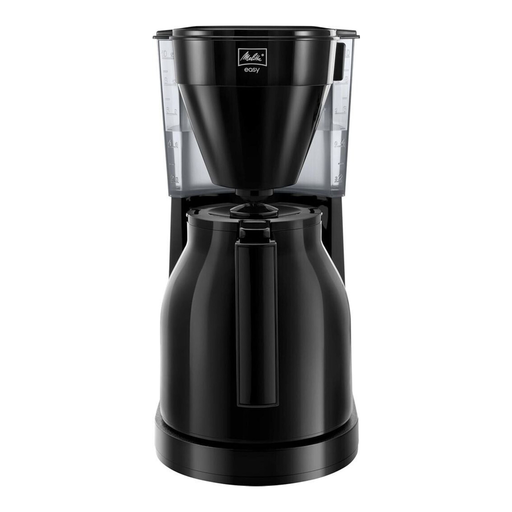
Why it suits this profile: Designed for larger quantities, this model offers straightforward operation without extensive programming.
The removable swivel filter makes cleaning easier. A drip-stop function and automatic shut-off are explicitly specified.
1.7-litre capacity, illuminated on/off switch, removable filter, and space-saving design.
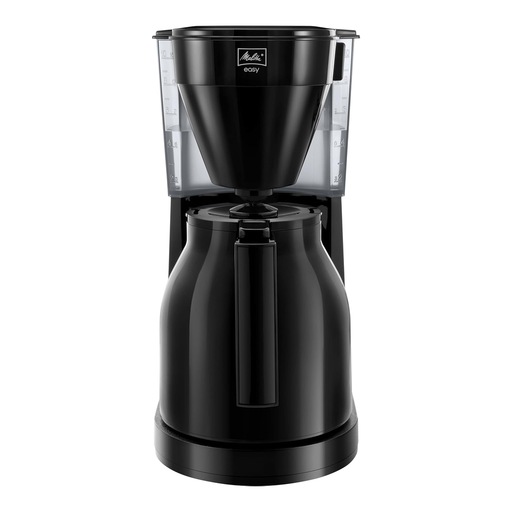
Why it suits this profile: The 1-litre thermal carafe is ideal for households that want to serve coffee after brewing without keeping a heating plate permanently switched on.
The thermal carafe reduces reliance on a warming plate. According to the product specifications, it should be washed by hand.
Double-walled thermal carafe, Easy-Click lid, drip stop, and removable swivel filter.
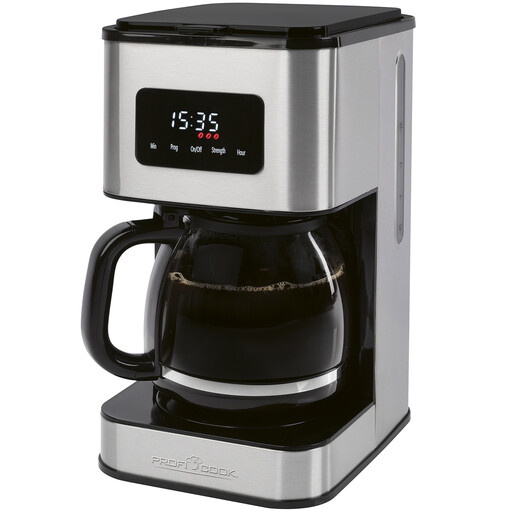
Why it suits this profile: This machine combines a capacity of around 1.5 litres with a timer and three aroma-strength settings.
The selection focuses on specific functions rather than vague claims about flavour: a 24-hour timer, drip stop, and automatic shut-off for the warming plate.
12–14-cup capacity, 1.5-litre glass carafe, removable filter insert, and 900 watts.
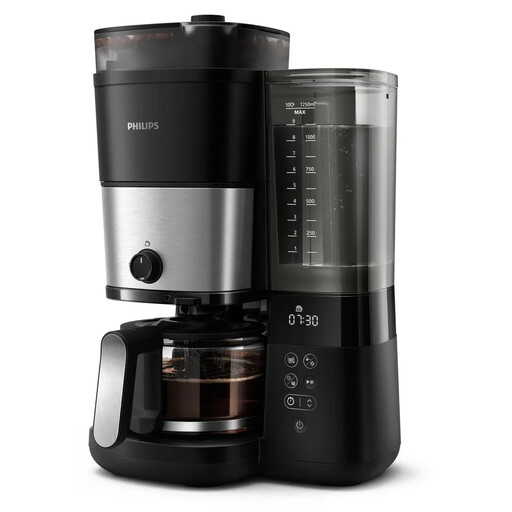
Why it suits this profile: A drip coffee maker with a grinder gives you the flexibility to use either whole beans or pre-ground coffee.
The bean hopper and water tank components are removable. The grinder can also be switched off when using pre-ground coffee.
1.25-litre tank for up to 10 cups, 24-hour timer, three coffee-strength settings, and adjustable grind levels.
Explore the complete selection to find more drip coffee makers with different capacities, carafe types, and feature sets.
Before first use, clean the carafe, filter holder, and removable parts according to the instructions. The housing, cable, and mains plug must not be immersed in water. The carafe and heating plate can become extremely hot during and after brewing.
Ongoing costs include not only electricity consumption, but also paper filters, descaling agents, and replacement carafes where necessary. A permanent filter can reduce paper consumption, but it requires regular cleaning. With a glass carafe, you should also check whether a replacement is available.
For one or two people, 4 to 6 cups—or around 500 to 750 millilitres—are often sufficient. Families and offices will generally find 1.2 to 1.5 litres more practical. Always compare the stated cup capacity with the volume in litres.
Service life depends on usage, water hardness, cleaning, and descaling. Regular maintenance in line with the manufacturer’s instructions can help reduce deposits. If you notice unusual noises, leaks, or damaged cables, stop using the appliance.
The timer itself does not automatically reduce energy consumption. However, it can prevent the machine from remaining switched on unnecessarily long if an automatic shut-off function is available. If coffee is kept warm frequently, a thermal carafe may be more practical in everyday use than a glass carafe kept on a continuously heated plate.