What should you look for when choosing one?
First, check where the footage is stored and what card format you have, then make sure it connects to your destination device. After that, you can decide whether UHS-II or extra ports are genuinely important for your needs.
| What matters |
What to check before buying |
Who should consider it? |
| Card format and storage location |
Check that the footage is stored on a removable microSD card and that the reader supports this format. |
If I want to read my drone card while I’m out, the reader needs to support the card format I use. Around 36% of consumers put card compatibility first. |
| Speed when transferring large files |
Compare the UHS standards supported by the card and reader, and check the USB data standard of the destination device. |
If I regularly copy large video files, I want my card, reader and destination device to work well together. Around 29% of consumers prioritise transfer speeds for large files. |
| Access on a mobile device |
Check the connection and supported file app. If you have an iPhone, also check Apple’s requirements for external storage. |
If I want to copy files straight to the smartphone or tablet I’ve brought with me, the file access matters as much as the connector. Around 21% of consumers put mobile device access first. |
| Extra ports |
Check whether you need to use SD and microSD at the same time, or need extra data and charging ports. If you’re considering a hub, check what’s included. |
If I need to connect other devices to my laptop while importing files, I want to work out which ports I’ll need in advance. Around 14% of consumers say extra card or laptop ports are their main concern. |
Joybuy products for on the go
This selection includes USB-C card readers and hubs for SD or microSD cards. The hubs also offer extra ports for your laptop.
 No image available
Acer ODK6V0 7-in-1 USB-C Hub
A good choice if you need extra ports when importing files to a USB-C device.
The product title lists an SD/TF card reader, 4K@30Hz HDMI, 100W PD and 3x USB 3.0 5Gbps.
View at Joybuy
 No image available
WOZINSKY 14-in-1 USB-C Hub
A good choice if you want to use extra laptop ports while importing files from an SD or TF card.
The product title lists a 15-cm cable, Power Delivery, USB-A, HDMI, RJ45, a 3.5-mm audio port, and SD and TF card readers.
View at Joybuy
 No image available
HOCO HB45 Spirit 2-in-1 card reader
A good choice if you want to read a removable microSD or TF card on a device with USB-C or USB-A.
The product title lists USB-A and USB-C.
View at Joybuy
 No image available
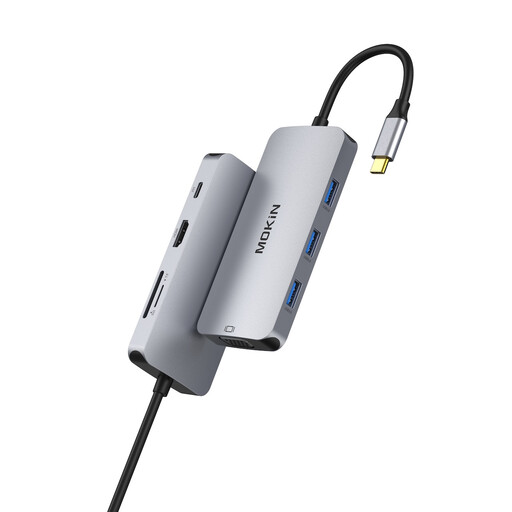
MOKiN USB-C Hub with HDMI and VGA
A good choice if you want to connect a monitor or other devices while importing files from a card.
The product title lists HDMI, VGA, 3 USB 3.0 ports, SD/TF and Power Delivery. The product description says the device isn’t intended for MHL mode and is designed for laptops with full-featured USB-C or Thunderbolt 3.
View at Joybuy
 No image available
4-in-1 USB-C card reader with USB-A
A good choice if you switch between USB-C and USB-A devices while you’re out and want to read an SD or microSD card.
The product title lists support for SD, MicroSD, TF and SDHC.
View at Joybuy
Frequently asked questions
Can I simply remove the microSD card from my drone?
If your footage is stored on a removable microSD card, DJI describes exporting it to a computer using a card reader. Check where it’s stored first, as recordings may also be saved to internal storage.
Will a USB-C card reader work with my iPhone?
You may be able to access the card through Files or supported apps using a compatible connection or adapter. Apple also specifies requirements for the partition and file system, so check what’s needed for your device and card.
Is UHS-II worth it for large drone videos?
UHS-II is mainly worth considering if your card and destination device support the standard too. A reader’s quoted speed isn’t a guaranteed copy speed; the card and system affect the result.
How do I safely disconnect a card reader after copying files on Windows?
First, check that the copied files are in the right place. Microsoft recommends using ‘Eject’ to remove external storage before disconnecting it.
What are my rights in Germany if my card reader is faulty?
If you buy a new product from a business seller and it’s faulty, you generally have statutory rights against the seller. The Verbraucherzentrale states that these rights apply for two years from delivery or receipt; a voluntary guarantee is separate. For online purchases, you generally have a 14-day right to cancel, which you must notify the retailer of.


