
Lieferung heute & morgen

Qualitätsgarantie

Willkommens-Angebote freischalten: KOSTENLOSE Lieferung | Bis zu 80 % RABATT | Kostenlose 30-Tage-JoyPlus-Testphase
App herunterladen
Finding a high-performance yet regulation-compliant camera drone can be a challenge. The sub-250-gram weight class is particularly crucial for hobby photographers, content creators, and travellers who want to capture high-quality aerial footage. Models in this category, often classified as C0 camera drones, offer significant regulatory advantages without compromising on image quality.
This article provides an objective overview of the key purchasing criteria and presents a selection of drone models suited for various applications based on their technical features. The goal is to provide you with a solid foundation for making an informed decision when buying a lightweight drone.
Before you buy a lightweight drone, several technical and legal aspects should be considered. These factors determine not only the recording quality but also the handling and the legal framework.
A key advantage of a drone under 249g is its classification in the C0 drone class under the EU Drone Regulation. Operating these devices generally does not require an EU Certificate of Competency (often called a "small drone license"). This significantly simplifies getting started. Nevertheless, operator registration with the German Federal Aviation Authority (LBA) and valid liability insurance are required by law.
For professional-looking footage, a drone with a 4K camera is the standard today. However, don't just focus on the resolution; also consider the image sensor and HDR (High Dynamic Range) capability for detailed images in both bright and dark areas. A 3-axis mechanical gimbal is essential. It compensates for the drone's movements and vibrations, ensuring stable, smooth video footage that is often unachievable with purely software-based stabilisation.
The specified flight time refers to a single battery under ideal conditions. For extended photo or video projects, a drone with a long flight time of over 30 minutes per battery is recommended. Many manufacturers offer "Fly More" combos that include multiple batteries and a charging hub. Such kits can significantly extend the effective usage time and are often more cost-effective than buying accessories separately.
Here is a selection of models that are suitable for different user groups due to their specific features.
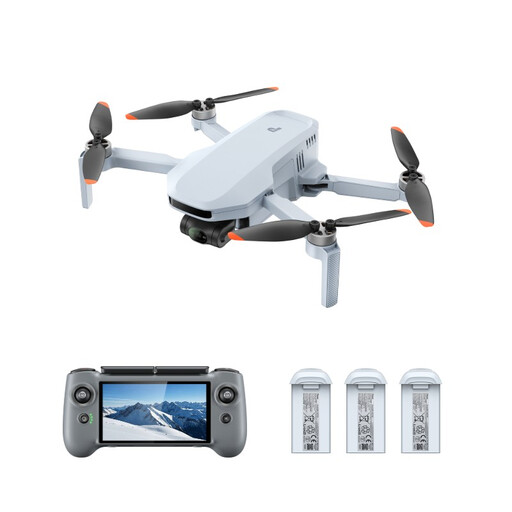
Why it stands out: The ATOM 2 set positions itself as an interesting DJI Mini alternative and is aimed at users looking for a ready-to-fly, all-in-one package. The remote controller with an integrated 5.5-inch FHD screen eliminates the need for a smartphone. With three batteries included, the manufacturer claims a total flight time of up to 96 minutes, which is particularly advantageous for longer shooting sessions.
Advantages:
Who it's for: This set is ideal for users who prefer an all-in-one experience and don't want to tie up their smartphone during flight. The long total flight time makes it a great choice for ambitious hobby filmmakers and travellers.
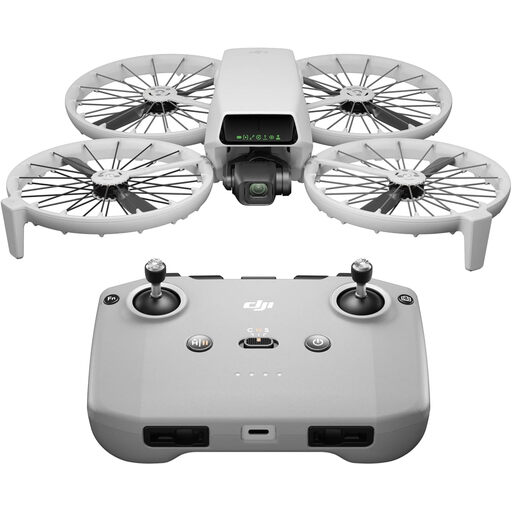
Why it stands out: The DJI Flip is designed as a versatile camera drone for beginners and advanced users. A special feature is the integrated carbon fibre propeller guards, which offer enhanced protection. The camera, with its 1/1.3-inch CMOS sensor, allows for 4K/60fps HDR recording, promising high image quality in this class.
Advantages:
Who it's for: The DJI Flip is well-suited for beginners who prioritise safety, as well as for users flying in environments with potential obstacles. The high frame rate in 4K is also appealing to content creators who want to use slow-motion effects.
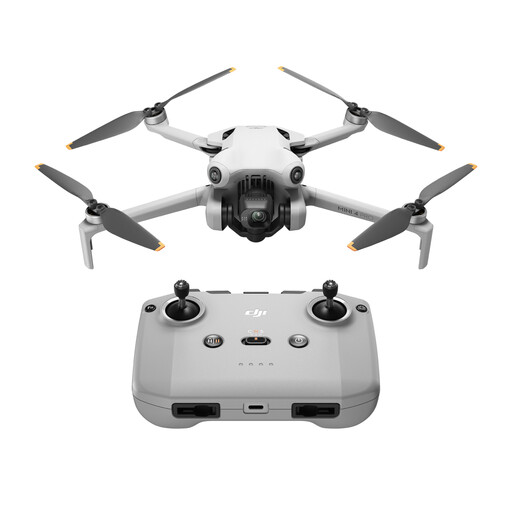
Why it stands out: The DJI Mini 4 Pro sets the standard for safety features in the sub-249g class. With its omnidirectional obstacle sensing, it can detect and fly around obstacles from all directions. Other features include true vertical 4K shooting for social media content and a video transmission range of up to 20 km, according to the manufacturer.
Advantages:
Who it's for: This drone is the right choice for content creators who produce a lot for social media, as well as for pilots who want maximum safety through advanced obstacle sensing. As a 4K travel drone, it is also very well-suited thanks to its compact design and long range.
The models presented cover a wide spectrum, but the market offers many other specialised devices. If you are looking for cameras with different specifications or for other applications, it's worth taking a look at our range.
Discover our wider selection of 4K video cameras to find the perfect model for your creative projects.
For drones with a take-off weight of less than 250 grams that are C0 classified, no EU Certificate of Competency (A1/A3) is required. However, you must register as an operator with the German Federal Aviation Authority (LBA) and have appropriate liability insurance. The registration number (e-ID) must be attached to the drone.
A 3-axis mechanical gimbal is a device that physically stabilises the camera. It compensates for the drone's pitch, roll, and yaw movements in real time. The result is shake-free, professional-looking video footage that is nearly impossible to achieve with this level of quality using purely digital image stabilisation.
A long flight time is very important for a travel drone. A flight time of 30 minutes or more per battery gives you enough time to scout a scene, find the right camera angle, and take multiple shots without constantly having to change the battery. Combos with multiple batteries are particularly recommended for travel, as charging options are often limited on the go.