
Lieferung heute & morgen

Qualitätsgarantie

Willkommens-Angebote freischalten: KOSTENLOSE Lieferung | Bis zu 80 % RABATT | Kostenlose 30-Tage-JoyPlus-Testphase
App herunterladen
Finding the right drone under 250g can be a challenge given the vast array of models and technical specifications. This weight class is particularly appealing to hobby photographers, travel enthusiasts, and content creators, as it often comes with fewer regulatory hurdles. This article serves as an objective guide. We will outline key purchasing criteria and present a selection of models to provide you with a solid basis for an informed decision.
A weight of under 250 grams is a critical factor. In the EU, drones in this category often fall into the C0 class. This typically means that a full EU drone licence (A2 Certificate of Competency) is not required for operation. However, online registration as an operator with the national aviation authority and attaching the operator ID to the drone are usually mandatory. Always check the current local regulations, as they can change. A no-licence drone, in the sense of not needing the full certificate, offers a straightforward entry into the world of aerial photography.
For stunning aerial shots, the camera is the centrepiece. Look for models with 4K camera drone resolution to capture detailed and sharp videos. Stabilisation is at least as important. A mechanical 3-axis gimbal is the standard here for professional-looking, smooth footage, as it effectively compensates for shakes and vibrations on three axes. The sensor size (e.g., 1/1.3-inch or 1/2-inch) also affects performance in low-light conditions.
A drone with long flight time is a common request. Compact drones naturally have smaller batteries. A flight time of around 30 minutes per battery is considered a good benchmark in this class. Many manufacturers offer "Fly More Combos" that include multiple batteries and a charging hub to significantly extend total flight time. For a travel drone, a foldable design and a compact pack size are also crucial. The video signal's transmission range indicates how far the drone can fly while you still see a stable live feed on your remote controller.
Here is a curated selection of models that cater to different needs and budgets.
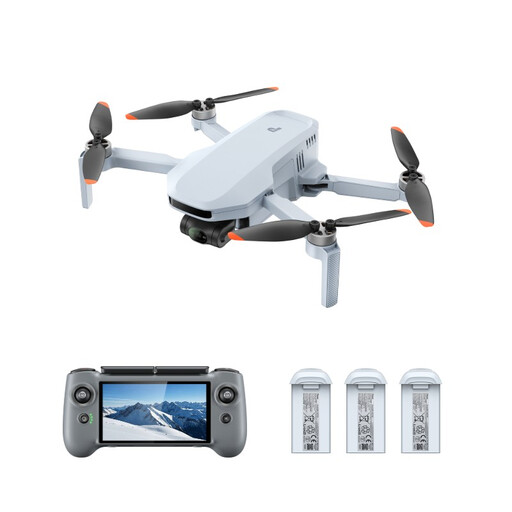 Why it stands out: The ATOM 2 set is distinguished by its included remote controller with an integrated 5.5-inch FHD touchscreen. This makes a separate smartphone unnecessary for operation and ensures a quick, streamlined start-up. Advantages:
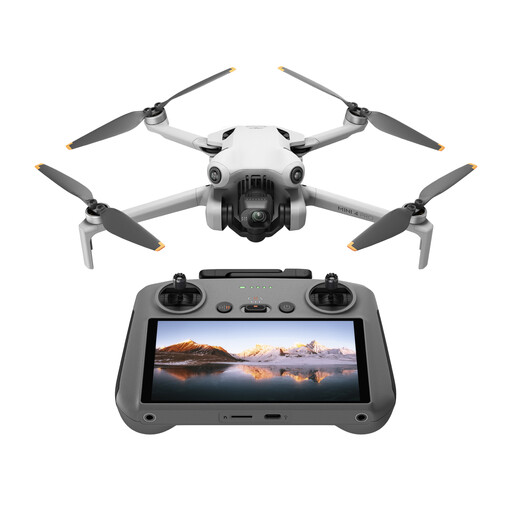 Why it stands out: The DJI Mini 4 Pro sets the standard for safety in the mini-drone class. With its omnidirectional obstacle sensing, it offers a high level of protection against collisions from all directions. Advantages:
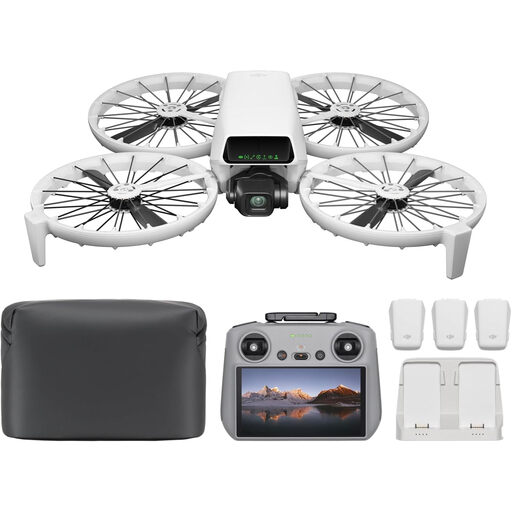 Why it stands out: The DJI Flip was designed with a clear focus on safety and ease of use. The integrated, all-around propeller guard makes it a great choice for flights in more complex environments or for less experienced pilots. Advantages:
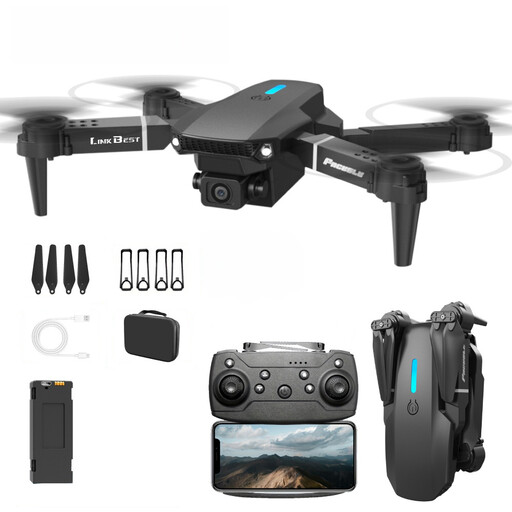 Why it stands out: The FACEGLE E88 Pro is positioned as a very budget-friendly entry-level model. It offers basic flight functions for anyone wanting to get their first experience with a drone. Advantages:
The world of camera drones is diverse. If the models presented here don't fully meet your requirements, you might find the right device in our broader selection. Discover more options and accessories. ? Discover more models in our Remote Camera category
As a rule, an EU Certificate of Competency A1/A3 or Remote Pilot Certificate A2 is not required to operate C0 class drones (typically under 250g). However, registration as a drone operator with the national aviation authority and attaching the e-ID to the drone are usually mandatory. The exact regulations can change, so checking current local laws before your first flight is essential.
4K refers to the video resolution and stands for approximately 4,000 horizontal pixels (usually 3840 x 2160 pixels). A drone with a 4K camera can record videos that are significantly sharper and more detailed than those in Full HD (1920 x 1080 pixels). This is particularly beneficial if the footage will be viewed on large screens or cropped in post-production.
The flight time of a drone under 250g varies depending on the model, battery capacity, and flight conditions (e.g., wind). Typical values range from 20 to 35 minutes per battery charge. Many manufacturers offer "Fly More" kits with extra batteries to extend the total flight time during an outing to over 90 minutes.