
Lieferung heute & morgen

Qualitätsgarantie

Willkommens-Angebote freischalten: KOSTENLOSE Lieferung | Bis zu 80 % RABATT | Kostenlose 30-Tage-JoyPlus-Testphase
App herunterladen
The selection of dry dog food is vast, and manufacturers' advertising promises are often grandiose. As a dog owner, you want only the best for your four-legged friend, but navigating the maze of food options is difficult. Many well-intentioned purchases turn out to be unsuitable because they are not tailored to the dog's individual needs or are based on marketing myths. This guide will help you separate the wheat from the chaff and make an informed decision.
Before we delve into the important selection criteria, let's clear up the most common misconceptions that often lead to the wrong food choice.
To find the right food, you should focus on objective criteria. The following two points are essential.
The ingredients list (declaration) is the heart of every food package. The ingredients are listed in descending order by weight before processing.
Your dog's individual needs are the most important benchmark.
Based on the criteria mentioned, we have compiled a few products for different requirement profiles.
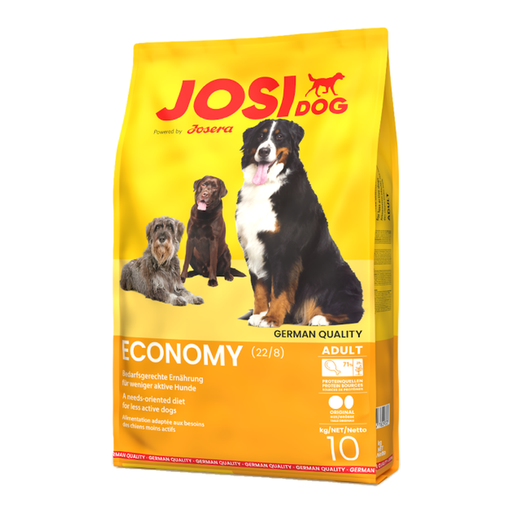
Why this food is a good fit: This food is designed as a solid basic provision for adult dogs with normal activity levels. It offers a balanced nutrient profile for daily needs without putting excessive strain on your wallet. Ideal for owners looking for an uncomplicated and economical complete feed.
It clearly positions itself as a basic food and does not create exaggerated expectations through marketing buzzwords. The composition is tailored to the target group of normally active dogs and not to special needs that it does not cover.
Provides complete nutrition for adult dogs with normal energy requirements at a very good price-performance ratio.
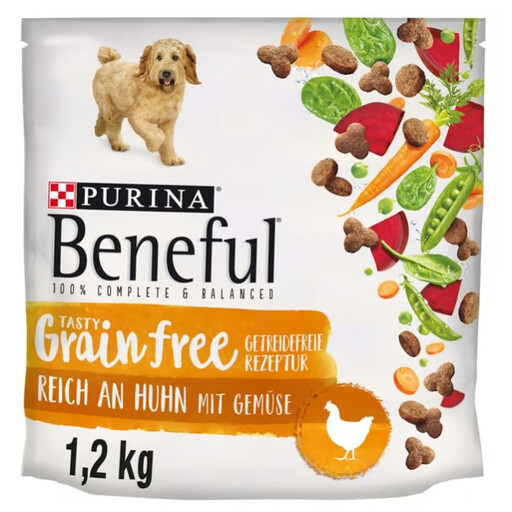
Why this food is a good fit: For dogs that react sensitively to grain, this recipe offers an easily digestible alternative. It is a good choice for owners who are specifically looking for a grain-free diet for their dog without wanting to compromise on a balanced meal.
This food avoids the "grain-free" trap by offering a clear solution for a specific need, rather than marketing grain-free as a blanket promise of quality. It is intended for dogs that benefit from such a recipe.
A grain-free recipe that, according to the manufacturer, is designed to support healthy digestion and contains Omega fatty acids for skin and coat.
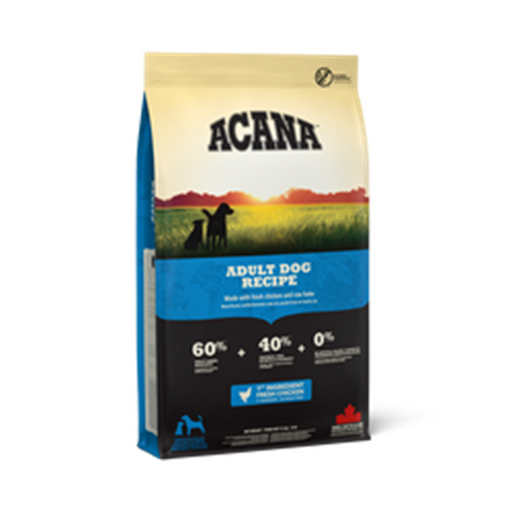
Why this food is a good fit: For owners who place special value on the origin and composition of ingredients. Acana focuses on a high proportion of animal proteins and a "WholePrey" philosophy, where organs and cartilage are processed in addition to muscle meat to ensure a diet that is close to nature.
It avoids the vague "meat content" trap by containing, according to the manufacturer, 60% high-quality animal ingredients and transparently distinguishing between fresh and dried components. The open declaration provides clarity about the ingredients.
A protein-rich recipe with one-third fresh or raw ingredients and a variety of animal sources (poultry, fish) for a nutrient-dense diet.
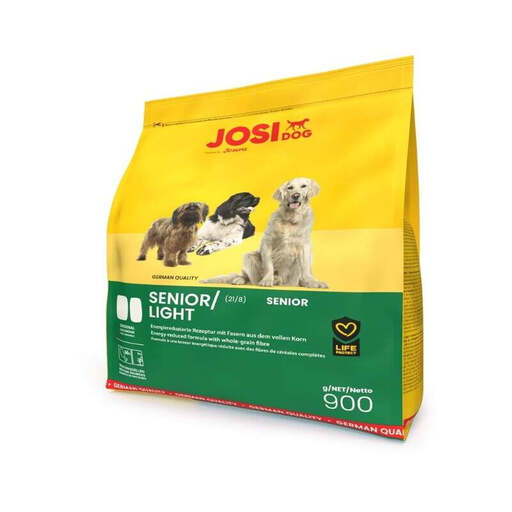
Why this food is a good fit: This recipe is specially tailored to the needs of older, less active, or overweight-prone dogs. The reduced energy content helps with weight management, while the balanced composition ensures complete nutrition.
It avoids the "one-food-for-all" mistake by offering a targeted solution for a specific life stage and a particular need (weight management). The nutritional values are clearly geared towards seniors and less active dogs.
A balanced recipe with reduced fat (8.0%) and energy content to support a healthy weight in older or less active dogs.
We have compiled a complete, up-to-date list of products that fully meet these strict selection criteria and German regulations.
A food transition should always be done gradually to avoid digestive problems. Over a period of about 7 to 10 days, mix a slowly increasing amount of the new food with the familiar food until you have completely replaced the old food.
The required amount of food depends on many factors: weight, age, breed, activity level, and the specific energy content of the food. You will find a manufacturer's feeding recommendation on every food package. This serves as a guideline that you should adjust to your dog's individual needs to maintain a healthy body weight.
Not necessarily. Grain-free food is primarily useful for dogs with a diagnosed grain intolerance or allergy. For most dogs, well-processed grain is a valuable source of energy and nutrients. More important than eliminating a single ingredient group is the overall quality, digestibility, and balanced composition of the food.