
Lieferung heute & morgen

Qualitätsgarantie

Willkommens-Angebote freischalten: KOSTENLOSE Lieferung | Bis zu 80 % RABATT | Kostenlose 30-Tage-JoyPlus-Testphase
App herunterladen
A dry red wine pairs well with many British dishes, but when shopping online it isn’t always selected using the right criteria. Terms like “full-bodied”, “barrique” or “old vines” can sound appealing, but on their own they don’t tell you whether a bottle actually suits your taste, your meal or how you plan to drink it.
The term dry primarily describes the residual sugar content, not automatically the body, alcohol or tannin structure. A dry red wine can taste fruity and light, or it can be noticeably full-bodied. For a red wine with a robust flavour, you also need to consider the grape variety, ageing process, alcohol content and acidity.
An Italian red wine made from Montepulciano won’t necessarily taste like a Cabernet Sauvignon from Italy. Similarly, a French red wine from the Pays d’Oc, an Australian Shiraz Cabernet and a wine from California differ significantly in fruit, acidity and tannins. Origin is a clue, but it doesn’t replace checking the specific grape variety and product description.
A red wine in a 6-pack can be practical for regular dinners, catering or larger parties. If you only open a bottle occasionally, you should consider storage space, drinking pace and closure type. Six bottles of 0.75 litres each total 4.5 litres; a pack of six 1-litre bottles contains 6 litres.
Cabernet Sauvignon red wine often points to a structured, fruit-forward style with notes of blackcurrant, blackberry or cherry. Tannins can be quite noticeable. A Shiraz-Cabernet blend typically combines the dark fruit and spice of Shiraz with the structure of Cabernet Sauvignon.
Other varieties also offer a suitable alternative:
The alcohol content of the wines considered here is roughly between 12 and 15% ABV. A higher value can mean more body, but it doesn’t guarantee a harmonious taste. Acidity provides freshness, while tannins can create structure and a dry sensation on the palate.
For red wine with meat, structured wines are often a good choice because tannins and acidity can complement rich dishes. Wines with more body also tend to work well with pasta in a hearty sauce, aged cheese or braised dishes. With light vegetable dishes or poultry, a fruitier, less tannic style may be more suitable.
The label and product data sheet should clearly show the alcohol content, volume, origin, ingredients and allergen information. Sulphites must be declared if present above a certain level. Claims such as organic red wine should be verifiable through an organic control body number or relevant certification. For vegan red wine, the specific product labelling is decisive, because animal-derived fining agents may sometimes be used in winemaking.
For storage, a cool, dark and dry place is recommended. Bottles with natural corks should – if the producer advises it – be stored lying down. Once opened, wine changes through exposure to oxygen; you should follow the product’s recommended drinking window.
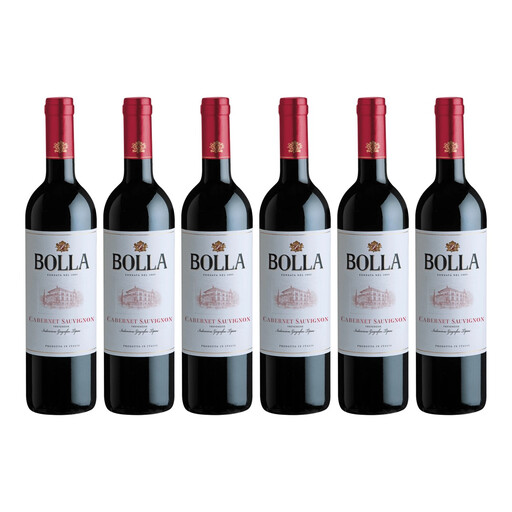
Why this product fits the profile: The 6-pack of 0.75-litre bottles is ideal for regular meals and a manageable stock. This Cabernet Sauvignon from Veneto is listed at 12.5% ABV.
Pack size, grape variety, origin and alcohol content are all clearly stated in the product profile, making it easy to compare the price per bottle.
Fruity forest berry notes, barrique ageing and natural cork are listed as product features.
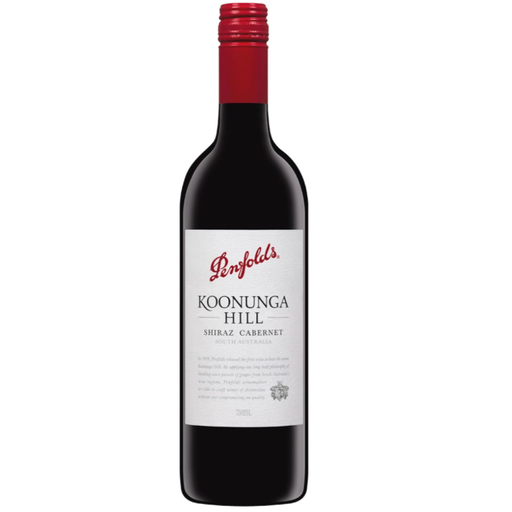
Why this product fits the profile: The declared blend consists of 67% Shiraz and 33% Cabernet Sauvignon and is described at 14.5% ABV.
The grape variety percentages and alcohol content are stated, rather than just using vague terms like “full-bodied”.
Described as having dark berries, herbs, spices and a full-bodied style balanced by fresh acidity.
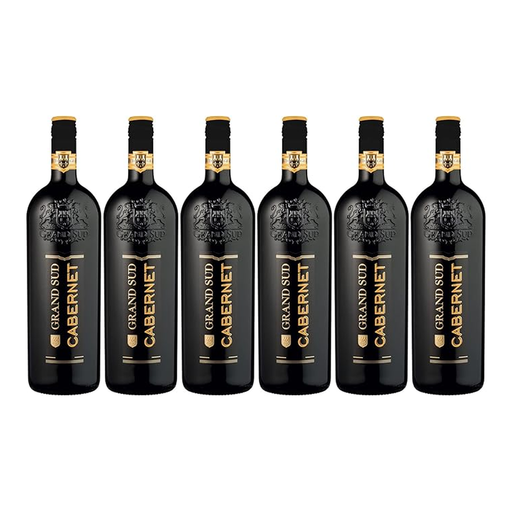
Why this product fits the profile: Six 1-litre bottles offer a larger volume for catering, parties or regular entertaining. This French red wine from the Pays d’Oc contains 12% ABV according to the product information.
The total volume is clearly stated. This makes it easier to plan your needs without accidentally ordering individual bottles that are too small.
Cabernet Sauvignon, dark fruit, spice notes and the stated food pairing recommendations make the profile easy to categorise.
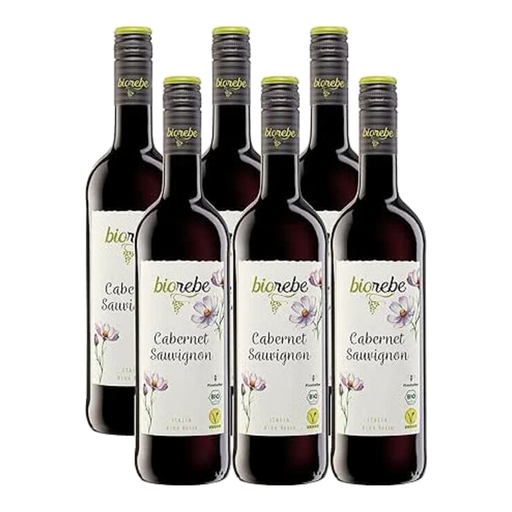
Why this product fits the profile: The product is labelled as organic red wine and vegan, and is offered in a 6-pack of 0.75-litre bottles.
Organic and vegan suitability are listed as product features. Ingredients and sulphites are also mentioned in the data sheet.
Cabernet Sauvignon from Italy, with declared organic origin and vegan labelling in a single stock-keeping unit.
We’ve put together a complete, regularly updated list of products that fully meet these strict selection criteria and the safety regulations in force in the EU.
Before you order, it’s worth a quick check:
“Dry” refers to the residual sugar. Under European wine labelling rules, a wine may generally contain no more than 4 grams of residual sugar per litre; under certain conditions, a higher value of up to 9 grams is possible. Acidity and tannins also influence the taste impression.
For beef, lamb, game and braised dishes, Cabernet Sauvignon, Shiraz-Cabernet or structured blends can work well. With less hearty dishes, fruity wines with more moderate tannins are often more practical. The specific sauce and cooking method are just as important as the type of meat.
That depends on the wine, how much is left, the closure and storage conditions. After opening, the bottle should be sealed and stored in a cool, dark place. For the best flavour quality, follow the recommendation given on the product; many wines should be consumed within a few days.