For sealing individual portions
If you want to divide a larger purchase of dry rice into separate packs to open later, suitable bags and an easy-to-use sealing function are essential.


If you regularly take rice from the same supply, a dry, tightly sealed container is usually the simplest place to start: the consumer advice centre recommends storing dry foods in a dry place in tightly sealed containers. If you want to prepare several unopened individual portions, a bar vacuum sealer with suitable film is better suited to the job than a system whose bags you open repeatedly. Choose based on how often you access the rice, how much space you have and the consumables required – not on any blanket expectation about shelf life.
If you want to divide a larger purchase of dry rice into separate packs to open later, suitable bags and an easy-to-use sealing function are essential.
If you often take rice from the same container, the consumer advice centre recommends keeping dry foods in a tightly sealed container and checking newly purchased supplies.
If you have limited storage space or want to reuse packaging, you can compare a compact pump system with compatible bags or boxes against a bar sealer and the film it requires.
A good fit if: you regularly open the same supply of rice and don’t need to prepare individual unopened portions.
The trade-off: You won’t need a machine or heat-seal bags, but you won’t have individually sealed packs.
A good fit if: you want to seal several portions separately and open just one pack at a time later.
The trade-off: This option requires a machine and compatible bags or rolls of film, which you’ll use up. The permitted type and width of film depend on the model.
A good fit if: you want a compact system and plan to open and reseal bags or boxes repeatedly.
The trade-off: The pump, valves, lids and containers must be compatible with the system. Reusable boxes aren’t permanently heat-sealed individual portions.
| Priority | What to look for when buying | Who this matters most to |
|---|---|---|
| Small, separate portions | Sealing function and suitable bags or rolls; check the permitted width for the model. | If I want to divide a large bag into portions that can be opened separately, I need compatible bags and a reliable sealing function; around 36% of consumers prioritise exactly this. |
| Dry, protected storage | A tightly sealed closure, a dry place to store the rice and a visual check before transferring it. | If I regularly open the same supply, I want to keep it somewhere dry and tightly sealed; around 29% of consumers prioritise protecting their food supplies. |
| Consumables | Compare compatible rolls of film or bags and check what comes with the specific machine. | If I repeatedly pack small portions, I want to weigh up the ongoing need for film against reusable accessories; around 21% of consumers pay particular attention to these running costs. |
| Space and reusability | Check the storage space required and the compatibility of the pump, bags and boxes. | If my kitchen has limited storage and I want to reuse containers, a compact, resealable system matters to me; around 14% of consumers prioritise space and reusability. |
Vacuum-packed dry rice still needs to be stored somewhere dry and protected from unsuitable conditions. A sealed bag won’t get rid of a pest infestation that’s already present.
Check the rice before packing it, then store it somewhere dry and protected from significant temperature fluctuations.
Features for liquids or repeated sealing don’t tell you whether you need several separate portions of rice in the first place.
First decide how often you open your supply and how many portions you actually want to seal separately. Then compare the machine type, features and storage space required.
A larger machine may take up more room without its extra features being useful for a few portions of dry rice.
The ProfiCook PC-VK 1080 and PC-VK 1146 are different models. Packaging materials must also be suitable for their intended food contact.
Check the full model number and the permitted type of film. For bags and containers, also check that they’re intended for food contact.
The models mentioned include bar sealers and a hand-pump system with boxes and ZIP bags.
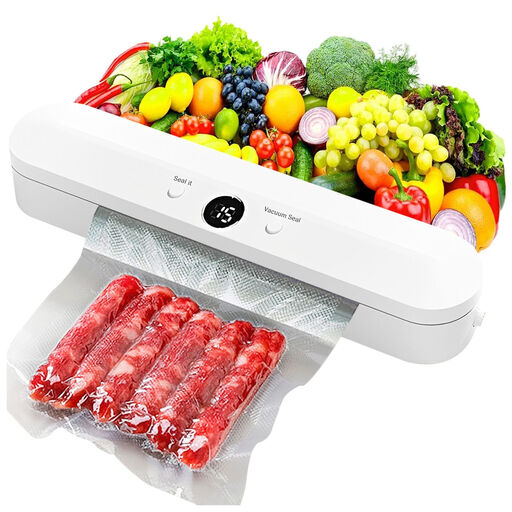
The PC-VK 1080 is a bar vacuum sealer for portioned foods.
The VAC 385 is a bar sealer with a roll compartment and a connection for vacuum containers.
The Fresh & Save Starter Set Plastic/M/L is a pump system with reusable bags and boxes.
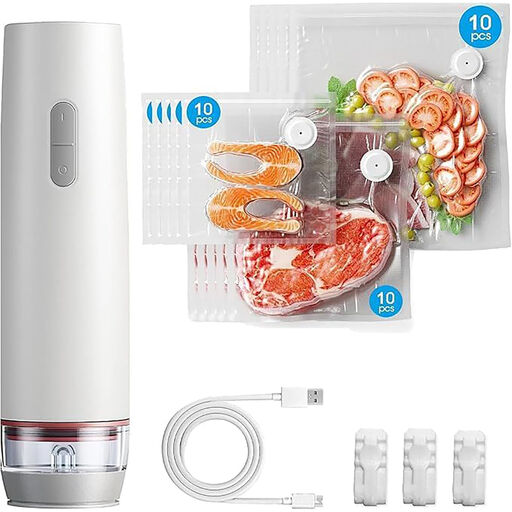
The following Joybuy products include handheld vacuum systems with reusable bags and bar vacuum sealers for portions of dry food.
 No image available
For use with reusable bags and convenient, compact cordless operation.
Features listed in the product title: 60 kPa and 30 reusable bags. The product description says it’s cordless and rechargeable via USB. Before filling the bags, check that they’re intended for food contact.
 No image available
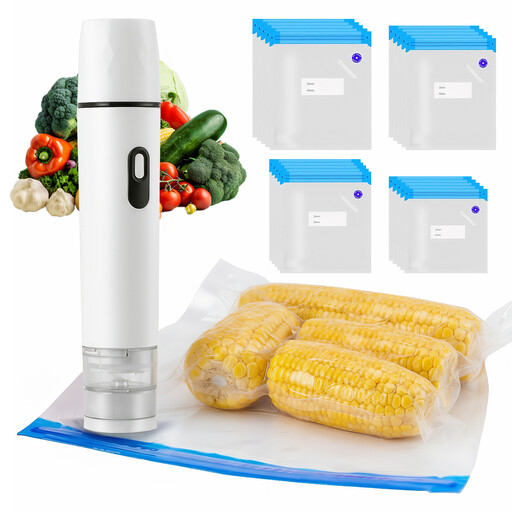
For repeated use with compatible vacuum bags and a manual valve system.
According to the product description, 20 washable bags are included; the machine attaches to the valve on each bag. Before filling the bags, check that they’re intended for food contact.
 No image available
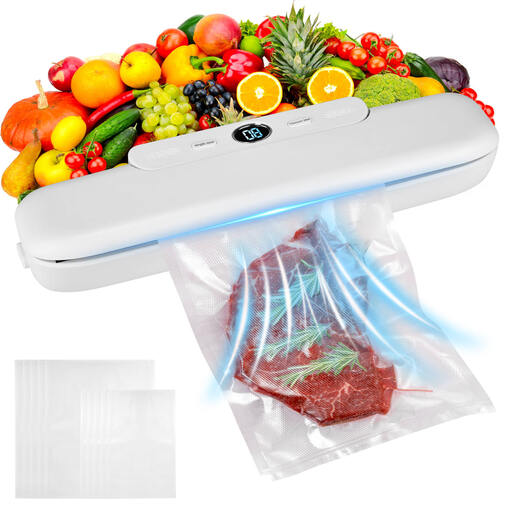
For vacuum sealing food bags.
According to the product description, 10 bags are included and the machine is operated using a push button. Before filling the bags, check that they’re intended for food contact.
 No image available
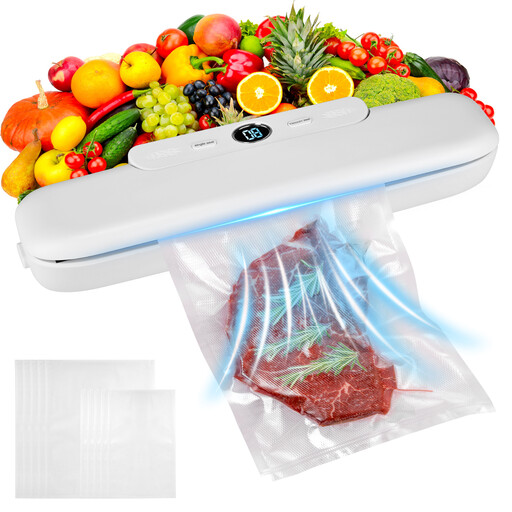
For portions of dry food when you want to vacuum seal and seal bags with one machine.
According to the product description, 10 bags are included and bags up to 30 cm wide can be used. Before filling the bags, check that they’re intended for food contact.
 No image available
For dry food and portions of different sizes, provided you use compatible film.
Features listed in the product title: 120 W and 28 cm roll width; according to the product description, the sealing bar is 28 cm wide. A dry mode and 10 bags are also listed. Before filling the bags, check that they’re intended for food contact.
No. The consumer advice centre recommends storing dry foods somewhere dry in tightly sealed containers and protecting them from unsuitable temperature fluctuations. Vacuum sealing is an additional packaging option, not a requirement for storage.
Check newly purchased supplies and transfer them straight into tightly sealed containers where possible. The consumer advice centre recommends these steps for good food storage hygiene; simply heat-sealing an infested supply won’t get rid of the pests.
No. Check the instructions for the specific machine and bag: the manufacturer specifies embossed vacuum bags and rolls up to 30 cm wide for the ProfiCook PC-VK 1080. The packaging material used for rice must also be suitable for its intended food contact.
No. This guide is about dry rice. The Federal Institute for Risk Assessment points out that Bacillus cereus spores can germinate if heated food is stored incorrectly; it recommends cooling it quickly or keeping it sufficiently hot. Vacuum sealing doesn’t replace proper temperature control.
According to the Federal Office of Consumer Protection and Food Safety, there’s no general approval requirement for ready-made food contact materials. However, they must still meet the applicable food contact requirements. Check the intended use and instructions when buying.