Families who portion rice in advance
You divide a larger purchase into individual portions of dry rice for cooking, opening each portion only when you need it. You’ll need suitable bags, a careful seal and manageable portion sizes.


If you want to divide dry rice into individual family portions and keep them sealed until you need them, a bar vacuum sealer with compatible embossed bags is a natural choice. If you regularly take rice from the same supply, a tightly sealed container may be enough: the Consumer Advice Centre recommends storing dry foods in a dry place and in tightly sealed containers. Cooked rice needs different handling; vacuum packaging is no substitute for safe temperature control.
You divide a larger purchase into individual portions of dry rice for cooking, opening each portion only when you need it. You’ll need suitable bags, a careful seal and manageable portion sizes.
You regularly take rice from the same supply and seal it again afterwards. A tightly sealed container may be all you need.
You open and reseal supplies more often, and compare suitable vacuum containers with the ongoing cost of sealing bags.
Suitable if: You want to divide a larger purchase of dry rice into separate family portions, sealed until you need them.
Consider: Check that the bags have the right texture and width for your specific machine. Vacuum sealing is no substitute for storing rice in a dry place away from heat and moisture.
Suitable if: You regularly take rice from a supply and put the remaining amount away again afterwards.
Consider: You won’t need a sealing machine or new portion bags. To keep portions separate, you’ll need several suitable containers.
Suitable if: You want to vacuum-seal a supply in a compatible container system that you open regularly.
Consider: A pump with valve containers won’t seal cut-to-size rice bags. The pump and lids must be compatible with the system.
| Priority | What to check before buying | Who is it important to? |
|---|---|---|
| Protecting dry rice in storage | Suitable food-contact material, dry contents and an appropriate storage place. | I want to keep my supply dry and protected from pests; around 33% of consumers prioritise protecting stored food. |
| Sealing individual meal portions | A bag width that suits the machine, and pre-made bags or rolls in the right size. | If I want to prepare family meals in individual portions and open only what I need, the right bag size matters; around 25% of consumers make portioning their main priority. |
| Bag use and reusability | Type of film and reusability guidance; for containers, check that the pump and lid are compatible. | I want to open supplies more often without using a new sealing bag every time; around 25% of consumers prioritise reusability and ongoing costs. |
| Space and ease of use | Dimensions, whether you want manual or automatic operation, and storage space for the machine, containers and rolls. | If my kitchen is short on space, I want to be able to store the machine and its accessories neatly; around 17% of consumers make space and ease of use their main priority. |
Dry rice can also be stored in a tightly sealed container. A machine is most useful when you want to seal individual portions separately.
Before buying, consider whether you need separate unopened portions or regularly take rice from one shared container.
Rommelsbacher rules out smooth film for the bar sealers described here; CASO labels the smooth heat-seal bags mentioned as suitable for chamber vacuum sealers only.
Before buying replacement bags, check your machine type, the required film texture and the maximum bag width.
The German Federal Institute for Risk Assessment points out that spores of Bacillus cereus can survive cooking. Vacuum sealing alone does not make cooked rice suitable for storage in a food cupboard.
Treat cooked rice as a prepared dish and store it with safe temperature control in mind.
The VC 10 is a bar vacuum sealer for bags up to 30 cm wide. The VRH 790 advanced Pro offers features including a liquid function and a double seal.
The FS 3610 is a bar vacuum sealer with a cutter for bags and rolls up to 28 cm wide.
The VAC 385 has a roll compartment, a cutter and a container connection; according to the manufacturer, it can operate without breaks between uses.
Fresh & Save uses a hand pump to draw air out of compatible vacuum containers and bags through valves.
The V.100 Premium X is a semi-automatic bar vacuum sealer with a 34 cm sealing bar and a double seal.
The following options include bar vacuum sealers for sealing bags and hand pumps for reusable bags. If you choose a pump, check that the bags and valves are compatible.
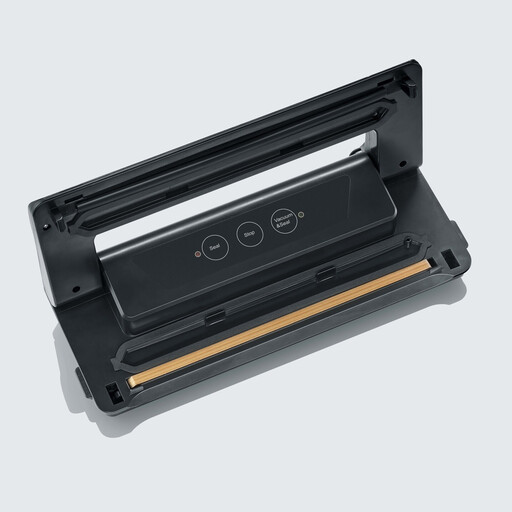 No image available
This model is worth considering if you want to seal bags into separate portions of rice.
Automatic vacuum sealing and heat sealing; 10 vacuum bags measuring 28 × 35 cm.
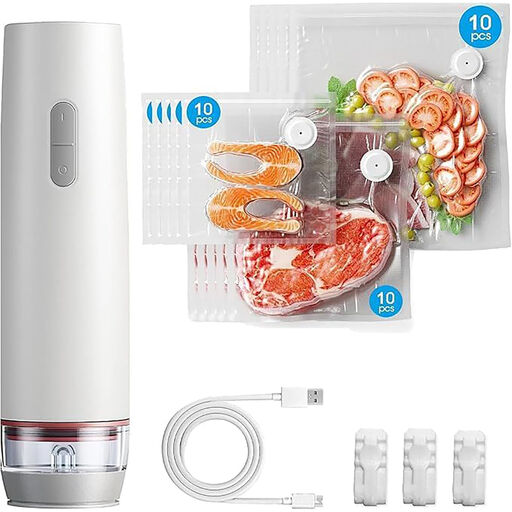 No image available
This handheld machine is suitable for portioned supplies only if the bags are compatible with its valve.
The product name specifies 60 kPa suction and 30 reusable bags.
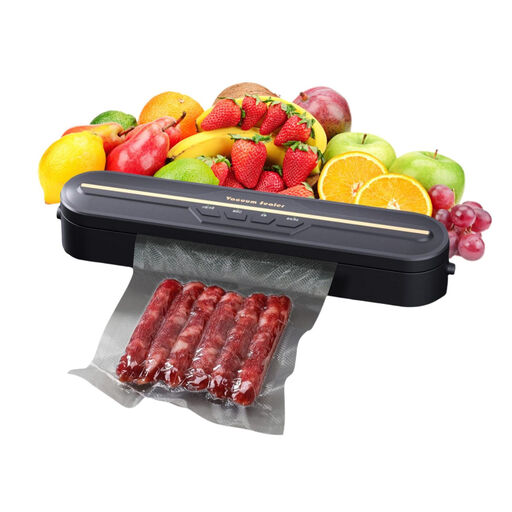 No image available
Its stated suitability for dry foods makes this model a possible option for rice portions.
The product name specifies 120 W, a 28 cm sealing width and 10 vacuum bags.
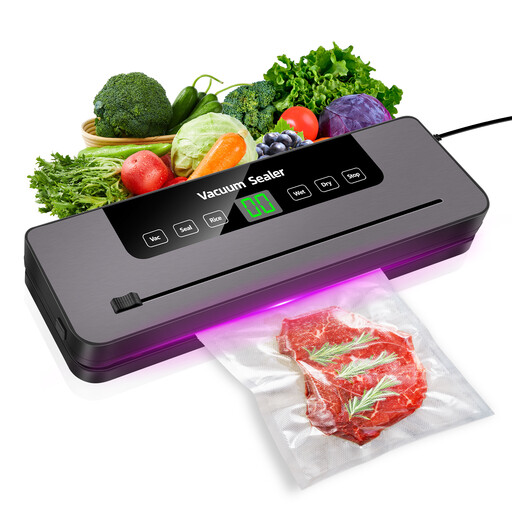 No image available
For dry rice portions, the stated suitability for dry foods is relevant.
The product name specifies 10 bags and an integrated cutter; the machine is listed as suitable for dry and moist foods.
 No image available
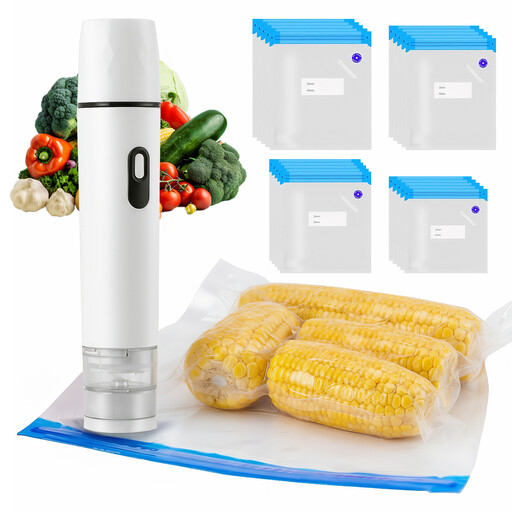
This portable pump may suit portioned supplies when space is at a premium, provided the bags are part of the same system.
The product name specifies 60 kPa and 20 reusable bags. According to the description, the pump is designed for special vacuum compression bags.
No. Vacuum sealing is not essential for storing rice appropriately. The Consumer Advice Centre recommends keeping dry foods in a dry place and in tightly sealed containers. A machine is worth considering mainly if you want to seal individual portions separately.
Use a bag that is suitable for your machine and for contact with food, and keep the sealing area clean. Follow the instructions for your specific model; for the VAC 385, Rommelsbacher highlights the position of the embossed side of the film in particular. First cut rolls to the right size, then seal one end.
Not without checking compatibility. Rommelsbacher rules out smooth film for the bar sealers it describes; CASO labels the smooth heat-seal bags mentioned as suitable for chamber vacuum sealers only. Check which type of bag is compatible with your exact machine.
No. Storage advice for dry rice does not apply to cooked rice. The German Federal Institute for Risk Assessment points out that spores of Bacillus cereus can survive cooking. For heated foods, it recommends cooling them quickly to no more than 7 °C or keeping them hot at a minimum of 60 °C throughout; vacuum packaging is no substitute for this temperature control.
Materials intended to come into contact with rice must meet EU requirements for food-contact materials, in particular Regulation (EC) No 1935/2004. If a machine is faulty, your statutory rights against the seller are separate from any voluntary manufacturer’s guarantee.