For anyone wanting to reshape individual ends
If you only want to tidy a few wavy ends on dry hair, control and manoeuvrability matter more than a large styling surface. ghd Germany positions its Mini range for shorter sections and fringes.


For a few dry, wavy ends, narrow heated plates may seem the obvious choice: ghd Germany positions its Mini range for shorter sections, although the plate width and how easy a particular device is to manoeuvre still matter. If your hair is delicate, adjustable temperature is important. An airflow device works without heated straightening plates, but there’s no evidence that it offers an advantage when shaping individual ends.
If you only want to tidy a few wavy ends on dry hair, control and manoeuvrability matter more than a large styling surface. ghd Germany positions its Mini range for shorter sections and fringes.
Choosing a suitable temperature and being mindful of repeated heat are important considerations. A study in the Journal of Cosmetic Science looks at heat exposure when straightening hair samples; it does not provide individual temperature recommendations.
At a dry styling station, cable length, a safe place to set the device down and its condition can all matter. Remington lists a 3 m cable for the S9100, and the VDE advises against continuing to use faulty appliances.
A good fit if: you want to target and shape a few short or hard-to-reach ends.
Worth weighing up: Direct contact with the plates transfers heat to the hair, so choosing the right temperature and using a controlled stroke are still important.
A good fit if: you want to choose the temperature yourself. Remington lists nine settings from 150 to 230 °C for the S9100.
Worth weighing up: Longer plates aren’t necessarily the easiest to handle if you’re only styling individual ends.
A good fit if: you want to refresh dry hair without heated straightening plates. The Dyson instructions describe a dedicated mode for this.
Worth weighing up: It shapes hair differently from plates, and there’s no evidence that it’s better for shaping individual wavy ends.
The figures below put the priorities of people looking to reshape dry, wavy ends at their dressing table into perspective.
| Priority | What to check when buying | Who is it especially relevant to? |
|---|---|---|
| Precision for individual ends | The width and shape of the plates on the specific model, along with how it feels to hold and whether it suits your hair length. | If I want to shape individual dry ends, I need to be able to grip and guide them precisely. Around 36% of people prioritise precision for individual ends. |
| Temperature and heat exposure | Available temperature settings, the lowest setting and ease of use. Remington lists nine settings from 150 to 230 °C for the S9100; this is not an individual temperature recommendation. | If I have delicate hair, I want to be able to adjust the heat rather than rely on a fixed setting. Around 29% of people prioritise temperature control. |
| Safe use at your dressing table | A suitable heat-resistant surface, an undamaged cable and the device’s auto shut-off function, if available. | At my dressing table, I need a safe place to set the device down and want the cable to be in good condition. Convenience features don’t replace these precautions. Around 21% of people put safe use at the dressing table first. |
| Cost and aftercare | Compare the drying or wet-hair function you need, the warranty terms and the seller responsible for the product. | If I’m only reshaping a few ends, I want to pay only for features I’ll actually use and understand the aftercare terms. Around 14% of people prioritise cost and aftercare. |
A high maximum temperature doesn’t tell you which setting is right for your hair. Studies on hair samples show that temperature is relevant to heat exposure.
Compare the available settings and follow the device instructions, taking the condition of your hair into account.
Whether a device is suitable for damp hair depends on the specific model. A study in the Journal of Cosmetic Science observed more structural changes in damp hair samples or samples treated with a water-based spray than in the dry comparison treatment.
Use a wet-hair setting only on a device specifically designed for it, and in the appropriate mode. For the routine described here, your ends should be dry.
A device can remain hot until it switches off automatically. Damaged cables or casing are another reason to stop using it; the VDE gives this safety advice for electrical appliances.
Make sure you have a suitable place to set it down, switch the device off after styling and don’t continue to use damaged appliances.
The Mini range is designed for shorter sections and fringes. The German brand website states that its straighteners use a styling temperature of 185 °C.
According to Remington Germany, the PROluxe S9100 is a corded plate straightener with adjustable temperature.
The 5000 Series BHS510/00 is a plate straightener with ThermoShield temperature control.
According to BaByliss, the Straight & Curl Titanium ST486E is designed for straightening sections and creating waves or curls.
According to Dyson Germany, the Airstrait works without heated straightening plates. Its instruction manual describes a mode for dry hair.
The selection below includes devices for dry ends: adjustable heated plates, a straightening brush and an airflow device. Consider which shape and controls best suit your routine.
 No image available
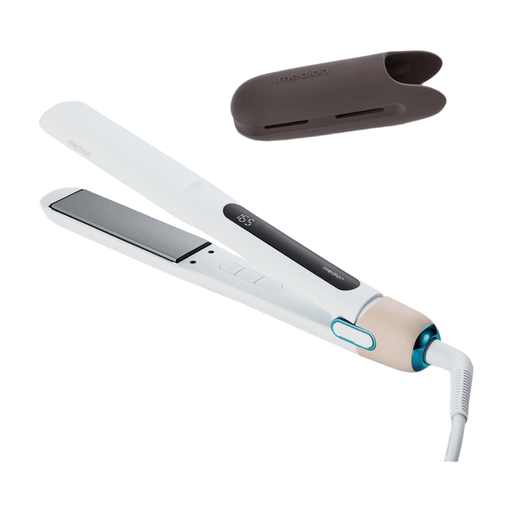
An option for dry ends if you want to adjust the temperature. The product name lists ceramic and tourmaline plates, five settings from 165 to 210 °C, a 60-second heat-up time, 52 W, a 1.80 m cable and a protective cap. The instructions say to use on dry hair only.
 No image available
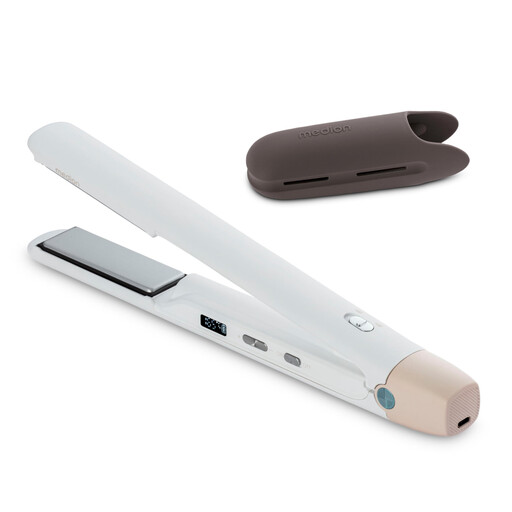
For dry ends, if you’d rather not have a power cable attached while styling. The product name lists ceramic and titanium plates, five settings from 165 to 210 °C, up to 25 minutes of cordless styling, an LCD display and auto shut-off after 30 minutes. The safety instructions say not to use on wet hair.
 No image available
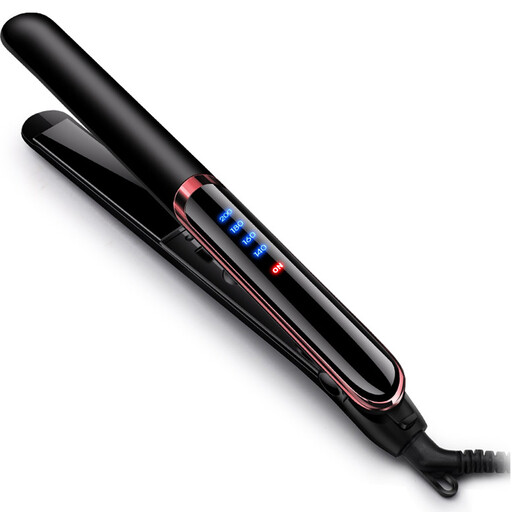
An option for dry hair if you’re looking for a 2-in-1 device with adjustable temperature. The product name lists four settings from 140 to 200 °C, 42 W, 220 V, a ceramic coating, PTC heating, an LED display and floating plates.
 No image available
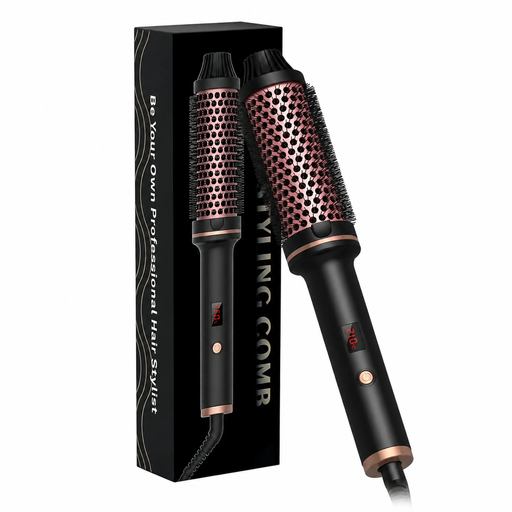
For dry, wavy ends if you’d like to try a brush rather than flat plates. The product name lists an LCD display and five temperature settings; the description says the device is designed for completely dry hair.
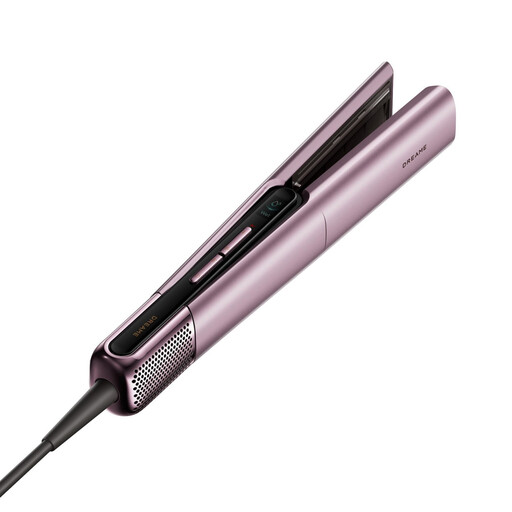 No image available
An airflow option for styling dry sections if you’d rather not use heated straightening plates. Consider whether this different approach to shaping hair will give you the result you want on individual ends.
With a standard plate straightener, your ends should be dry before you straighten them. You should also follow the device instructions. A laboratory study in the Journal of Cosmetic Science found more structural changes in damp hair samples or samples treated with a water-based spray than in the dry comparison treatment. It does not specify a general waiting time.
The special installation rules for bathrooms don’t establish a general installation requirement for a dry dressing table. Check the device and cable for damage, keep the switched-on device away from water and use a suitable place to set it down. The VDE explains the special electrical installation rules for bathrooms, which don’t apply automatically to every dressing table.
No. Electrical equipment covered by the EU Low Voltage Directive must carry CE marking. It indicates that the manufacturer declares the product meets the relevant requirements; it isn’t an EU-wide certification issued by a central body or an independent styling test. Whether the directive applies to a particular device depends on its scope.
Your statutory rights against the seller and a voluntary guarantee are separate entitlements. With an online purchase, you generally have the right to cancel, usually within 14 days of receiving the goods; exceptions and the cancellation information should be checked. The consumer advice centre explains the relevant terms.
Take old electrical appliances to a local authority collection point or an appropriate take-back point, separately from other waste. Whether a retailer must accept an appliance without you buying a new one depends, among other things, on the retailer’s size and whether no external dimension of the appliance exceeds 25 cm. The Federal Environment Agency provides information about local collection points; check the terms of the specific take-back point.