
Lieferung heute & morgen

Qualitätsgarantie

Willkommens-Angebote freischalten: KOSTENLOSE Lieferung | Bis zu 80 % RABATT | Kostenlose 30-Tage-JoyPlus-Testphase
App herunterladen
If you’re looking to buy Chardonnay white wine, you’ll find plenty of choice online: dry Chardonnay from Germany, French and Italian wines, off-dry options from California, organic Chardonnay, vegan Chardonnay and multipacks. But the grape variety alone tells you little about the wine’s actual taste or how best to serve it. The key factors are sweetness, alcohol content, origin, pack size and the information on the label.
Chardonnay can be made in a fresh, fruity, mineral or full-bodied style. Terms such as “exotic”, “creamy” and “harmonious” are not consistently defined either. So if you’re looking for a fruity white wine, check for specific tasting notes, residual sugar and acidity too.
A dry Chardonnay can still contain a certain amount of residual sugar. Depending on its acidity and how it’s made, a dry wine can taste softer or fresher. For an informed comparison, look for the terms “dry”, “off-dry” or “medium-sweet”, and check the residual sugar per litre if it’s listed.
At first glance, a 0.75-litre bottle of Chardonnay can often seem cheaper than a six-pack of Chardonnay or Chardonnay in a bag-in-box. But the price per litre is what matters when comparing costs. A 3-litre pack can be handy for parties or regular use, while individual bottles give you more flexibility to try different wines.
A dry Chardonnay often works well as a white wine to serve with food, such as salads, fish, poultry or light meat dishes. An off-dry Chardonnay can taste more approachable thanks to its higher residual sugar, and depending on the style, can also pair well with vegetarian dishes or pasta. The alcohol content can help you compare options: the selection includes wines ranging from 11.5 to 14.0 % vol.
Look for specific tasting notes wherever possible. Maybach Chardonnay lists melon and exotic fruits, while Gallo Family Vineyards Chardonnay features notes including apple, lime, honeydew melon and vanilla. These are product descriptions, not a guarantee of how the wine will taste to you.
A German Chardonnay can have a different style from a wine from France, Italy or California. This is partly down to factors such as climate, soil, ripeness and winemaking. For organic products, a control number should be listed on the product. For example, FR-BIO-01 is listed for Gérard Bertrand Change Chardonnay, while DE-ÖKO-022 is given for Pfannebecker Chardonnay & Weißburgunder.
“Vegan” and “vegetarian” don’t automatically mean the same thing. If you’re looking for vegan Chardonnay, check the product’s specific labelling. Biorebe Chardonnay is described as organic and vegan. It’s also important to check for allergens such as sulphur dioxide and sulphites, which can trigger reactions in sensitive people.
The right packaging depends on the occasion:
Serve the wine at the temperature recommended for that particular product. Maybach Chardonnay is best served at 10–12 °C, while Pfannebecker Chardonnay & Weißburgunder should be served at 6–8 °C. If wine is too chilled, its aromas may be less noticeable; if it’s too warm, it may taste more alcoholic.
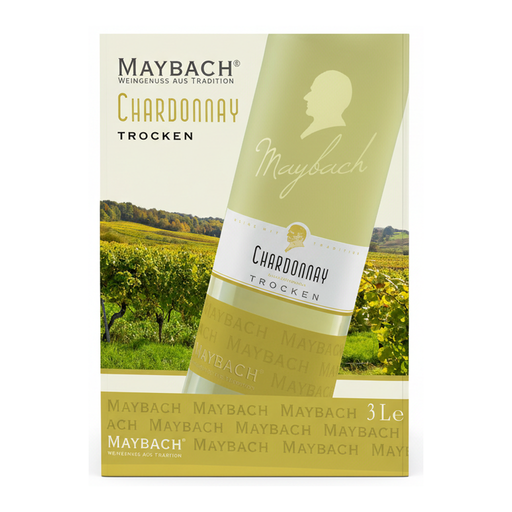
Why this product suits this profile: The 3-litre bag-in-box is made for parties, picnics and larger gatherings. This German wine is dry and contains 12 % vol.
The larger pack makes it easier to compare the price per litre and means you won’t need several individual packs for a party.
3 litres, a tap, a dry style and tasting notes of melon and exotic fruits.
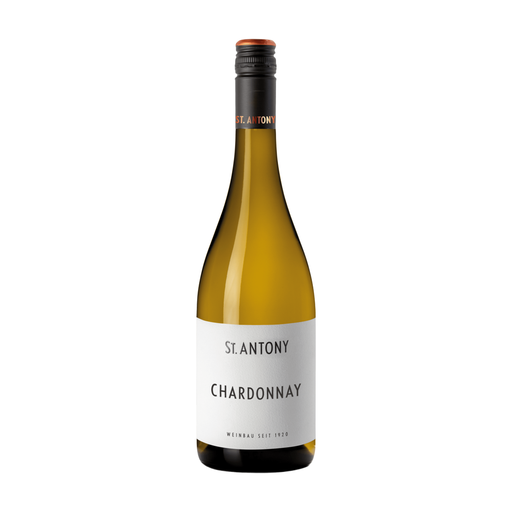
Why this product suits this profile: This German Chardonnay from Rheinhessen is listed as an organic wine and matured in a stainless-steel tank. The 0.75-litre format is ideal if you want to choose carefully.
The product details specify the origin, organic control number, alcohol content and winemaking style, rather than relying on general marketing claims.
Organic certification DE-ÖKO-039, 11.5 % vol. and tasting notes of Williams pear, apricot and dried flowers.
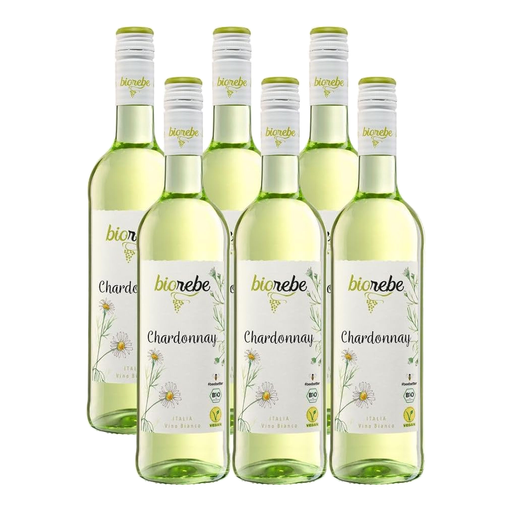
Why this product suits this profile: This six-pack is suited to households and hosts who regularly need dry Chardonnay and want to meet organic and vegan criteria.
The product details explicitly state that it’s organic and vegan, rather than leaving you to infer this from green packaging.
6 bottles of 0.75 litres, a dry style, Italian origin, and organic and vegan labelling according to the product description.
We’ve put together a complete, regularly updated list of products that meet these strict selection criteria and the safety regulations in force in the EU.
Still Chardonnay is usually served between 6 and 13 °C, depending on the product. Always follow the specific manufacturer’s recommendation. Store unopened bottles and bag-in-box packs in a cool, dry place away from light. Once opened, handle the packaging according to the label instructions.
Wine contains alcohol and is intended for adults aged 16 and over only. Pregnant women should avoid alcoholic drinks. Please note that all the products listed contain sulphites, which are an allergen. Alcohol should always be consumed responsibly; driving after drinking is not safe.
No. Dry Chardonnay can have fruity notes, but it can also be made in a mineral or fuller-bodied style. If you’re looking for a fruity wine, check the specific tasting notes, as well as the acidity and residual sugar.
A six-pack is a good choice if you regularly serve the same wine, for example at family gatherings or with several meals. If you only drink Chardonnay occasionally, individual 0.75-litre bottles offer more variety.
Chardonnay Secco contains carbonation and is often served as an aperitif at around 8–10 °C. Still Chardonnay has no added carbonation and is more often chosen to accompany a meal. Check the product description and alcohol content before buying.